

4 Thalers – Brunswick-Lüneburg-Celle
Germany
Context
Year: 1647
Country: Germany 
Issuer: Brunswick-Lüneburg-Celle
Ruler: Frederick IV
Currency:
Demonetized: Yes
Material
References
KM: #Click to copy to clipboard179
Numista: #295414
Value
Bullion value: $330.92
Obverse
Description:
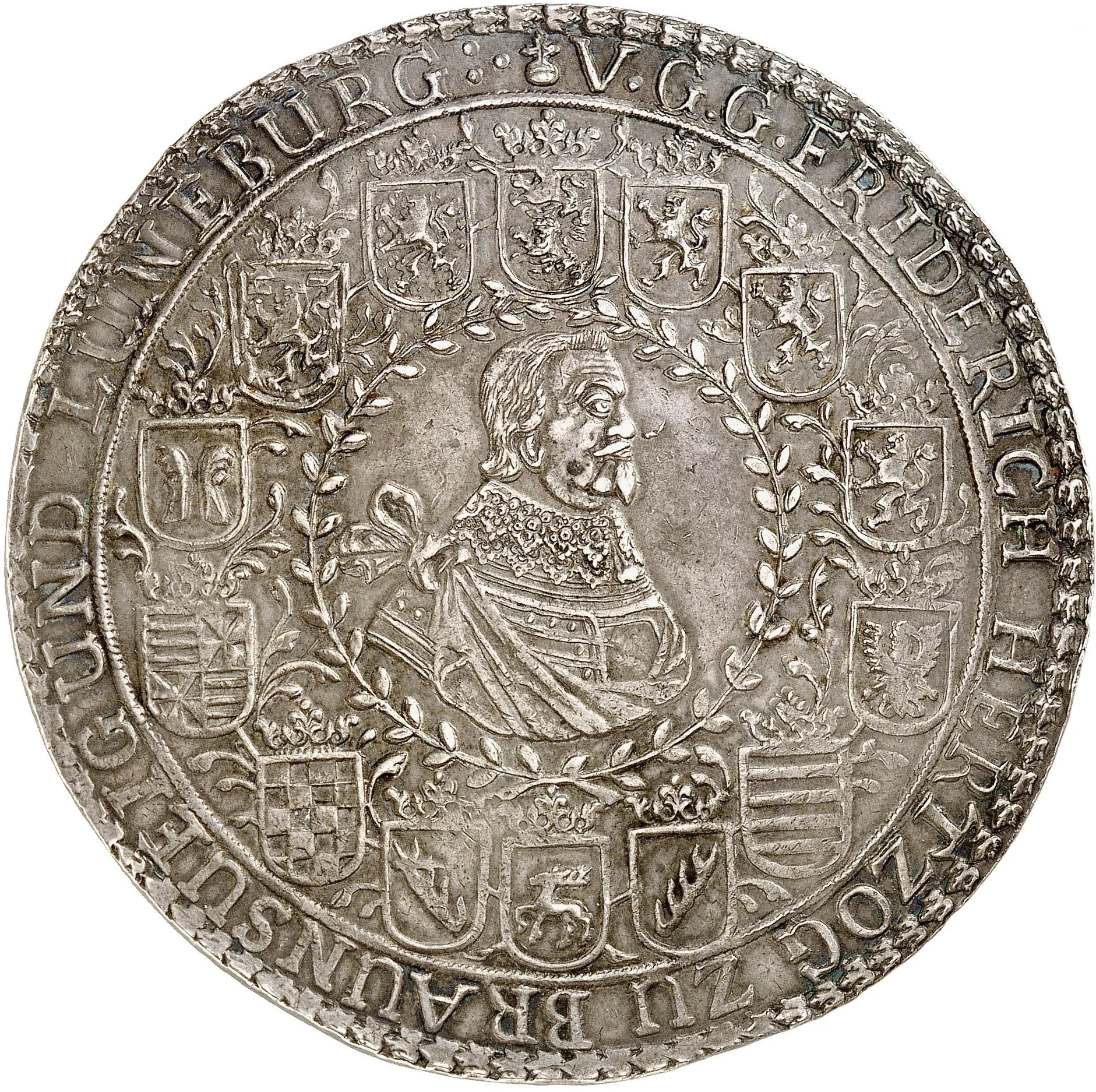
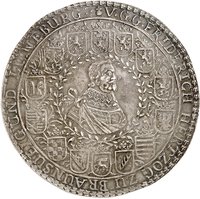
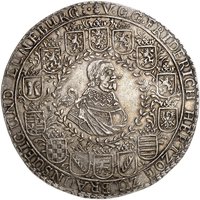
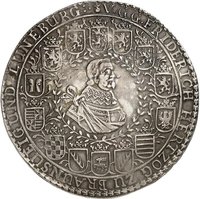
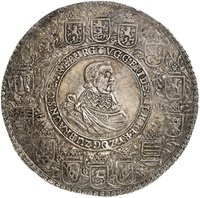
Duke Friedrich, encircled by the arms of his duchy's towns: Brunswick, Eberstein, Oberdiepholz, Lohra, Unterdiepholz, Lutterberg, Blankenburg, Klettenberg, Regenstein, Hohenstein, Bruchhausen, Hoya, Homburg, and Lüneburg.
Inscription:
V . G . G . FRIDERICH HERTZOG ZU BRAUNSUEIGUND LUNEBURG ∴
Script: Latin
Reverse
Description:
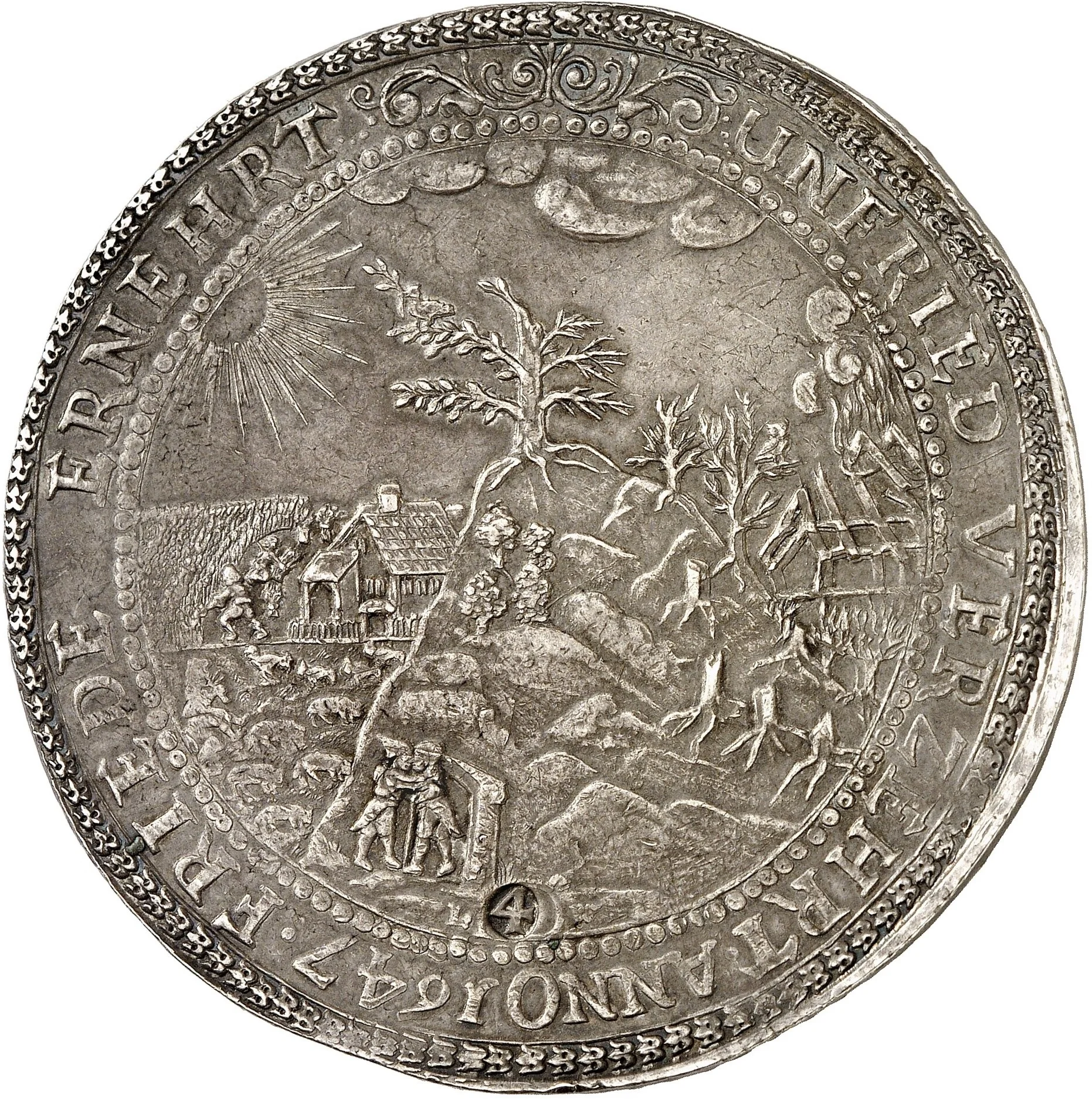
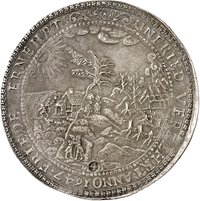
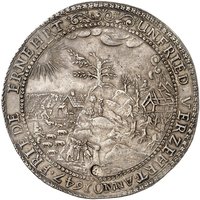
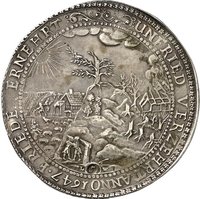
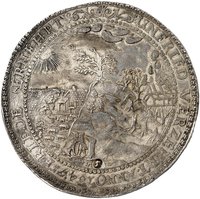
A dichotomic scene: on the right, a desolate landscape with felled trees and a burning building, watched by an owl in a withered tree. On the left, an idyllic scene of farmers, shepherds, and miners beneath a sun, overwatched by a dove with an olive branch. The weight "4" Talers is stamped at the bottom.
Inscription:
UNFRIED VERZEHRT · ANNO 1647 · FRIEDE ERNEHRT
Script: Latin
Edge
Mints
| Name | Mark |
|---|---|
| Clausthal | — |
Mintings
| Year | Mint Mark | Mintage | Quality | Collection |
|---|---|---|---|---|
| 1647 | — | — |
Historical background
In 1647, the Duchy of Brunswick-Lüneburg, specifically the sub-principality of Celle under Duke Christian Louis, was embroiled in the profound monetary chaos that plagued the Holy Roman Empire during the Thirty Years' War. The primary issue was the proliferation of debased coinage, particularly the infamous Kipper- und Wipperzeit (1618–1623), which had seen rulers and minting authorities drastically reduce the precious metal content of coins to fund the war, flooding the region with unstable and unreliable currency. Although the peak of this crisis had passed, its consequences were deeply entrenched by 1647, with multiple coin types of varying standards circulating simultaneously, undermining public trust and hampering commerce on the eve of the war's conclusion.
The monetary landscape was further fragmented by the political structure of the Guelph territories. While Celle was a significant power, it was one of several Brunswick-Lüneburg principalities, each with varying degrees of minting rights and monetary policies. This lack of a unified currency across the region created complex exchange problems for trade between cities like Celle, Hanover, and Wolfenbüttel. Furthermore, the circulation of high-quality foreign coins, such as Reichsthalers from the Habsburg mints or Dutch coins, alongside debased local issues, led to Gresham's Law in practice: "bad money drives out good," as people hoarded full-value coins and passed on the inferior ones.
The situation in 1647 existed in a tense interim between war and peace, as negotiations for the Peace of Westphalia were underway. Duke Christian Louis, like his contemporaries, faced the urgent but difficult task of monetary stabilization. Any meaningful reform, however, required coordination with other imperial estates and awaited the overarching legal and political framework that the impending peace treaty would provide. Thus, the currency situation remained in a state of exhausted disorder, a direct legacy of wartime finance awaiting the stability necessary for a systematic Münzreform (coinage reform) in the postwar era.
The monetary landscape was further fragmented by the political structure of the Guelph territories. While Celle was a significant power, it was one of several Brunswick-Lüneburg principalities, each with varying degrees of minting rights and monetary policies. This lack of a unified currency across the region created complex exchange problems for trade between cities like Celle, Hanover, and Wolfenbüttel. Furthermore, the circulation of high-quality foreign coins, such as Reichsthalers from the Habsburg mints or Dutch coins, alongside debased local issues, led to Gresham's Law in practice: "bad money drives out good," as people hoarded full-value coins and passed on the inferior ones.
The situation in 1647 existed in a tense interim between war and peace, as negotiations for the Peace of Westphalia were underway. Duke Christian Louis, like his contemporaries, faced the urgent but difficult task of monetary stabilization. Any meaningful reform, however, required coordination with other imperial estates and awaited the overarching legal and political framework that the impending peace treaty would provide. Thus, the currency situation remained in a state of exhausted disorder, a direct legacy of wartime finance awaiting the stability necessary for a systematic Münzreform (coinage reform) in the postwar era.
✨ Legendary