

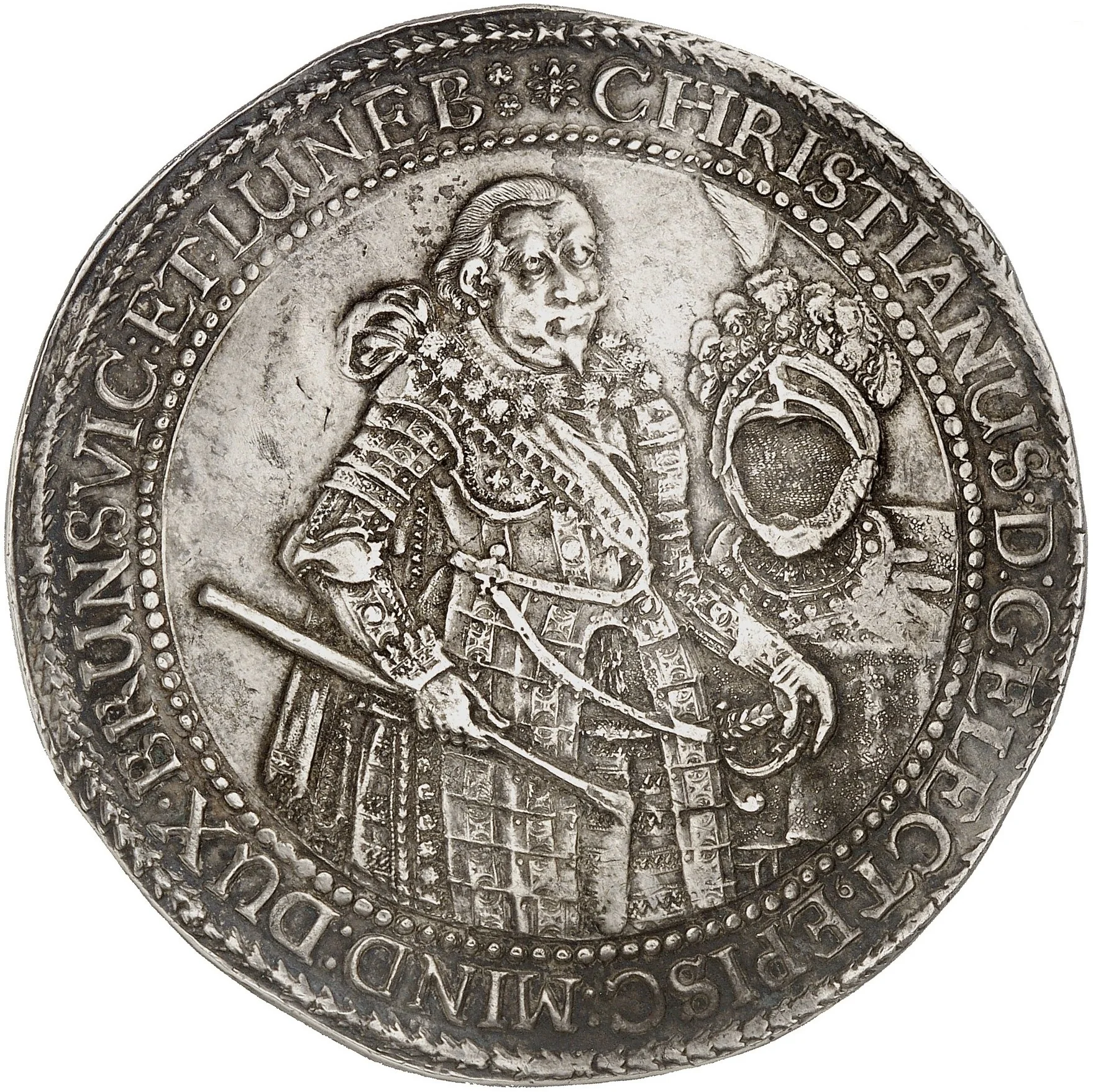
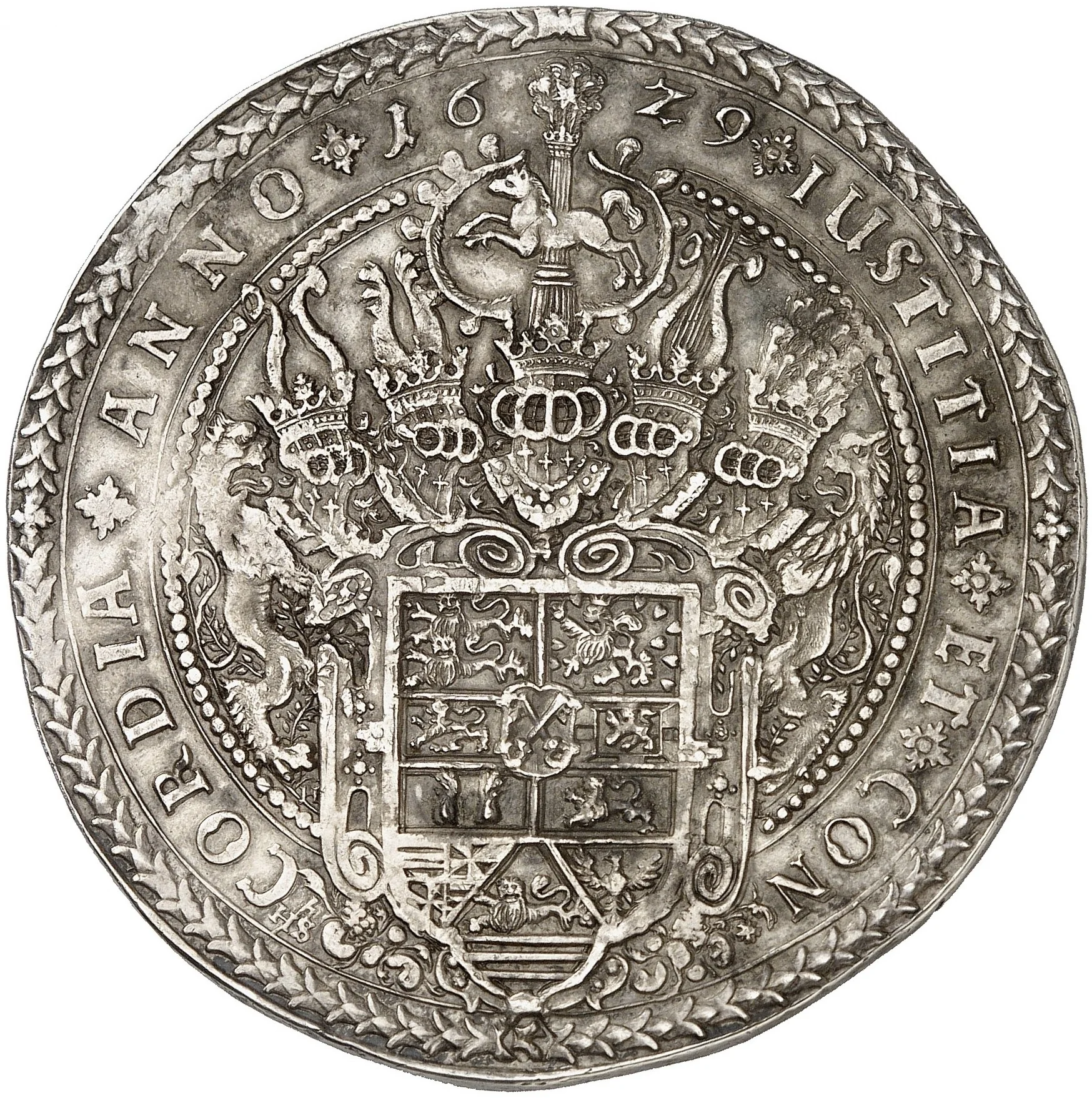
5 Thalers – Brunswick-Lüneburg-Celle
Germany
Context
Year: 1629
Country: Germany 
Issuer: Brunswick-Lüneburg-Celle
Ruler: Christian
Currency:
Demonetized: Yes
Material
References
KM: #Click to copy to clipboard94
Numista: #295413
Value
Bullion value: $416.99
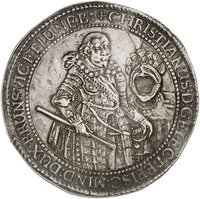
Obverse
Inscription:
CHRISTIANUS D G ELECT EPISC MIND DUX BRUNSVIC ET LUNEB
Script: Latin
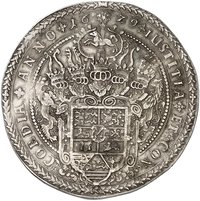
Reverse
Inscription:
IUSTITIA ET CON CORDIA ANNO 16 Z9
Script: Latin
Edge
Mints
| Name | Mark |
|---|---|
| Clausthal | — |
Mintings
| Year | Mint Mark | Mintage | Quality | Collection |
|---|---|---|---|---|
| 1629 | — | — |
Historical background
In 1629, the Duchy of Brunswick-Lüneburg, specifically the Principality of Celle under Duke Christian the Elder, was entangled in the profound monetary chaos of the Thirty Years' War. The region was suffering from the direct and indirect consequences of the conflict, including military occupation, forced contributions to warring armies, and severe economic disruption. This environment created intense pressure on the ducal finances, leading to a chronic shortage of precious metals needed for minting full-value coinage.
The currency situation was characterized by rampant debasement and the circulation of vastly inferior coins. Like many German states, Celle resorted to issuing Kippermünzen (debased coinage) to generate immediate revenue, often reducing the silver content in coins like Groschen and Thalers to a fraction of their nominal value. This practice, combined with the influx of even more debased coins from neighboring territories, led to a classic "bad money drives out good" scenario, where older, full-value coins were hoarded or melted down, leaving only poor-quality money in everyday circulation.
This monetary instability caused severe price inflation, crippled trade, and inflicted hardship on the population, who saw the real value of their savings and wages evaporate. While attempts were made through imperial ordinances and regional treaties to stabilize the currency, the relentless financial demands of the war made effective reform impossible in 1629. The situation in Celle was thus a microcosm of the wider economic collapse affecting the Holy Roman Empire, where fiscal survival consistently undermined monetary integrity.
The currency situation was characterized by rampant debasement and the circulation of vastly inferior coins. Like many German states, Celle resorted to issuing Kippermünzen (debased coinage) to generate immediate revenue, often reducing the silver content in coins like Groschen and Thalers to a fraction of their nominal value. This practice, combined with the influx of even more debased coins from neighboring territories, led to a classic "bad money drives out good" scenario, where older, full-value coins were hoarded or melted down, leaving only poor-quality money in everyday circulation.
This monetary instability caused severe price inflation, crippled trade, and inflicted hardship on the population, who saw the real value of their savings and wages evaporate. While attempts were made through imperial ordinances and regional treaties to stabilize the currency, the relentless financial demands of the war made effective reform impossible in 1629. The situation in Celle was thus a microcosm of the wider economic collapse affecting the Holy Roman Empire, where fiscal survival consistently undermined monetary integrity.
✨ Legendary