

8 Thalers – Brunswick-Lüneburg-Celle
Germany
Context
Year: 1654
Country: Germany 
Issuer: Brunswick-Lüneburg-Celle
Ruler: Christian Louis
Currency:
Demonetized: Yes
Material
References
KM: #Click to copy to clipboard234
Numista: #295250
Value
Bullion value: $667.19
Obverse
Description:
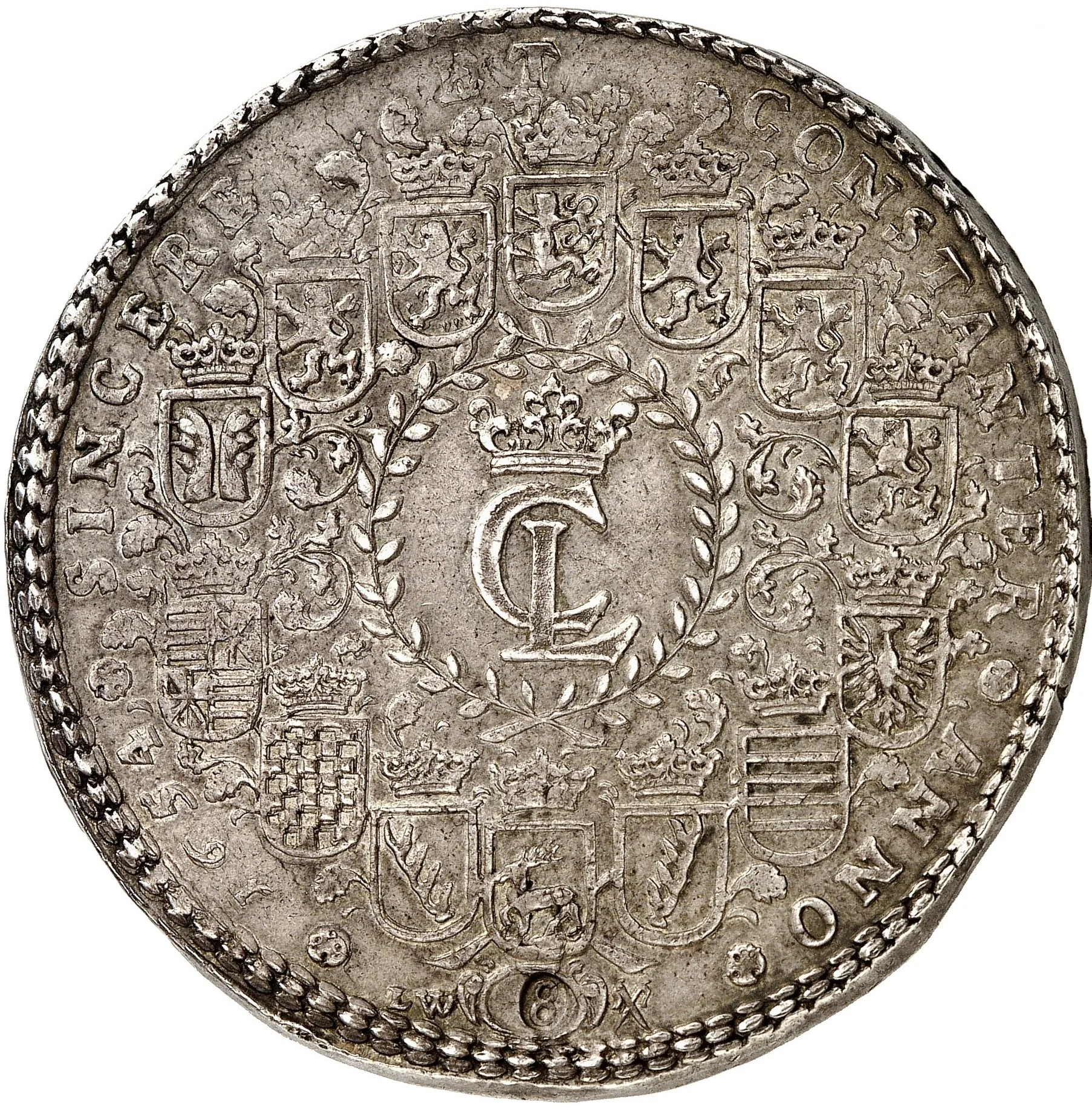
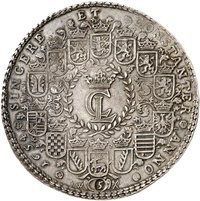
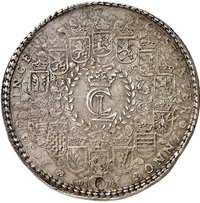
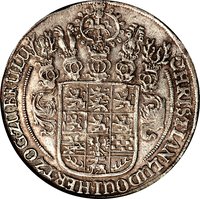
Crowned CL monogram in wreath, fourteen small shields, date in legend, punched 8.
Inscription:
SINCERE ET CONSTANTER ANNO 1654
CL
8
CL
8
Reverse
Description:
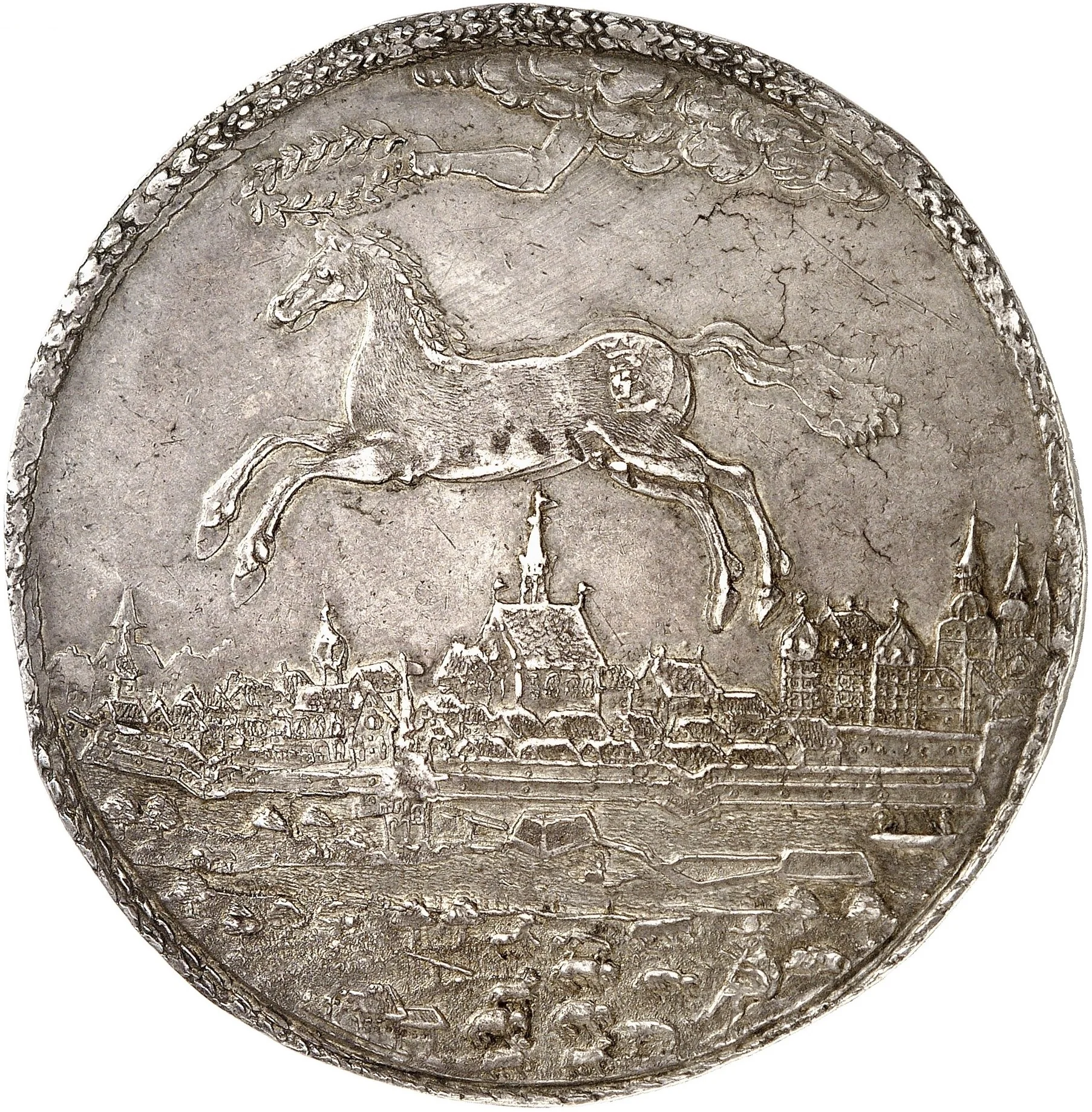
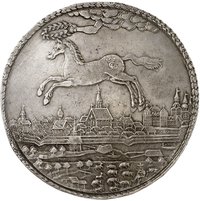
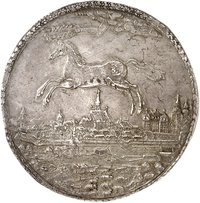
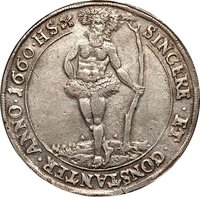
A horse leaps left over Celle, looking up at a wreath held by cloud-borne arms.
Inscription:
CL
Edge
Mints
| Name | Mark |
|---|---|
| Clausthal | — |
Mintings
| Year | Mint Mark | Mintage | Quality | Collection |
|---|---|---|---|---|
| 1654 | — | — |
Historical background
In 1654, the Duchy of Brunswick-Lüneburg, specifically the sub-principality of Celle under Duke Christian Louis, was entangled in the complex and debilitating monetary fragmentation of the Holy Roman Empire. The region operated within a patchwork of multiple, often competing, currency systems. While the Reichsthaler served as a common accounting unit, actual circulation was dominated by a plethora of physical coins minted not only by Celle itself but also by neighboring Brunswick principalities, imperial cities, and foreign states. This proliferation led to chronic instability, as the intrinsic silver content of coins varied widely, facilitating debasement and causing frequent fluctuations in exchange rates.
The situation was exacerbated by the ongoing economic strain of the Thirty Years' War, which had ended just six years prior in 1648. The war had devastated local economies, drained silver reserves, and left many German states, including Celle, with heavy debts. In response, rulers often resorted to Kipper- und Wipperzeit practices—clipping coins or issuing debased currency—to generate short-term revenue, further eroding trust in the monetary system. For Celle, this meant daily trade was hampered by uncertainty, as merchants and subjects struggled to assess the true value of the coins in their hands, hindering economic recovery.
Consequently, Duke Christian Louis, like his contemporaries, faced intense pressure to stabilize commerce. The year 1654 falls within a period where individual territories sought regional agreements to curb the worst excesses. While a comprehensive imperial solution (the Reichsmünzordnung) remained elusive, Celle would have been engaged in ongoing negotiations with its Brunswick neighbors to standardize minting practices. The primary challenges were to assert princely control over coinage, suppress counterfeit and debased money, and establish a more reliable link between account books and physical currency to facilitate taxation and trade.
The situation was exacerbated by the ongoing economic strain of the Thirty Years' War, which had ended just six years prior in 1648. The war had devastated local economies, drained silver reserves, and left many German states, including Celle, with heavy debts. In response, rulers often resorted to Kipper- und Wipperzeit practices—clipping coins or issuing debased currency—to generate short-term revenue, further eroding trust in the monetary system. For Celle, this meant daily trade was hampered by uncertainty, as merchants and subjects struggled to assess the true value of the coins in their hands, hindering economic recovery.
Consequently, Duke Christian Louis, like his contemporaries, faced intense pressure to stabilize commerce. The year 1654 falls within a period where individual territories sought regional agreements to curb the worst excesses. While a comprehensive imperial solution (the Reichsmünzordnung) remained elusive, Celle would have been engaged in ongoing negotiations with its Brunswick neighbors to standardize minting practices. The primary challenges were to assert princely control over coinage, suppress counterfeit and debased money, and establish a more reliable link between account books and physical currency to facilitate taxation and trade.
✨ Legendary