

4 Tari – Malta
Malta
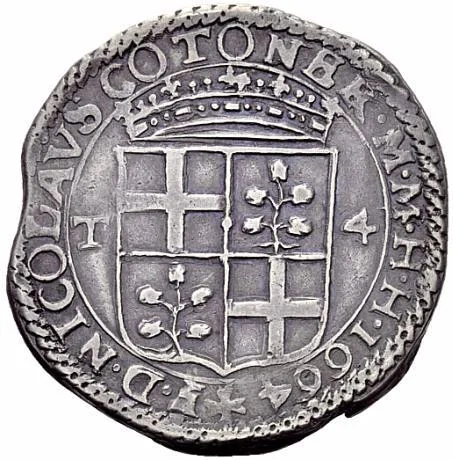
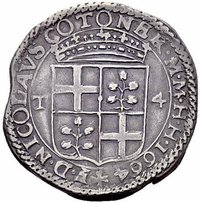
Obverse
Description:
Crowned arms of Nicolas Cotoner flank the value.
Inscription:
☩ F • D • NICOLAVS COTONER • M • M • H • H • 1664
T 4
T 4
Script: Latin
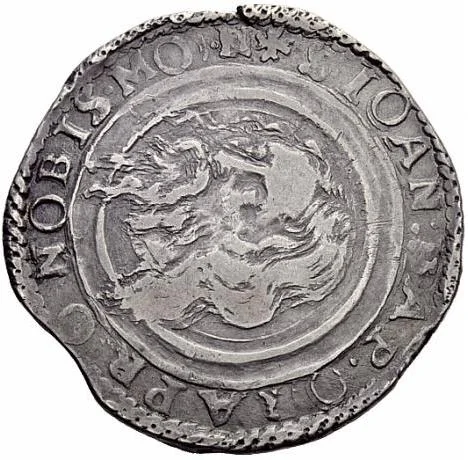
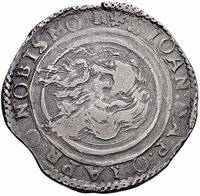
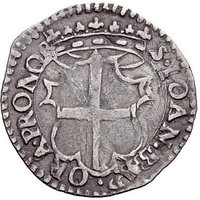
Reverse
Description:
Saint John the Baptist's severed head.
Inscription:
☩ S • IOAN • BAP • ORA • PRO NOBIS • MO • N
Script: Latin
Edge
Mintings
| Year | Mint Mark | Mintage | Quality | Collection |
|---|---|---|---|---|
| 1663 | — | — | ||
| 1664 | — | — | ||
| 1665 | — | — | ||
| 1666 | — | — | ||
| 1667 | — | — | ||
| 1668 | — | — | ||
| 1673 | — | — |
Historical background
In 1663, Malta's currency situation was complex and reflected its dual role as a strategic fortress of the Knights of Saint John (the Order of St. John) and a bustling Mediterranean trading hub. The islands operated under a bimetallic system, but it was one plagued by instability. The official currency was the scudo, a large silver coin, which was subdivided into 12 tari, each of 20 grani. However, a vast array of foreign coins circulated freely, including Spanish pieces of eight, Venetian ducats, and Ottoman sequins, their values fluctuating with trade flows and metallic content. This created constant challenges for merchants and the treasury in determining exchange rates and values.
The root of the monetary instability lay in the chronic shortage of small-denomination coinage for everyday transactions. This scarcity was exacerbated by the Knights' own minting practices. The Order's mint in Valletta primarily produced high-value gold zecchini and silver scudi for prestige, international trade, and to pay its troops and galley crews, neglecting the need for lower-value coins. Consequently, the economy relied heavily on worn and often clipped foreign copper and billon coins, like the cavallotto, leading to inflation and public frustration with debased small change.
Recognising the crisis, Grand Master Nicolas Cotoner, who ascended in 1663, made monetary reform a priority. His reign saw significant, though initially problematic, efforts to stabilise the currency. Shortly after 1663, he introduced a new, fixed tariff list to standardise the values of the multitude of foreign coins. More tangibly, he oversaw a substantial minting programme, issuing new copper grani and tari coins bearing his emblem. These provided much-needed small change, but their introduction also required the controversial demonetisation and recall of the old debased coins, a process that caused short-term dislocation but aimed for long-term stability in Malta's commercial life.
The root of the monetary instability lay in the chronic shortage of small-denomination coinage for everyday transactions. This scarcity was exacerbated by the Knights' own minting practices. The Order's mint in Valletta primarily produced high-value gold zecchini and silver scudi for prestige, international trade, and to pay its troops and galley crews, neglecting the need for lower-value coins. Consequently, the economy relied heavily on worn and often clipped foreign copper and billon coins, like the cavallotto, leading to inflation and public frustration with debased small change.
Recognising the crisis, Grand Master Nicolas Cotoner, who ascended in 1663, made monetary reform a priority. His reign saw significant, though initially problematic, efforts to stabilise the currency. Shortly after 1663, he introduced a new, fixed tariff list to standardise the values of the multitude of foreign coins. More tangibly, he oversaw a substantial minting programme, issuing new copper grani and tari coins bearing his emblem. These provided much-needed small change, but their introduction also required the controversial demonetisation and recall of the old debased coins, a process that caused short-term dislocation but aimed for long-term stability in Malta's commercial life.
✨ Legendary