

1 piastra – Papal States
Add to wishlist
Vatican City
Context
Years: 1671–1672
Country: Vatican City
Issuer: Papal States
Ruler: Clement X
Currency:
(1534—1835)
Demonetized: Yes
Material
References
KM: #
Numista: #29325
Value
Bullion value: $73.41
Obverse
Description:
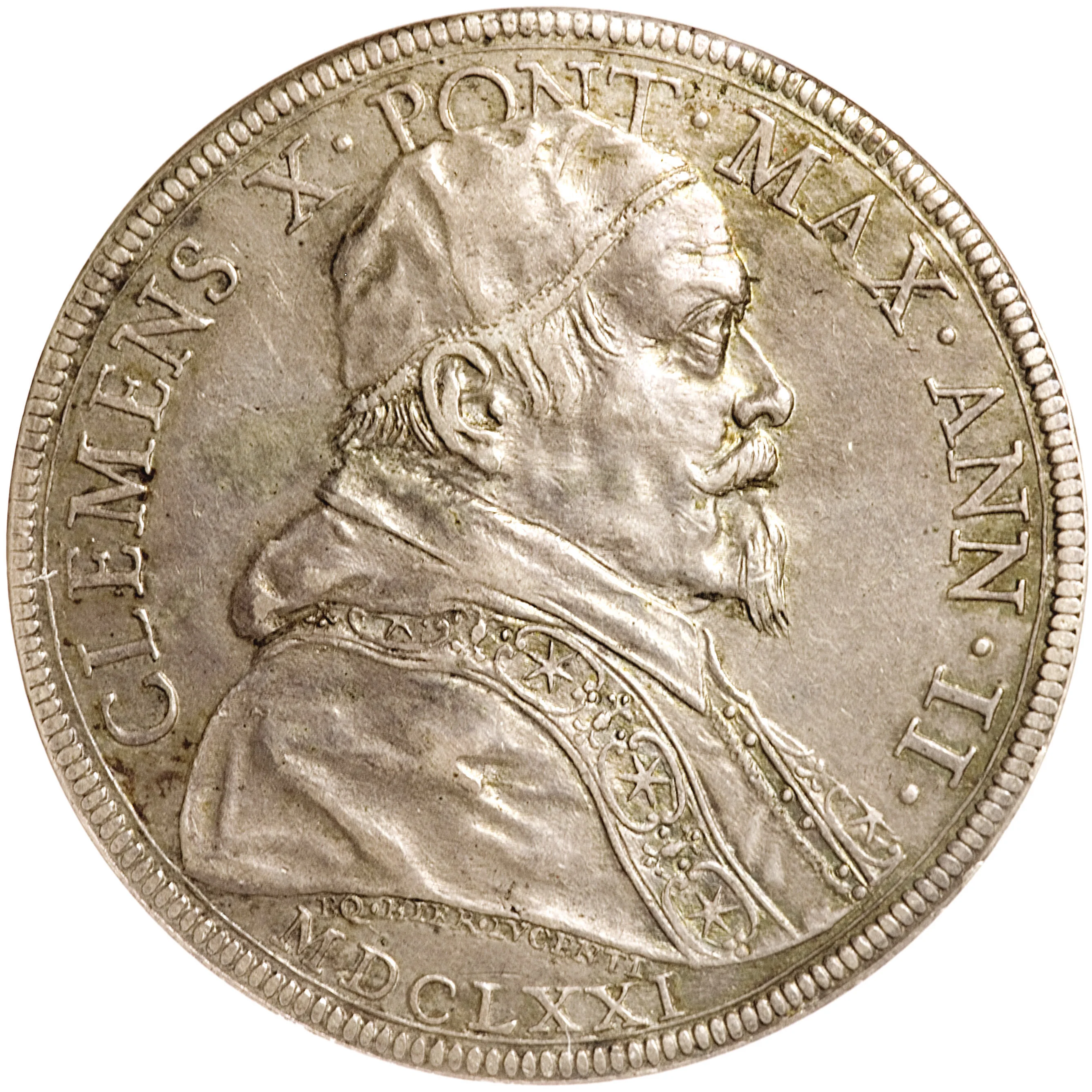
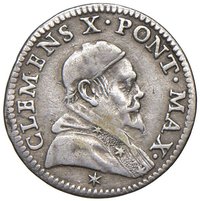
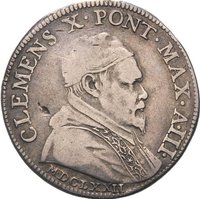
Clement X bust right, date in Roman numerals.
Inscription:
CLEMENS X٠PONT٠MAX٠ANN٠II٠
EQ٠HIER٠LVCENTI
MDCLXXI
EQ٠HIER٠LVCENTI
MDCLXXI
Script: Latin
Engraver: Girolamo Lucenti
Reverse
Description:
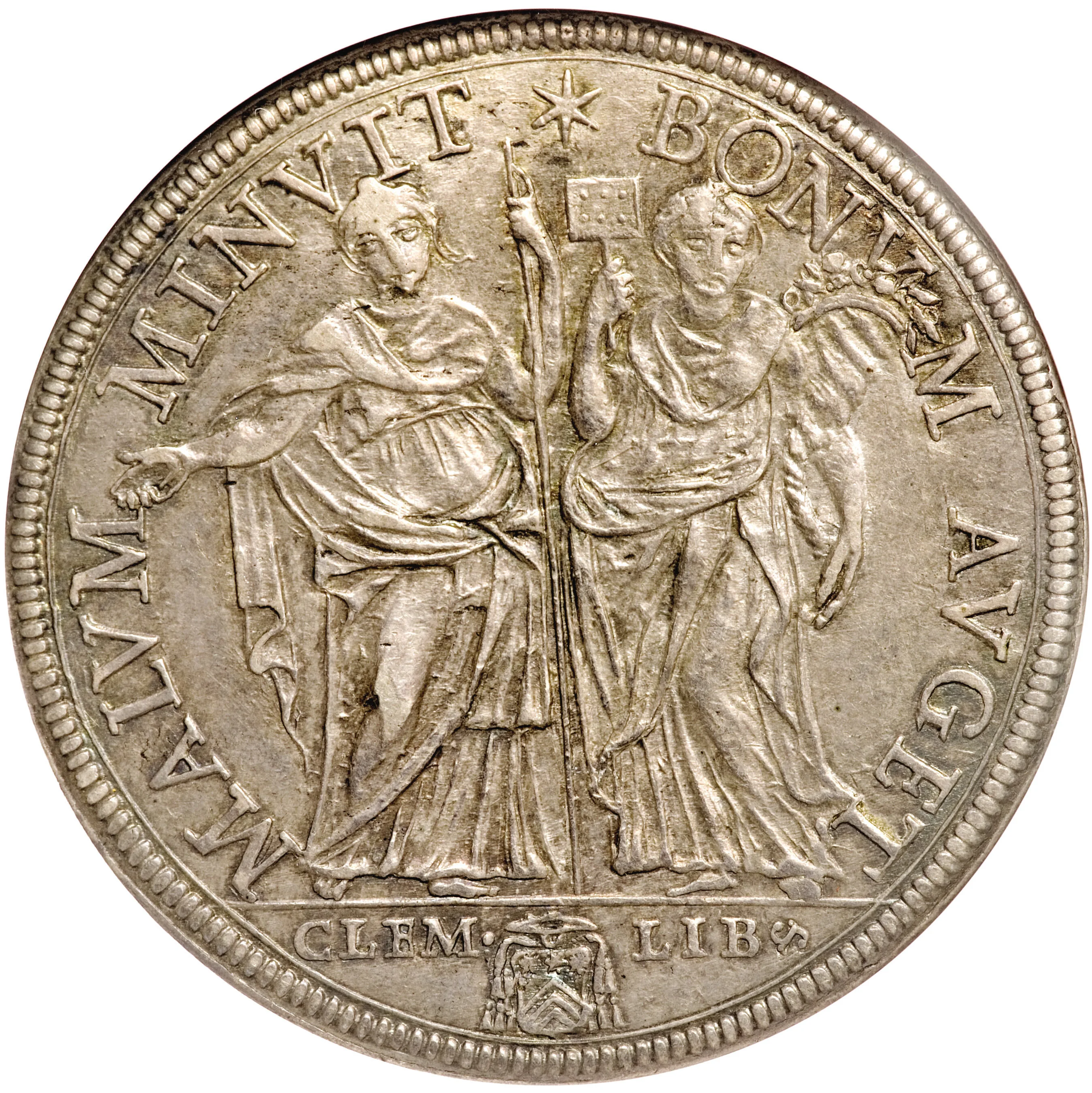
Clemency and Abundance standing. Mintmaster Monsignor Giovanni Battista Costaguti's arm below.
Inscription:
MANVM MINVIT * BONVM AVGET
CLEM٠ LIB
CLEM٠ LIB
Script: Latin
Engraver: Girolamo Lucenti
Edge
Mints
| Name | Mark |
|---|---|
| Rome | — |
Mintings
| Year | Mint Mark | Mintage | Quality | Collection |
|---|---|---|---|---|
| 1671 | — | — | ||
| 1672 | — | — |
Historical background
In 1671, the Papal States operated under a complex and often unstable monetary system, typical of early modern Italian polities. The primary unit was the papal scudo, a silver coin, which existed alongside a plethora of subsidiary coins in copper and billon (debased silver). Crucially, the system was bimetallic, with a gold scudo d'oro in circulation, but the fixed exchange rate between gold and silver set by the papal mint frequently failed to reflect market values. This discrepancy encouraged the export and hoarding of undervalued coins, leading to recurrent shortages of good specie and a circulation flooded with inferior, often foreign, coinage.
The monetary policy was directly controlled by the Camera Apostolica (the papal treasury) under Pope Clement X (Emilio Altieri), who had ascended to the throne that same year. The financial administration was notoriously inefficient and burdened by debt, often resorting to short-term fiscal measures like currency debasement to raise funds for the state's needs and lavish artistic patronage. Furthermore, the Papal States' numerous legations and provinces, such as Bologna and Romagna, sometimes issued their own local coins, adding another layer of complexity and fragmentation to the monetary landscape.
Consequently, everyday commerce in 1671 was hampered by uncertainty and confusion. Merchants and citizens had to constantly evaluate the intrinsic metal value and legitimacy of numerous coins, leading to widespread discounting and disputes. This environment of monetary instability reflected the broader administrative challenges of the Papal States, where temporal governance struggled to manage economic realities, ultimately hindering trade and contributing to a gradual economic decline relative to more financially coherent European powers.
The monetary policy was directly controlled by the Camera Apostolica (the papal treasury) under Pope Clement X (Emilio Altieri), who had ascended to the throne that same year. The financial administration was notoriously inefficient and burdened by debt, often resorting to short-term fiscal measures like currency debasement to raise funds for the state's needs and lavish artistic patronage. Furthermore, the Papal States' numerous legations and provinces, such as Bologna and Romagna, sometimes issued their own local coins, adding another layer of complexity and fragmentation to the monetary landscape.
Consequently, everyday commerce in 1671 was hampered by uncertainty and confusion. Merchants and citizens had to constantly evaluate the intrinsic metal value and legitimacy of numerous coins, leading to widespread discounting and disputes. This environment of monetary instability reflected the broader administrative challenges of the Papal States, where temporal governance struggled to manage economic realities, ultimately hindering trade and contributing to a gradual economic decline relative to more financially coherent European powers.
✨ Legendary