

1 Zecchino – Papal States
Vatican City
Context
Years: 1776–1784
Country: Vatican City 
Issuer: Papal States
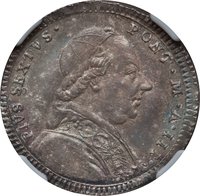
Ruler: Pius VI
Currency:
(1534—1835)
Demonetized: Yes
Material
References
KM: #Click to copy to clipboard1046
Numista: #29323
Value
Bullion value: $570.45
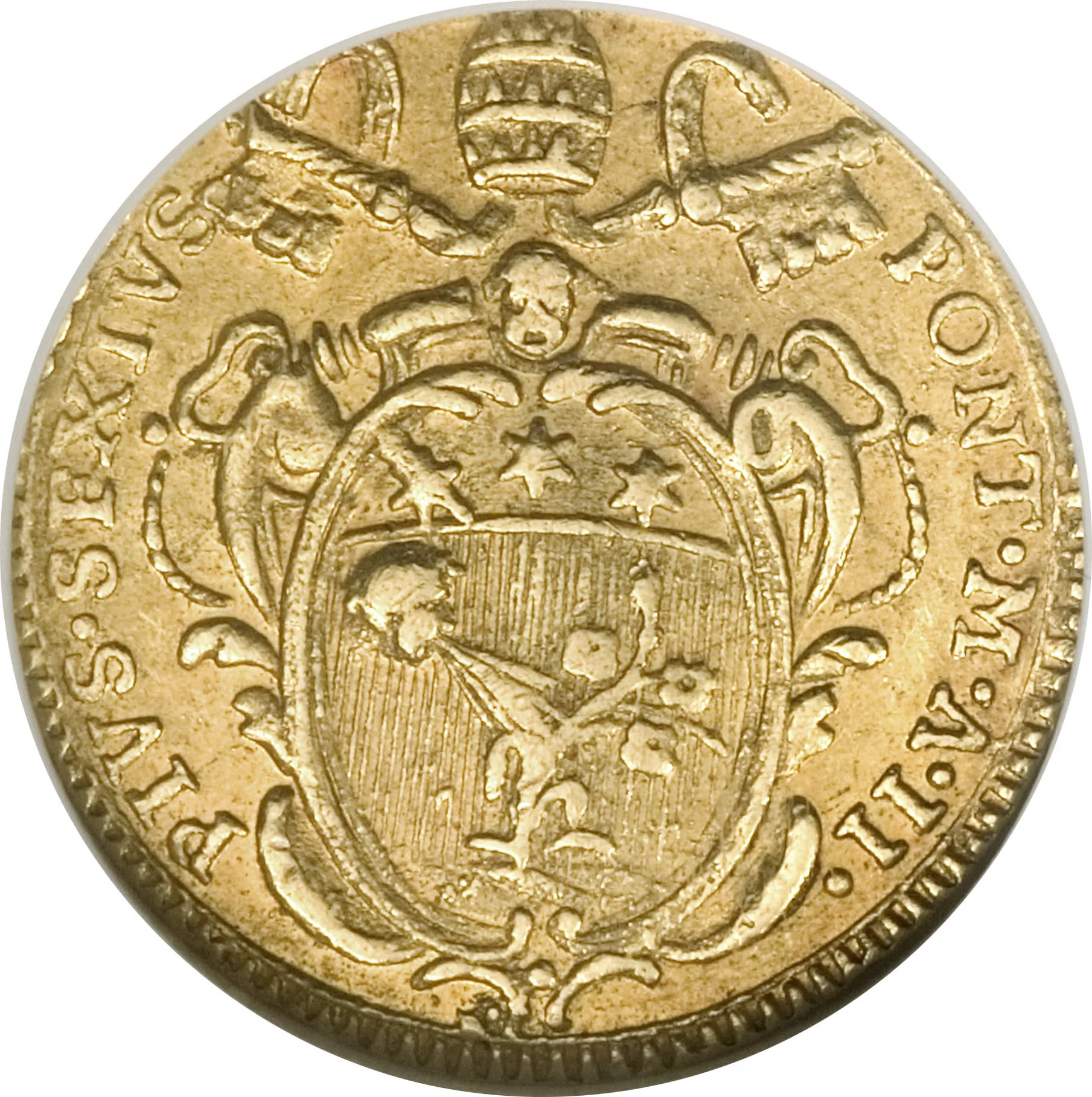
Obverse
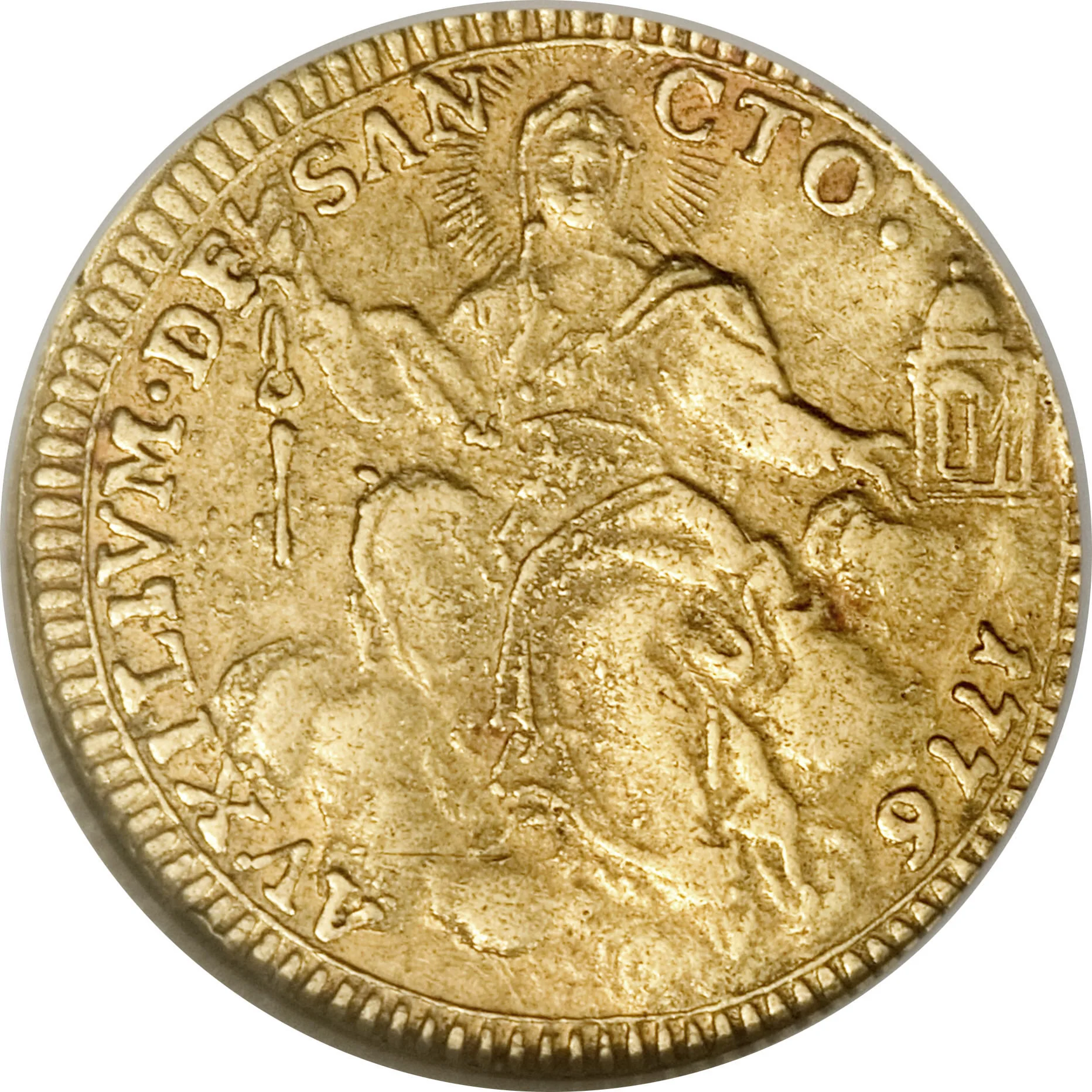
Reverse
Description:
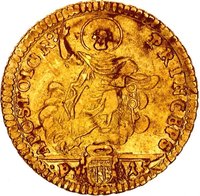
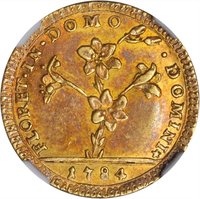
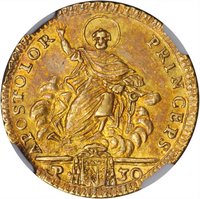
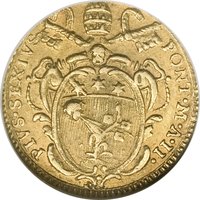
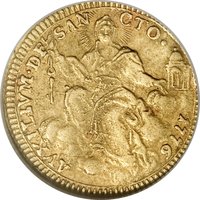
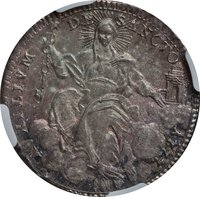
A female figure symbolizing the Holy Roman Church, seated on clouds with a radiant head, holds a pair of keys. A temple is on the right.
Inscription:
AVXILIVM DE SANCTO 1776
Script: Latin
Edge
Stringed
Mints
| Name | Mark |
|---|---|
| Rome | — |
Mintings
| Year | Mint Mark | Mintage | Quality | Collection |
|---|---|---|---|---|
| 1776 | — | — | ||
| 1783 | — | — | ||
| 1784 | — | — |
Historical background
In 1776, the Papal States, a collection of territories in central Italy under the sovereign rule of the Pope, operated with a complex and often chaotic monetary system. It was not a unified currency zone. Instead, a multitude of different coins circulated simultaneously, including local issues from major cities like Bologna and Ravenna, older papal coinage from various pontificates, and a significant influx of foreign specie. Spanish "pieces of eight," French écus, and other European coins were commonly used in commerce, reflecting the region's integration into broader Mediterranean and continental trade networks. This proliferation created constant challenges for merchants and the populace, who had to navigate fluctuating exchange rates and the varying intrinsic values of silver and gold content between coins.
The central papal authority in Rome issued its own currency, most notably the scudo (divided into 100 baiochi), which served as the theoretical standard. However, the state's fiscal health was precarious. Decades of deficit spending, often to fund monumental architectural projects and sustain a lavish court, had depleted reserves. Consequently, the actual value of papal coinage was frequently undermined by debasement—reducing the precious metal content to stretch supplies—and by the issuance of low-value copper moneta piccola. This practice eroded public trust and often led to price inflation, as goods were priced higher when paid for in the weaker official coinage.
Furthermore, the monetary situation was symptomatic of the broader administrative and economic stagnation within the Papal States. The government, a conservative theocracy, was resistant to the Enlightenment-era reforms sweeping through other European states. There was no central bank, and financial policy was often short-sighted, aimed at solving immediate fiscal crunches rather than achieving long-term stability. Therefore, in 1776, while the Papal States were not in a state of monetary collapse, its system was fragmented, unstable, and a significant hindrance to economic modernization, operating more on medieval precedents than contemporary financial principles.
The central papal authority in Rome issued its own currency, most notably the scudo (divided into 100 baiochi), which served as the theoretical standard. However, the state's fiscal health was precarious. Decades of deficit spending, often to fund monumental architectural projects and sustain a lavish court, had depleted reserves. Consequently, the actual value of papal coinage was frequently undermined by debasement—reducing the precious metal content to stretch supplies—and by the issuance of low-value copper moneta piccola. This practice eroded public trust and often led to price inflation, as goods were priced higher when paid for in the weaker official coinage.
Furthermore, the monetary situation was symptomatic of the broader administrative and economic stagnation within the Papal States. The government, a conservative theocracy, was resistant to the Enlightenment-era reforms sweeping through other European states. There was no central bank, and financial policy was often short-sighted, aimed at solving immediate fiscal crunches rather than achieving long-term stability. Therefore, in 1776, while the Papal States were not in a state of monetary collapse, its system was fragmented, unstable, and a significant hindrance to economic modernization, operating more on medieval precedents than contemporary financial principles.
✨ Legendary