

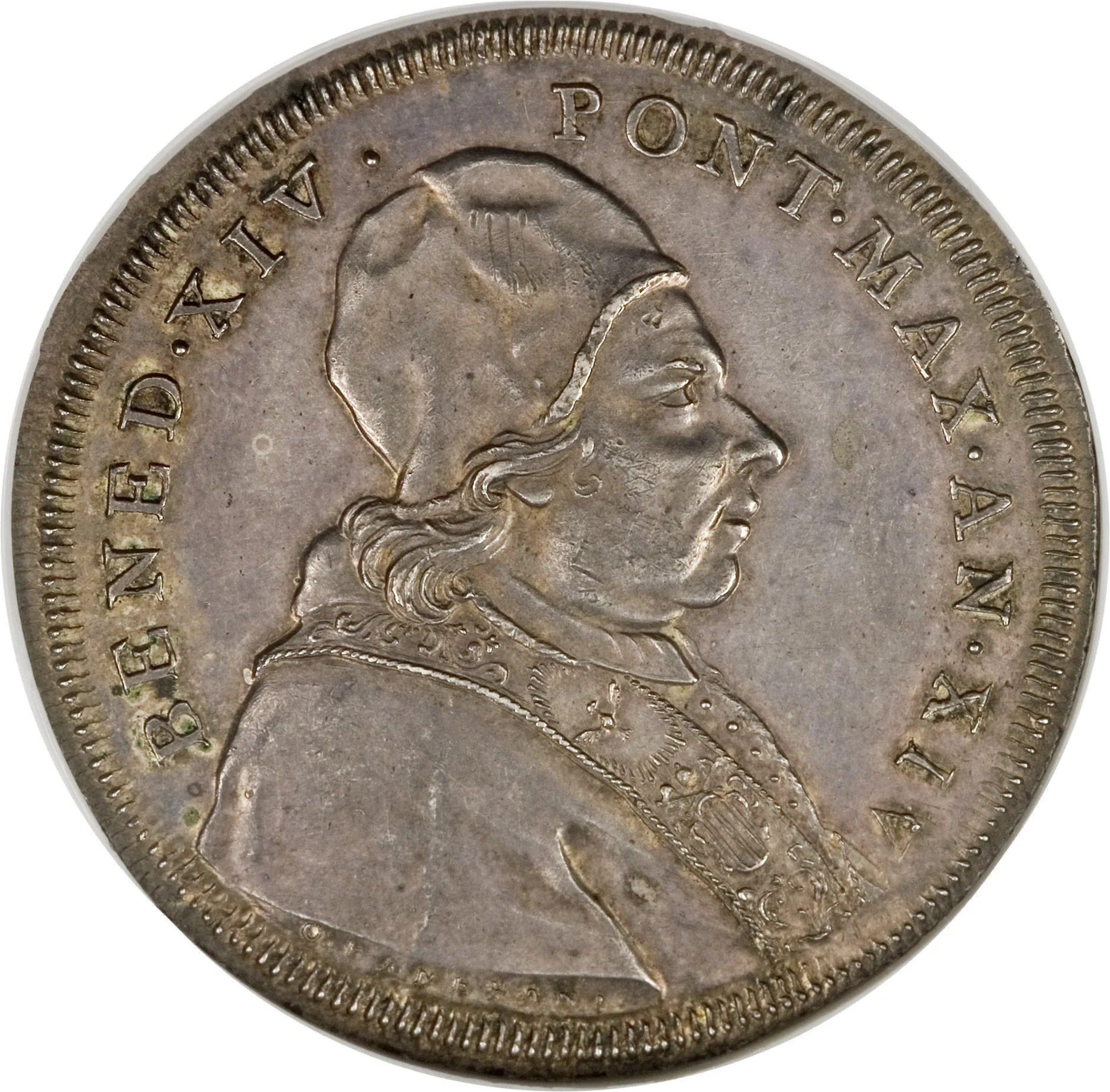
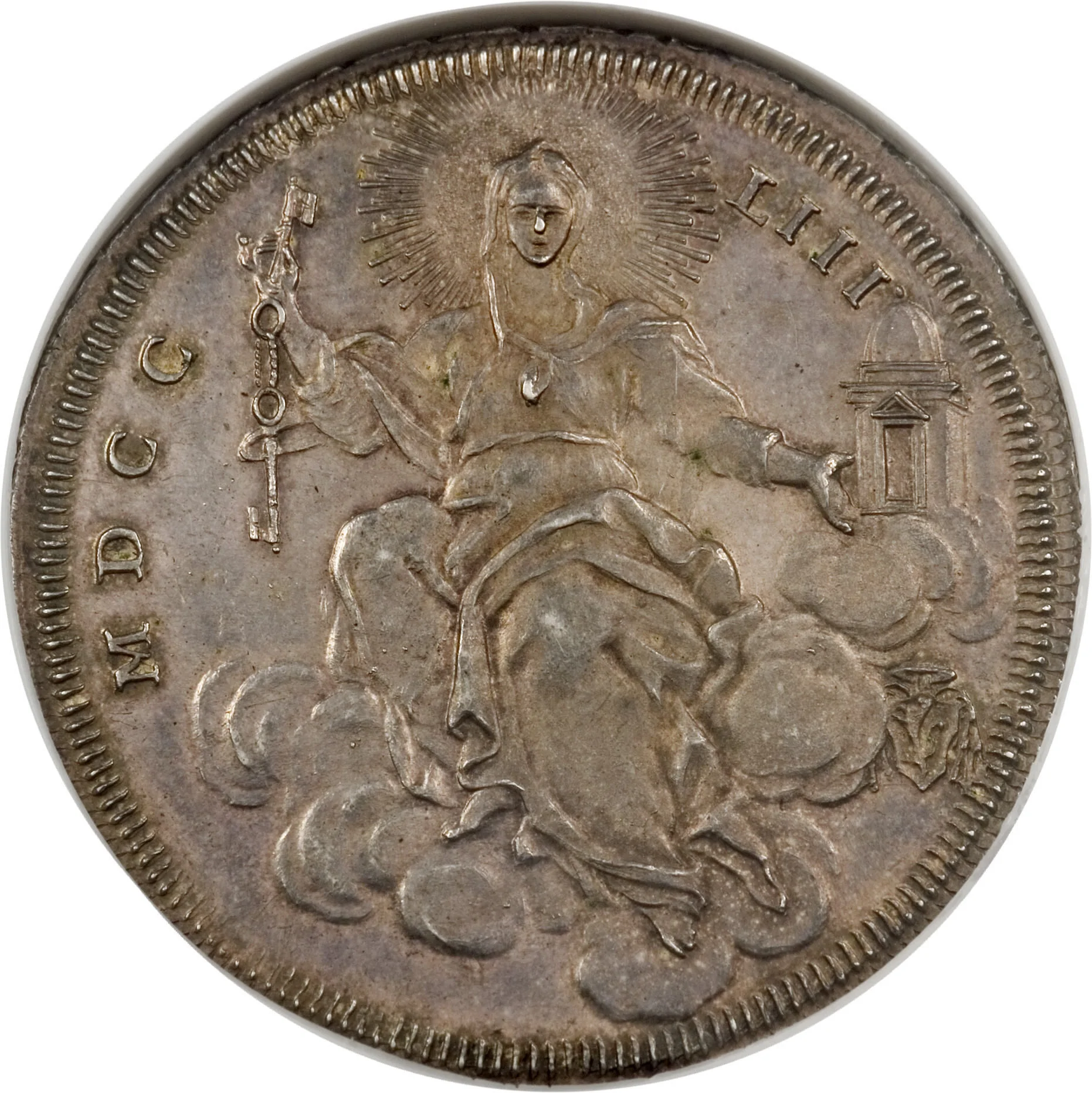
1 scudo – Papal States
Add to wishlist
Vatican City
Context
Years: 1753–1754
Country: Vatican City
Issuer: Papal States
Ruler: Benedict XIV
Currency:
(1534—1835)
Demonetized: Yes
Material
References
KM: #
Numista: #29322
Value
Bullion value: $60.41
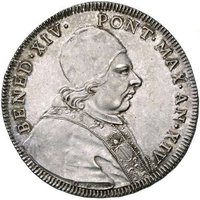
Obverse
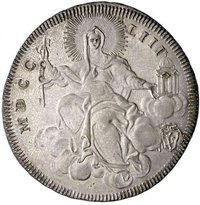
Reverse
Edge
Mintings
| Year | Mint Mark | Mintage | Quality | Collection |
|---|---|---|---|---|
| 1753 | — | — | ||
| 1754 | — | — |
Historical background
In 1753, the Papal States, a collection of territories in central Italy under the sovereign rule of the Pope, operated within a complex and fragmented monetary system. The situation was characterized by a duality between high-value gold and silver coinage issued directly by the papal mint and a chaotic array of low-value copper and billon (debased silver) coins circulating at the regional and local levels. While the papal scudo (in both gold and silver forms) served as the official standard for larger transactions and state finance, daily commerce for most citizens was conducted in a bewildering variety of baiocchi, quattrini, and giuli, whose values and metal content could vary significantly between cities like Rome, Bologna, and Ancona.
This monetary fragmentation was a direct result of the Papal States' administrative structure, where various cities and legations retained certain historic rights to issue their own fractional coinage. Furthermore, the financial demands of the papal court and frequent budgetary shortfalls often led the government to manipulate the currency. A common practice was the periodic recall and re-minting of copper coinage, where old coins were called in and reissued with a higher face value but the same or lower metal content—a form of seigniorage that generated immediate revenue for the treasury but fueled inflation and public distrust.
Consequently, the year 1753 fell within a period of chronic monetary instability and localized inflation, particularly affecting the poor who relied on copper currency. Prices for basic goods were unstable, and exchange between different coin types was a daily nuisance. While Pope Benedict XIV (1740-1758) was known for his efforts at administrative reform, comprehensive monetary unification remained elusive. The system in place in 1753 was therefore one of entrenched complexity, serving the fiscal needs of the state at the expense of economic clarity and stability for its subjects.
This monetary fragmentation was a direct result of the Papal States' administrative structure, where various cities and legations retained certain historic rights to issue their own fractional coinage. Furthermore, the financial demands of the papal court and frequent budgetary shortfalls often led the government to manipulate the currency. A common practice was the periodic recall and re-minting of copper coinage, where old coins were called in and reissued with a higher face value but the same or lower metal content—a form of seigniorage that generated immediate revenue for the treasury but fueled inflation and public distrust.
Consequently, the year 1753 fell within a period of chronic monetary instability and localized inflation, particularly affecting the poor who relied on copper currency. Prices for basic goods were unstable, and exchange between different coin types was a daily nuisance. While Pope Benedict XIV (1740-1758) was known for his efforts at administrative reform, comprehensive monetary unification remained elusive. The system in place in 1753 was therefore one of entrenched complexity, serving the fiscal needs of the state at the expense of economic clarity and stability for its subjects.
✨ Legendary