

1 Piastra – Papal States
Vatican City
Context
Years: 1634–1643
Year: 1643
Country: Vatican City 
Issuer: Papal States
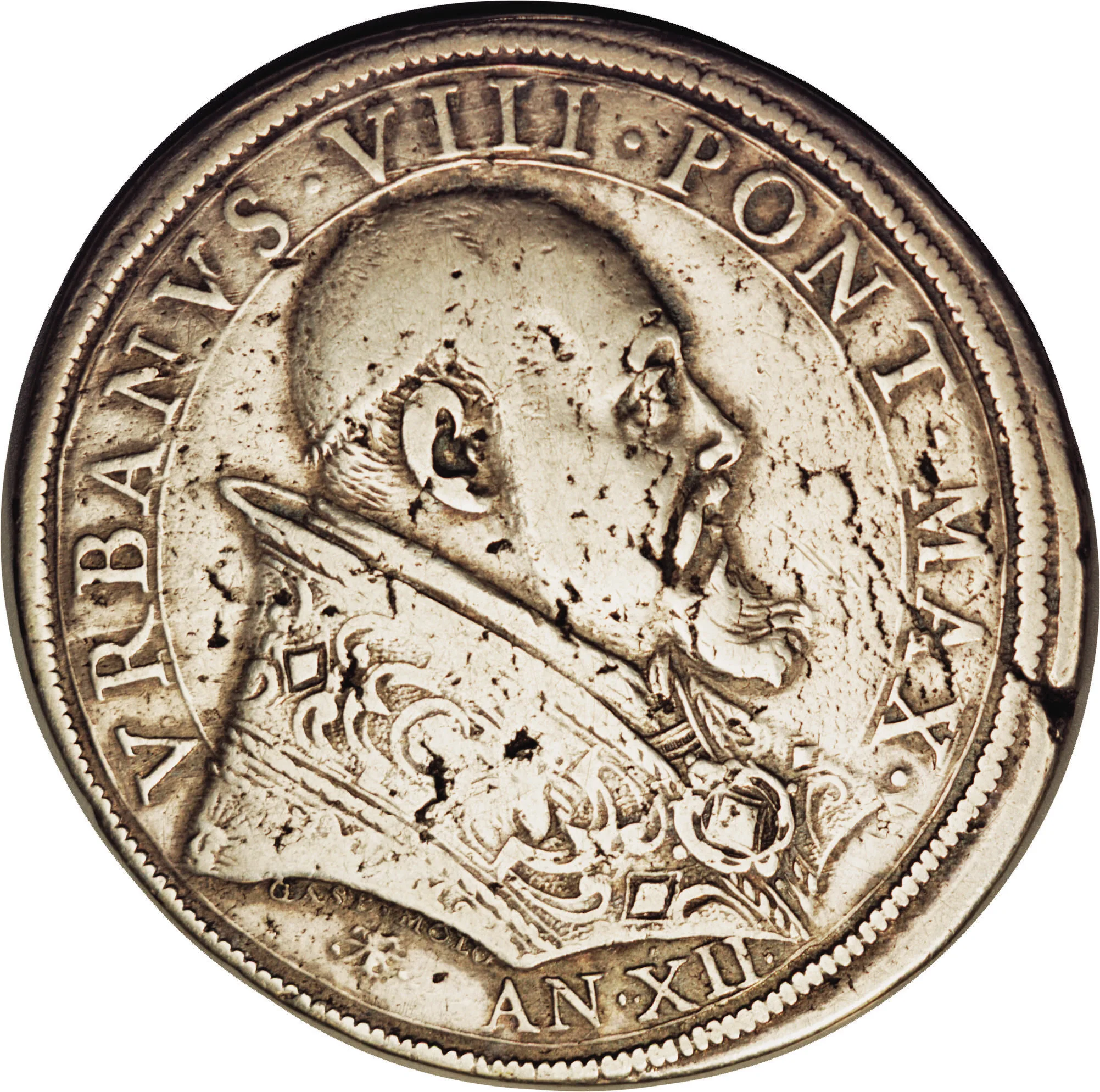
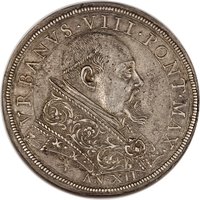
Ruler: Urban VIII
Currency:
(1534—1835)
Demonetized: Yes
Material
Diameter: 42 mm
Weight: 31.68 g
Silver weight: 29.05 g
Shape: Round
Composition: 91.7% Silver
Standard: Silver ounce
Magnetic: No
Alignment: Coin alignment
flip
References
KM: #Click to copy to clipboard184
Numista: #29282
Value
Bullion value: $84.43
Obverse
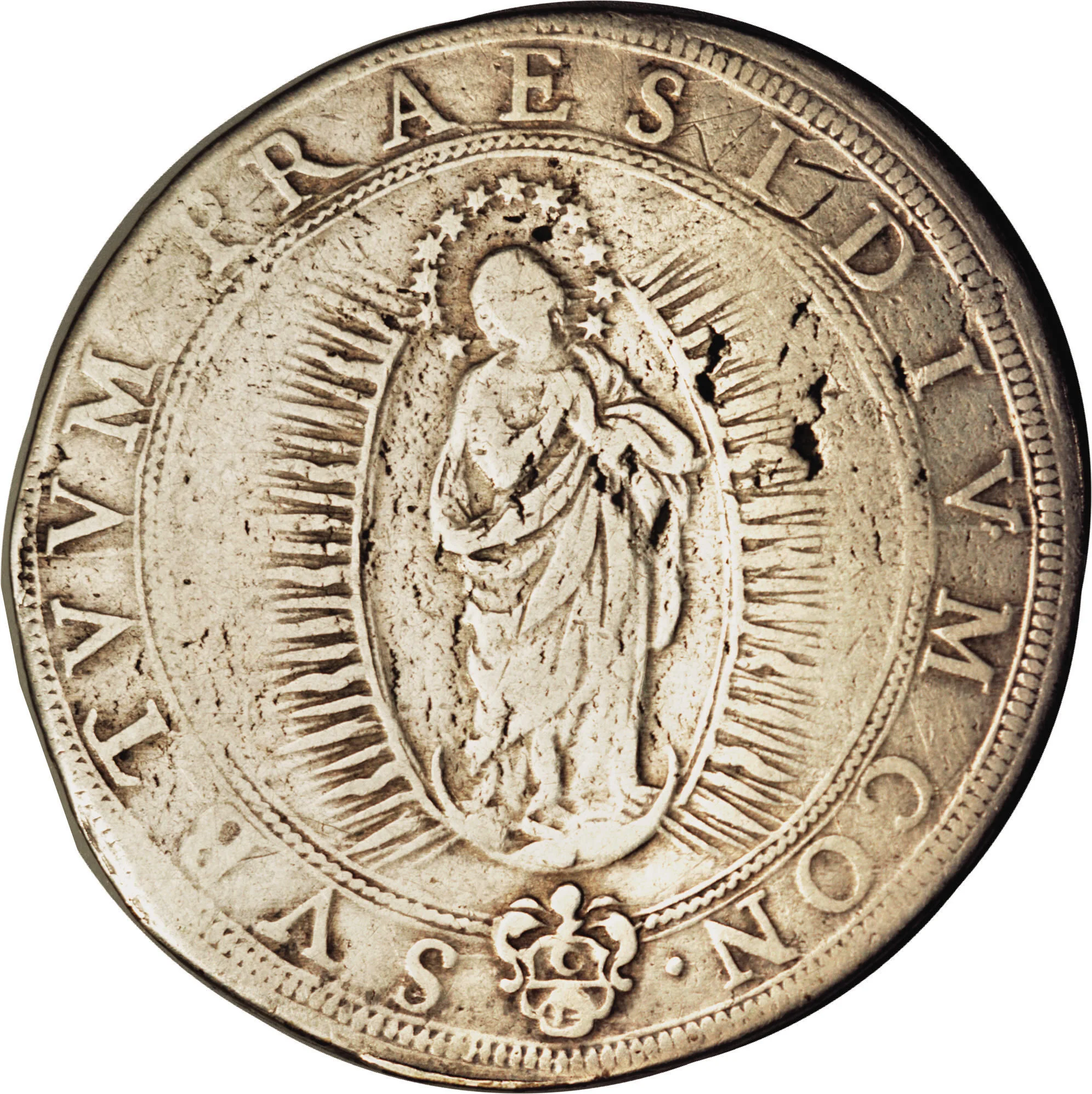
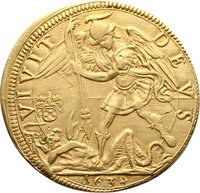
Reverse
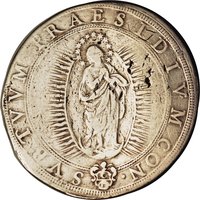
Description:
Virgin Mary standing on a crescent moon, radiant.
Inscription:
SVBTVVM PRAESIDIVM CON·
Script: Latin
Edge
Mints
| Name | Mark |
|---|---|
| Rome | — |
Mintings
| Year | Mint Mark | Mintage | Quality | Collection |
|---|---|---|---|---|
| 1634 | — | — | ||
| 1643 | — | — |
Historical background
In 1634, the Papal States, under Pope Urban VIII, operated within a complex and strained monetary system typical of early modern Italian states. The currency was based on a bimetallic standard of gold and silver, with the primary silver coin being the papal giulio (or "papal lira") and the gold scudo d'oro serving as the higher-value unit. However, the system was not uniform; alongside these official issues, a plethora of foreign coins—especially Spanish silver reales and gold escudos from Spain, and currencies from other Italian states like Tuscany and Venice—circulated freely due to extensive trade. This created a constant challenge of exchange rates and valuation.
The period was marked by significant fiscal pressure, largely driven by Urban VIII's expensive policies, including military campaigns in the War of Castro (against the Farnese family) and his ambitious artistic and architectural patronage, which culminated in projects like the fortification of Castel Sant'Angelo and the lavish adornment of St. Peter's. To finance these endeavors, the Papal Treasury increasingly resorted to debasement—reducing the precious metal content in coins while maintaining their face value. This practice, though providing short-term revenue, led to inflation, a loss of public confidence in the currency, and complicated commerce as merchants grew wary of the actual intrinsic value of papal coinage.
Consequently, the monetary situation in 1634 was one of underlying instability. While daily transactions continued using a mix of coins, the state's fiscal mismanagement was eroding the integrity of its currency. The reliance on foreign specie and the gradual debasement of domestic issues reflected the broader financial strains of the papacy, caught between its spiritual prestige and the costly secular realities of maintaining political and military power in Central Italy. This environment set the stage for further economic difficulties that would persist throughout the 17th century.
The period was marked by significant fiscal pressure, largely driven by Urban VIII's expensive policies, including military campaigns in the War of Castro (against the Farnese family) and his ambitious artistic and architectural patronage, which culminated in projects like the fortification of Castel Sant'Angelo and the lavish adornment of St. Peter's. To finance these endeavors, the Papal Treasury increasingly resorted to debasement—reducing the precious metal content in coins while maintaining their face value. This practice, though providing short-term revenue, led to inflation, a loss of public confidence in the currency, and complicated commerce as merchants grew wary of the actual intrinsic value of papal coinage.
Consequently, the monetary situation in 1634 was one of underlying instability. While daily transactions continued using a mix of coins, the state's fiscal mismanagement was eroding the integrity of its currency. The reliance on foreign specie and the gradual debasement of domestic issues reflected the broader financial strains of the papacy, caught between its spiritual prestige and the costly secular realities of maintaining political and military power in Central Italy. This environment set the stage for further economic difficulties that would persist throughout the 17th century.
✨ Legendary