

3 Tari – Malta
Malta
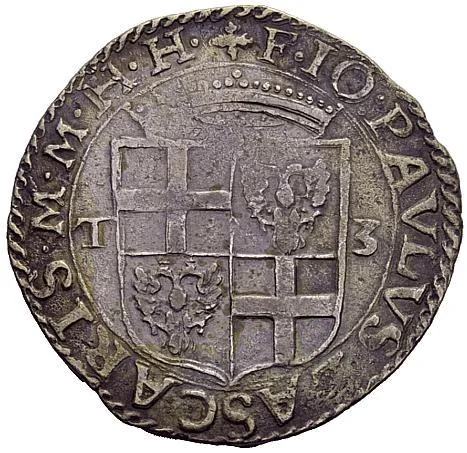
Obverse
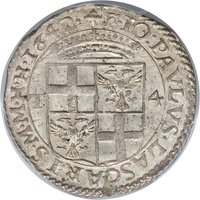
Description:
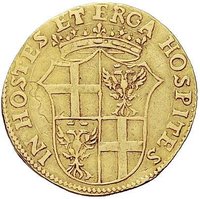
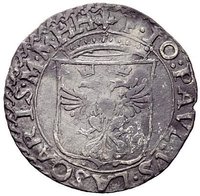
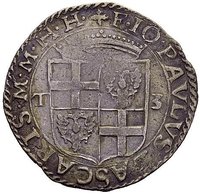
Lascaris crowned arms.
Inscription:
☩ F • IO : PAVLVS LASCARIS • M • M • H • H •
Script: Latin
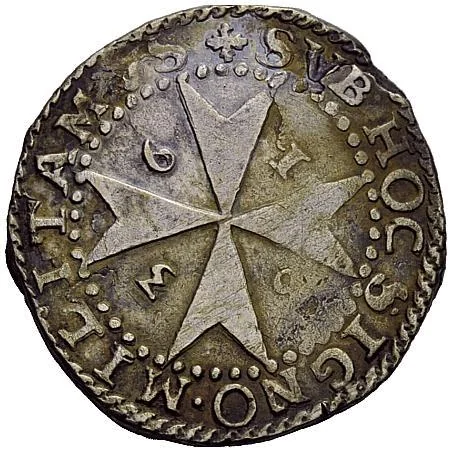
Reverse
Description:
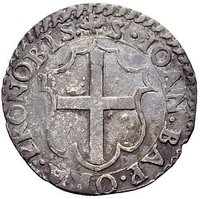
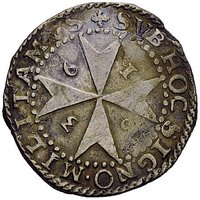
Maltese cross with date in its angles.
Inscription:
☩ SVB • HOC • SIGNO • MILITAMVS
Script: Latin
Edge
Mintings
| Year | Mint Mark | Mintage | Quality | Collection |
|---|---|---|---|---|
| 1636 | — | — | ||
| 1637 | — | — | ||
| 1638 | — | — | ||
| 1640 | — | — | ||
| 1642 | — | — | ||
| 1648 | — | — | ||
| 1649 | — | — | ||
| 1651 | — | — |
Historical background
In 1636, Malta, under the rule of the Knights Hospitaller, faced a complex and challenging currency situation typical of the early modern Mediterranean. The island's economy was not defined by a single, sovereign coinage but was instead a monetary mosaic. The official accounting system was based on the scudo, a silver coin not commonly minted locally, which was divided into 12 tari, each of 20 grani. However, a multitude of physical coins from various states circulated simultaneously, including Spanish silver reales, Venetian ducats and zecchini, and Ottoman gold sultani. This created a constant need for money-changers and complicated all commercial transactions.
The primary problem was the chronic shortage of small-denomination coinage for everyday trade. While large silver and gold coins from international commerce entered the port of Valletta, they were often hoarded, exported to pay for essential grain imports, or clipped and worn down through use. This scarcity of usable small change severely hampered local markets and the payment of wages, leading to unofficial tokens and even barter in the rural economy. Furthermore, the fluctuating values of foreign coins against the notional scudo created instability and opportunities for arbitrage at the expense of ordinary people.
Recognizing these disruptions, the Order of St. John attempted to exert control. In 1636, the island's mint was active, primarily striking copper grani and tari coins to alleviate the small change shortage. However, the intrinsic value of this copper coinage often fell below its face value, leading to periodic distrust and inflation. The Knights also periodically issued official bandi (edicts) to fix the exchange rates of the myriad foreign coins in circulation, a clear but often ineffective attempt to impose order on a inherently chaotic and globalized monetary environment. Thus, Malta's currency situation remained a persistent struggle between local needs, the realities of Mediterranean trade, and the limited regulatory power of its ruling Order.
The primary problem was the chronic shortage of small-denomination coinage for everyday trade. While large silver and gold coins from international commerce entered the port of Valletta, they were often hoarded, exported to pay for essential grain imports, or clipped and worn down through use. This scarcity of usable small change severely hampered local markets and the payment of wages, leading to unofficial tokens and even barter in the rural economy. Furthermore, the fluctuating values of foreign coins against the notional scudo created instability and opportunities for arbitrage at the expense of ordinary people.
Recognizing these disruptions, the Order of St. John attempted to exert control. In 1636, the island's mint was active, primarily striking copper grani and tari coins to alleviate the small change shortage. However, the intrinsic value of this copper coinage often fell below its face value, leading to periodic distrust and inflation. The Knights also periodically issued official bandi (edicts) to fix the exchange rates of the myriad foreign coins in circulation, a clear but often ineffective attempt to impose order on a inherently chaotic and globalized monetary environment. Thus, Malta's currency situation remained a persistent struggle between local needs, the realities of Mediterranean trade, and the limited regulatory power of its ruling Order.
✨ Legendary