

30 tari – Malta
Add to wishlist
Malta
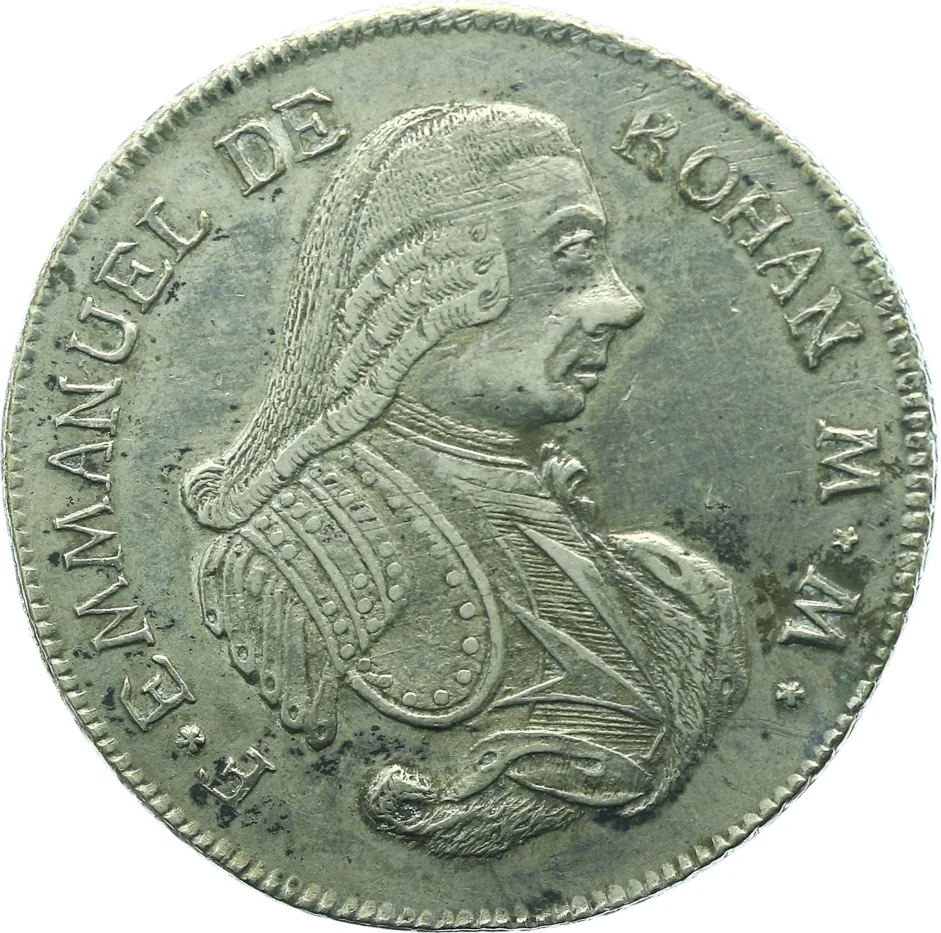
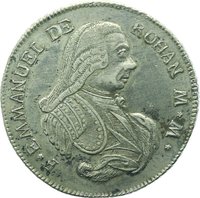
Obverse
Description:
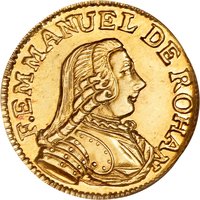
Armored bust right, cross on chest.
Inscription:
F ⭑ EMMANUEL DE ROHAN M ⭑ M ⭑
Script: Latin
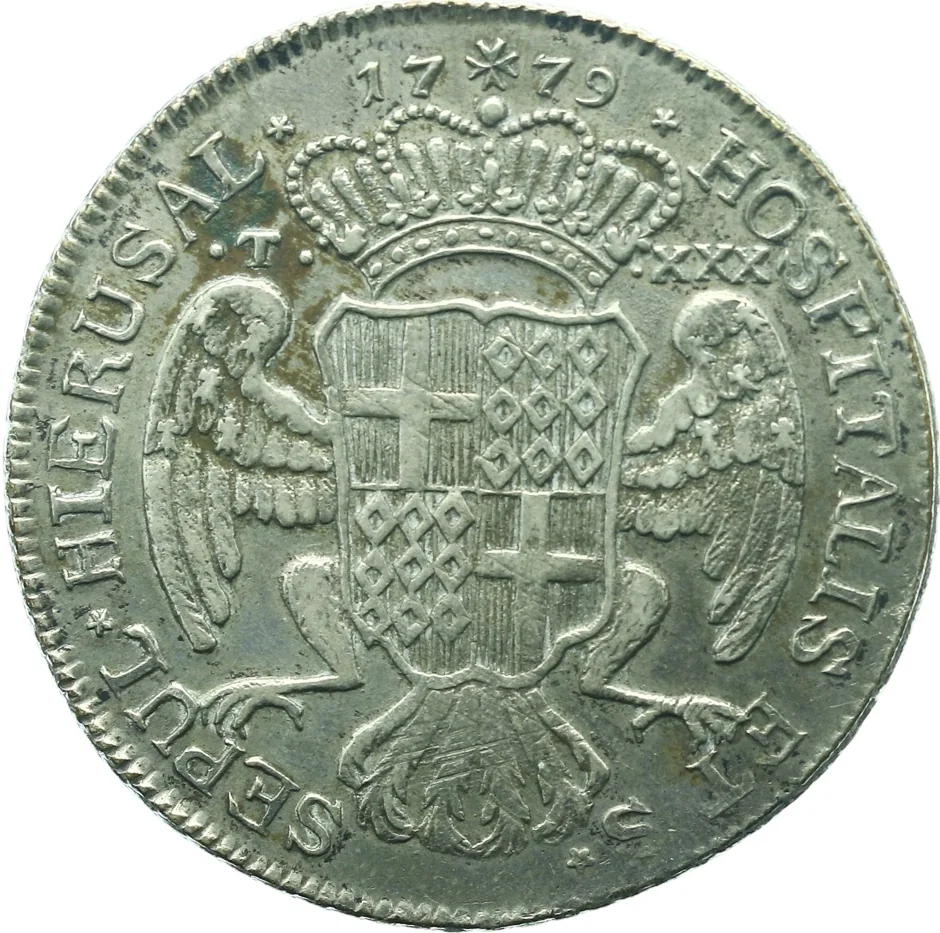
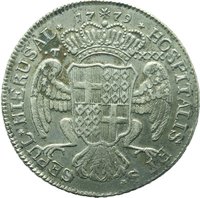
Reverse
Description:
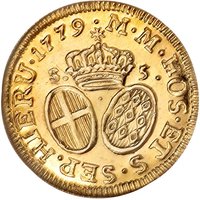
Crowned arms on eagle's breast, date above.
Inscription:
17 ☩ 79
⭑HOSPITALIS ET S ⭑ SEPUL ⭑ HIERUSAL ⭑
• T • / • XXX
⭑HOSPITALIS ET S ⭑ SEPUL ⭑ HIERUSAL ⭑
• T • / • XXX
Script: Latin
Edge
Mintings
| Year | Mint Mark | Mintage | Quality | Collection |
|---|---|---|---|---|
| 1779 | — | — |
Historical background
In 1779, Malta's currency situation was a complex tapestry reflecting its unique political and economic position. The islands were under the rule of the Sovereign Military Order of St. John, which minted its own distinctive coinage. The primary unit was the Scudo, subdivided into 12 Tari, each of 20 Grani or 240 Piccioli. These coins, often stamped with the Cross of the Order, facilitated local trade and tax payments. However, the Order's limited mintage and the demands of a bustling port meant domestic supply was often insufficient.
Crucially, Malta's role as a key trading hub in the central Mediterranean led to a significant circulation of foreign coins. Spanish pieces of eight (reales), Venetian zecchini, and Ottoman altun were all common in Valletta's markets, their value determined by weight and precious metal content. This created a de facto multi-currency system where merchants and bankers had to be adept at exchange and assay. The situation was further complicated by the frequent presence of British naval and merchant vessels, especially as the American Revolutionary War (1775-1783) raged, introducing British guineas and pounds into the mix.
The overall system was functional but inherently unstable, reliant on the fluctuating intrinsic value of diverse foreign specie. The Order attempted regulation by periodically issuing official exchange tariffs (bando), fixing rates between the local scudo and the most common foreign coins. These decrees aimed to prevent fraud and standardise transactions, but their effectiveness was limited by market forces and the sheer volume of international trade. Thus, in 1779, Malta's monetary landscape was a pragmatic, if cumbersome, blend of local authority and global commerce, characteristic of a small, strategically vital island navigating the economic currents of the late 18th century.
Crucially, Malta's role as a key trading hub in the central Mediterranean led to a significant circulation of foreign coins. Spanish pieces of eight (reales), Venetian zecchini, and Ottoman altun were all common in Valletta's markets, their value determined by weight and precious metal content. This created a de facto multi-currency system where merchants and bankers had to be adept at exchange and assay. The situation was further complicated by the frequent presence of British naval and merchant vessels, especially as the American Revolutionary War (1775-1783) raged, introducing British guineas and pounds into the mix.
The overall system was functional but inherently unstable, reliant on the fluctuating intrinsic value of diverse foreign specie. The Order attempted regulation by periodically issuing official exchange tariffs (bando), fixing rates between the local scudo and the most common foreign coins. These decrees aimed to prevent fraud and standardise transactions, but their effectiveness was limited by market forces and the sheer volume of international trade. Thus, in 1779, Malta's monetary landscape was a pragmatic, if cumbersome, blend of local authority and global commerce, characteristic of a small, strategically vital island navigating the economic currents of the late 18th century.
✨ Legendary