

½ Kronenthaler – Austrian Netherlands
Belgium
Context
Years: 1790–1792
Country: Belgium 
Issuer: Austrian Netherlands
Ruler: Leopold II
Currency:
(1744—1798)
Demonetized: Yes
Material
References
KM: #Click to copy to clipboard41
Numista: #28684
Value
Bullion value: $36.78
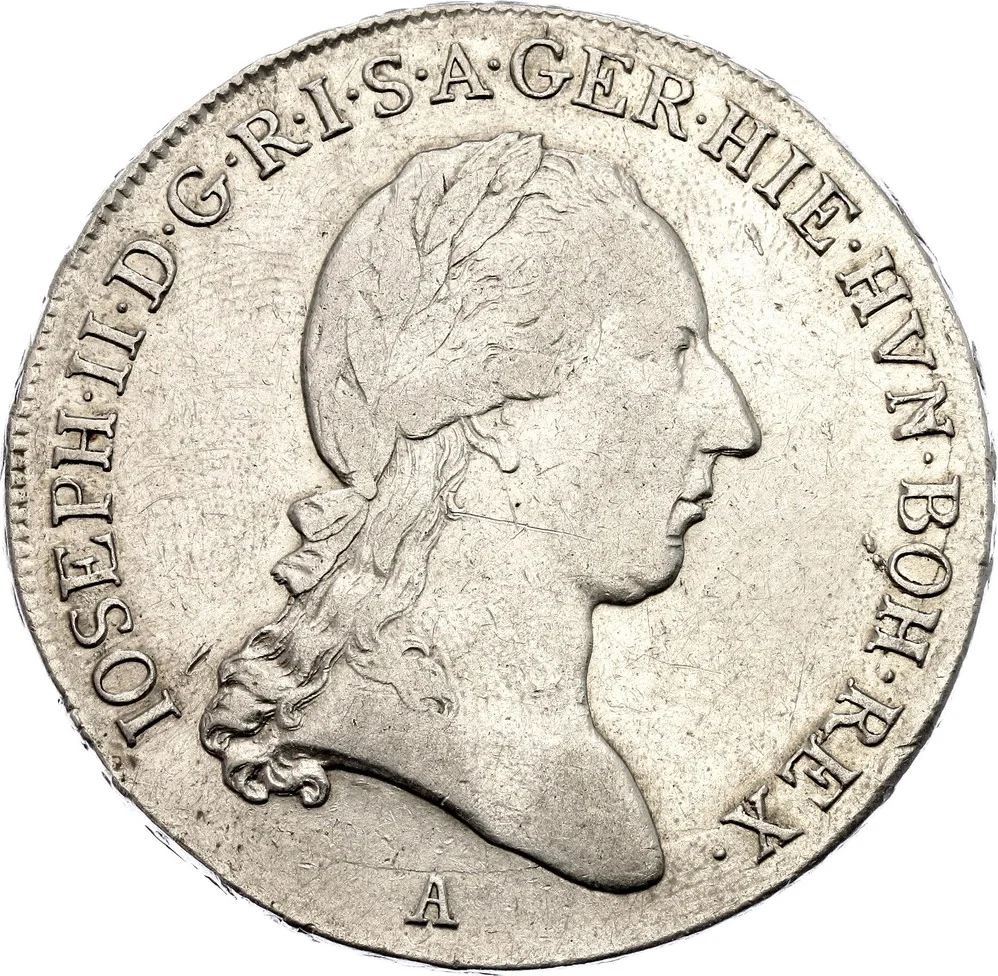
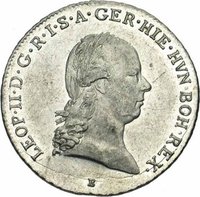
Obverse
Description:
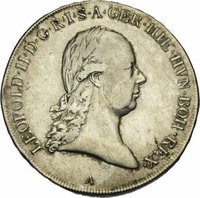
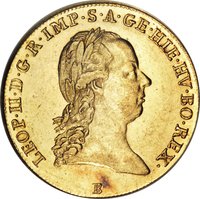
Portrait right. Legend: "Leopoldus II...Rex". Mintmark below bust.
Inscription:
LEOPOLD·II·D·G·R·I·S·A·GER·HIE·HVN·BOH·REX·
H
H
Script: Latin
Engraver: Théodore Van Berckel
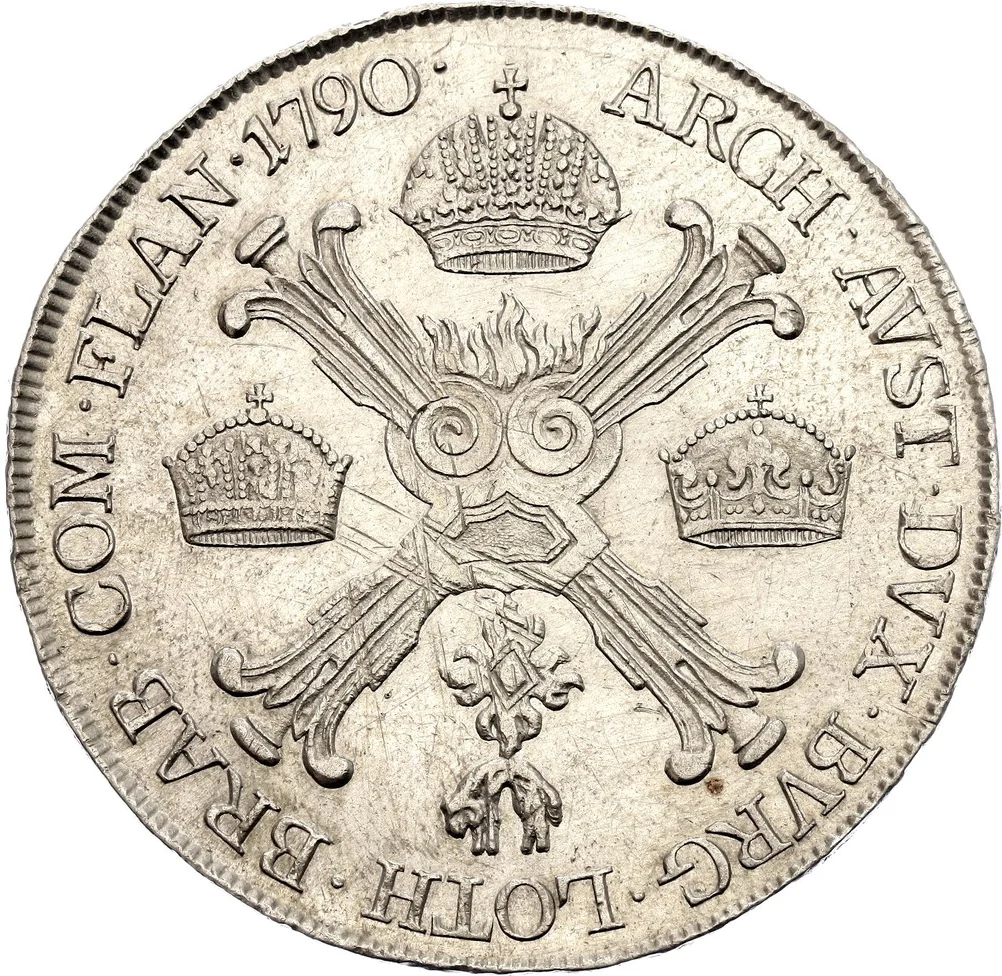
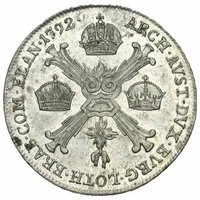
Reverse
Description:
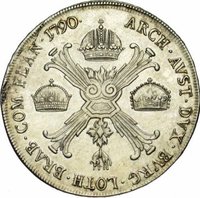
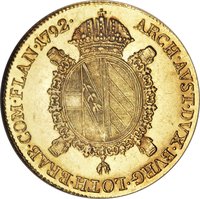
Burgundian cross with three crowns, bearing the Order of the Golden Fleece. Legend: "Archidux Austriae Dux Burgundiae Lotharingiae Brabantiae Comes Flandriae".
Inscription:
ARCH·AVST·DVX·BVRG·LOTH·BRAB·COM·FLAN·
1791·
1791·
Script: Latin
Engraver: Théodore Van Berckel
Edge
Dotted line
Legend:
PIETATE ET CONCORDIA
Mints
| Name | Mark |
|---|---|
| Münze Österreich | A |
| Günzburg | H |
| Milan | M |
Historical background
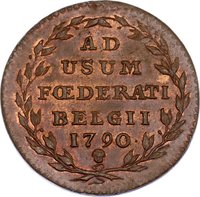
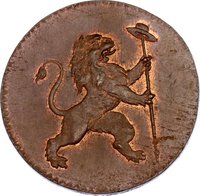
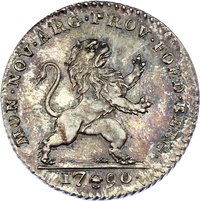
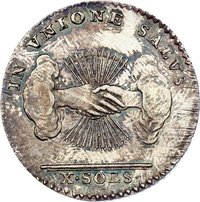
In 1790, the currency situation in the Austrian Netherlands (approximately modern-day Belgium) was a complex and destabilizing factor, deeply intertwined with the broader political crisis. The region operated on a bimetallic system of guilders (florins) and patards, but its economy was plagued by a severe shortage of small-denomination coinage for everyday transactions. This scarcity, a result of both hoarding and insufficient minting by the authorities, crippled local commerce and markets, causing widespread frustration among the merchant and working classes. The problem was exacerbated by the circulation of numerous foreign coins, particularly from the neighboring Dutch Republic and German states, which created confusion over exchange rates and values.
The monetary chaos was directly linked to the neglectful and extractive fiscal policies of the Habsburg ruler, Emperor Joseph II. His centralizing reforms and expensive foreign wars led to heavy taxation and the siphoning of local wealth to Vienna, which in turn drained specie from the provinces. Furthermore, his government's attempt to standardize the coinage across the empire, without regard for local economic conditions, only added to the uncertainty. This financial distress became a powerful catalyst for the Brabant Revolution of 1789-1790, where insurgents cited the ruinous currency and tax policies as key grievances against Austrian rule.
Ultimately, the currency disorder was both a symptom and a cause of the loss of Habsburg authority. The short-lived independent state of the United Belgian States, proclaimed in January 1790, immediately faced the immense practical challenge of stabilizing the monetary system to legitimize its rule and fund its operations. However, the revolutionary government lacked the time and resources to implement lasting solutions. By December 1790, Austrian military forces had restored control, but the underlying economic and monetary frustrations remained unresolved, leaving a legacy of discontent that would resurface in the wake of the French Revolutionary Wars.
The monetary chaos was directly linked to the neglectful and extractive fiscal policies of the Habsburg ruler, Emperor Joseph II. His centralizing reforms and expensive foreign wars led to heavy taxation and the siphoning of local wealth to Vienna, which in turn drained specie from the provinces. Furthermore, his government's attempt to standardize the coinage across the empire, without regard for local economic conditions, only added to the uncertainty. This financial distress became a powerful catalyst for the Brabant Revolution of 1789-1790, where insurgents cited the ruinous currency and tax policies as key grievances against Austrian rule.
Ultimately, the currency disorder was both a symptom and a cause of the loss of Habsburg authority. The short-lived independent state of the United Belgian States, proclaimed in January 1790, immediately faced the immense practical challenge of stabilizing the monetary system to legitimize its rule and fund its operations. However, the revolutionary government lacked the time and resources to implement lasting solutions. By December 1790, Austrian military forces had restored control, but the underlying economic and monetary frustrations remained unresolved, leaving a legacy of discontent that would resurface in the wake of the French Revolutionary Wars.
💎 Extremely Rare