

1 Penny – England
United Kingdom
Context
Years: 1685–1688
Country: United Kingdom 
Issuer: England 
Ruler: James II
Currency:
(1158—1970)
Demonetized: Yes
Material
References
KM: #Click to copy to clipboard449
Numista: #27926
Value
Bullion value: $1.29
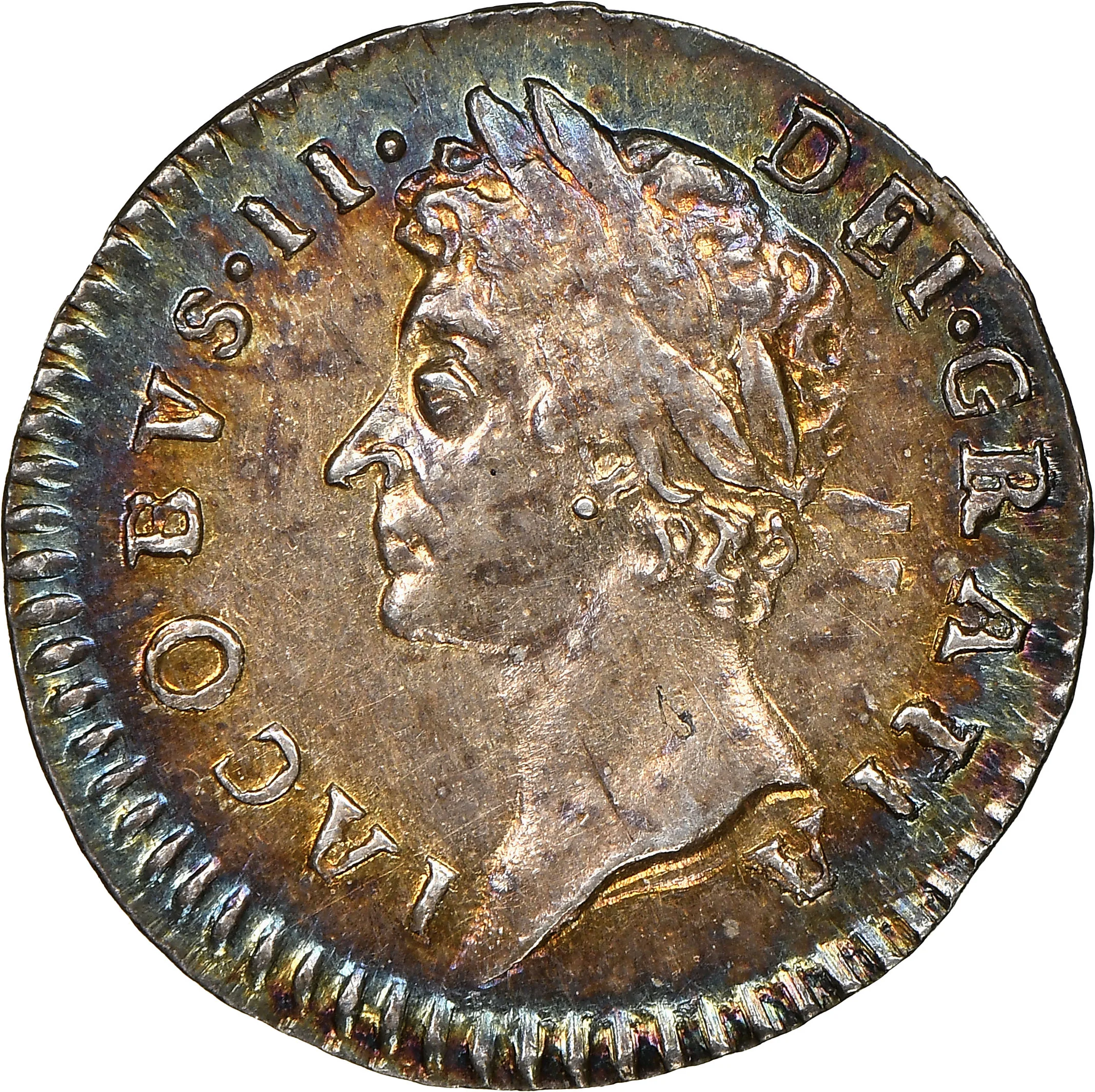
Obverse
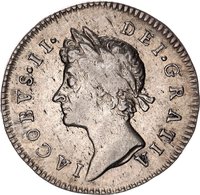
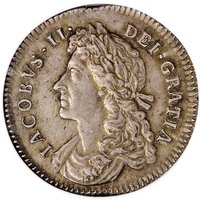
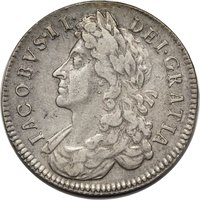
Description:
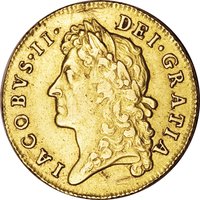
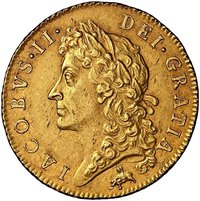
King James II, left-facing portrait, encircled by legend.
Inscription:
IACOBVS·II· DEI·GRATIA
Script: Latin
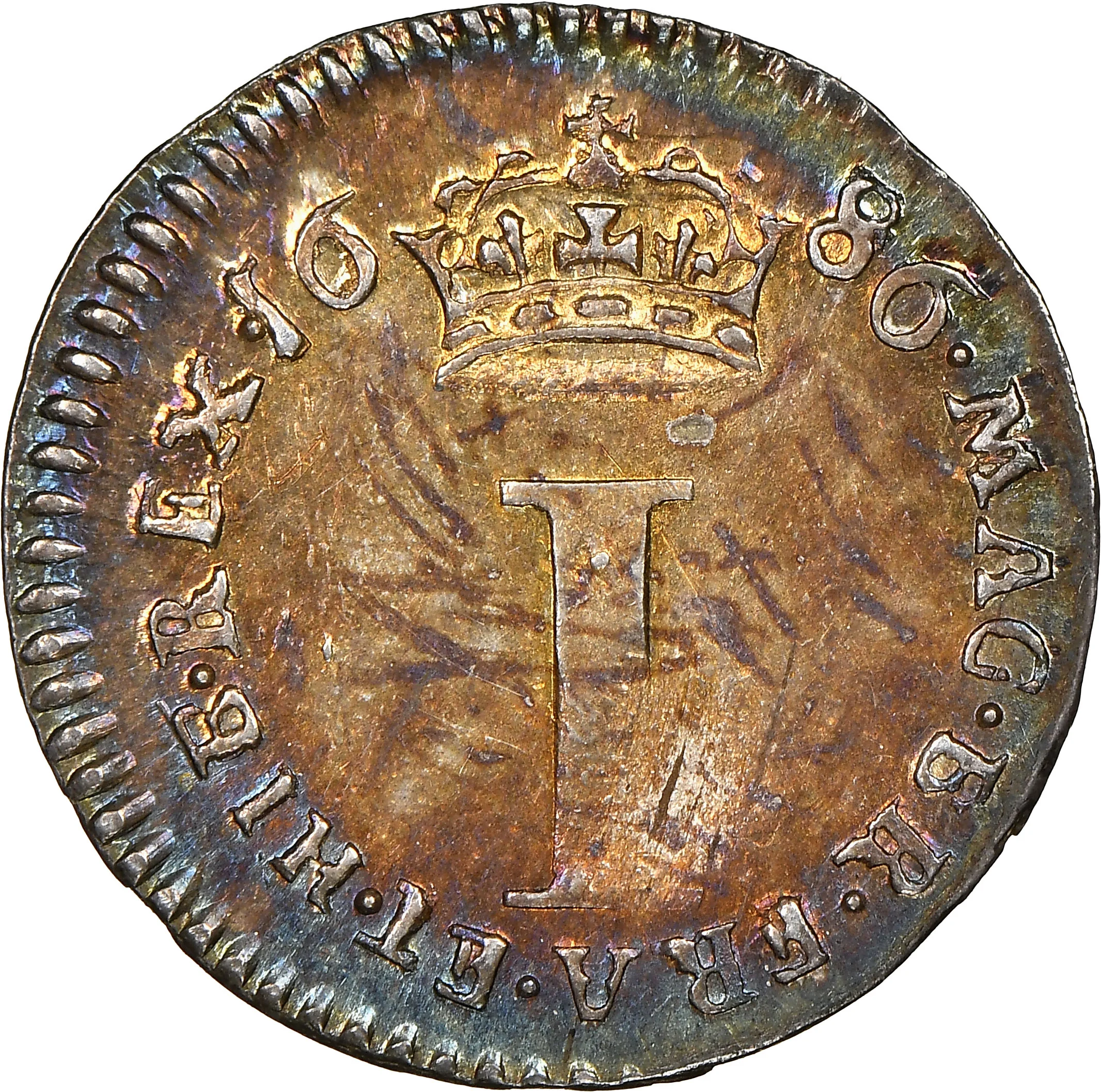
Reverse
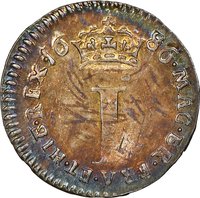
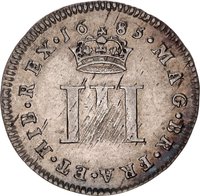
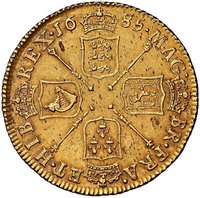
Description:
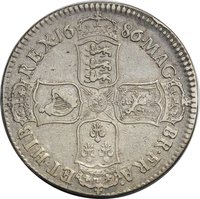
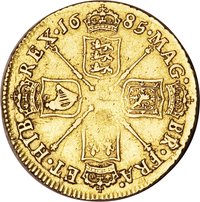
Central denomination below crown, date flanked by legend.
Inscription:
MAG·BR·FRA·ET·HIB·REX·16 86·
I
I
Script: Latin
Edge
Mintings
| Year | Mint Mark | Mintage | Quality | Collection |
|---|---|---|---|---|
| 1685 | — | — | ||
| 1686 | — | — | ||
| 1687 | — | — | ||
| 1688 | — | — |
Historical background
In 1685, England operated under a silver-based monetary system, where the principal unit was the silver pound sterling, divided into 20 shillings, each of 12 pence. The coinage was physically minted from precious metals, primarily silver, but also gold in the form of guineas. This system faced a profound and worsening crisis: widespread clipping and counterfeiting of silver coins had drastically reduced the average weight and precious metal content of coins in circulation. Consequently, the "face value" of a coin was often higher than its intrinsic bullion value, leading to Gresham's Law in action—"good" unclipped coins were hoarded or melted down for export, while "bad" light coins flooded the market, undermining public trust and complicating everyday trade.
The root of the problem lay in the official mint price for silver being lower than the market price. It was more profitable for merchants and bullion dealers to export full-weight silver coins to Europe or melt them for commodity silver than to bring bullion to the Royal Mint for coining. This chronic shortage of sound currency stifled commerce and state finance. The newly crowned King James II inherited this intractable situation from the reign of his brother, Charles II. While the Crown and Treasury were acutely aware of the problem, decisive action had been stalled for years due to the immense cost of a full recoinage and fears of the short-term economic disruption it would cause.
Therefore, the currency in 1685 was a deteriorating and unstable medium, a patchwork of worn, clipped silver and full-weight gold guineas. The guinea itself, originally valued at 20 shillings, was fluctuating significantly—sometimes as high as 22 shillings—due to the poor state of the silver coinage against which it was measured. This unstable monetary environment created uncertainty for all economic activity, from government taxation to merchant contracts, setting the stage for the Great Recoinage that would finally be undertaken a decade later under the government of William III and the guidance of Sir Isaac Newton as Warden of the Mint.
The root of the problem lay in the official mint price for silver being lower than the market price. It was more profitable for merchants and bullion dealers to export full-weight silver coins to Europe or melt them for commodity silver than to bring bullion to the Royal Mint for coining. This chronic shortage of sound currency stifled commerce and state finance. The newly crowned King James II inherited this intractable situation from the reign of his brother, Charles II. While the Crown and Treasury were acutely aware of the problem, decisive action had been stalled for years due to the immense cost of a full recoinage and fears of the short-term economic disruption it would cause.
Therefore, the currency in 1685 was a deteriorating and unstable medium, a patchwork of worn, clipped silver and full-weight gold guineas. The guinea itself, originally valued at 20 shillings, was fluctuating significantly—sometimes as high as 22 shillings—due to the poor state of the silver coinage against which it was measured. This unstable monetary environment created uncertainty for all economic activity, from government taxation to merchant contracts, setting the stage for the Great Recoinage that would finally be undertaken a decade later under the government of William III and the guidance of Sir Isaac Newton as Warden of the Mint.
Series: 1685 England circulation coins
💎 Extremely Rare