

1 Shilling – England
United Kingdom
Context
Years: 1663–1669
Country: United Kingdom 
Issuer: England 
Ruler: Charles II
Currency:
(1158—1970)
Demonetized: Yes
Material
References
KM: #Click to copy to clipboard418
Numista: #27911
Value
Bullion value: $15.62
Obverse
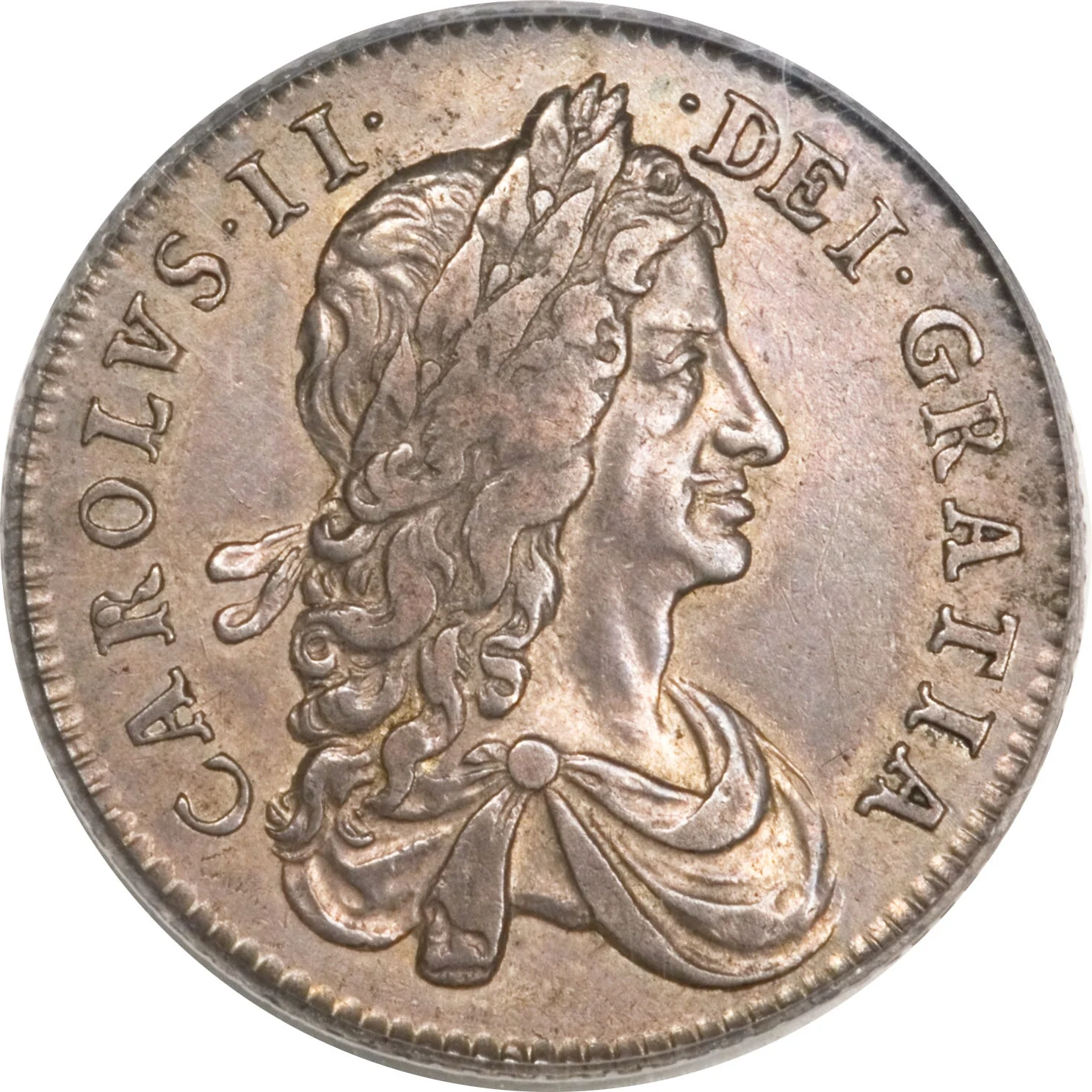
Description:
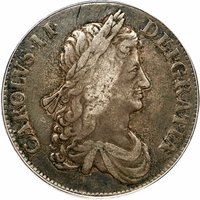
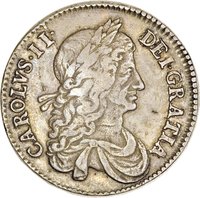
First laureate and draped bust of Charles II right, legend surrounding.
Inscription:
CAROLVS·II· ·DEI·GRATIA
Script: Latin
Reverse
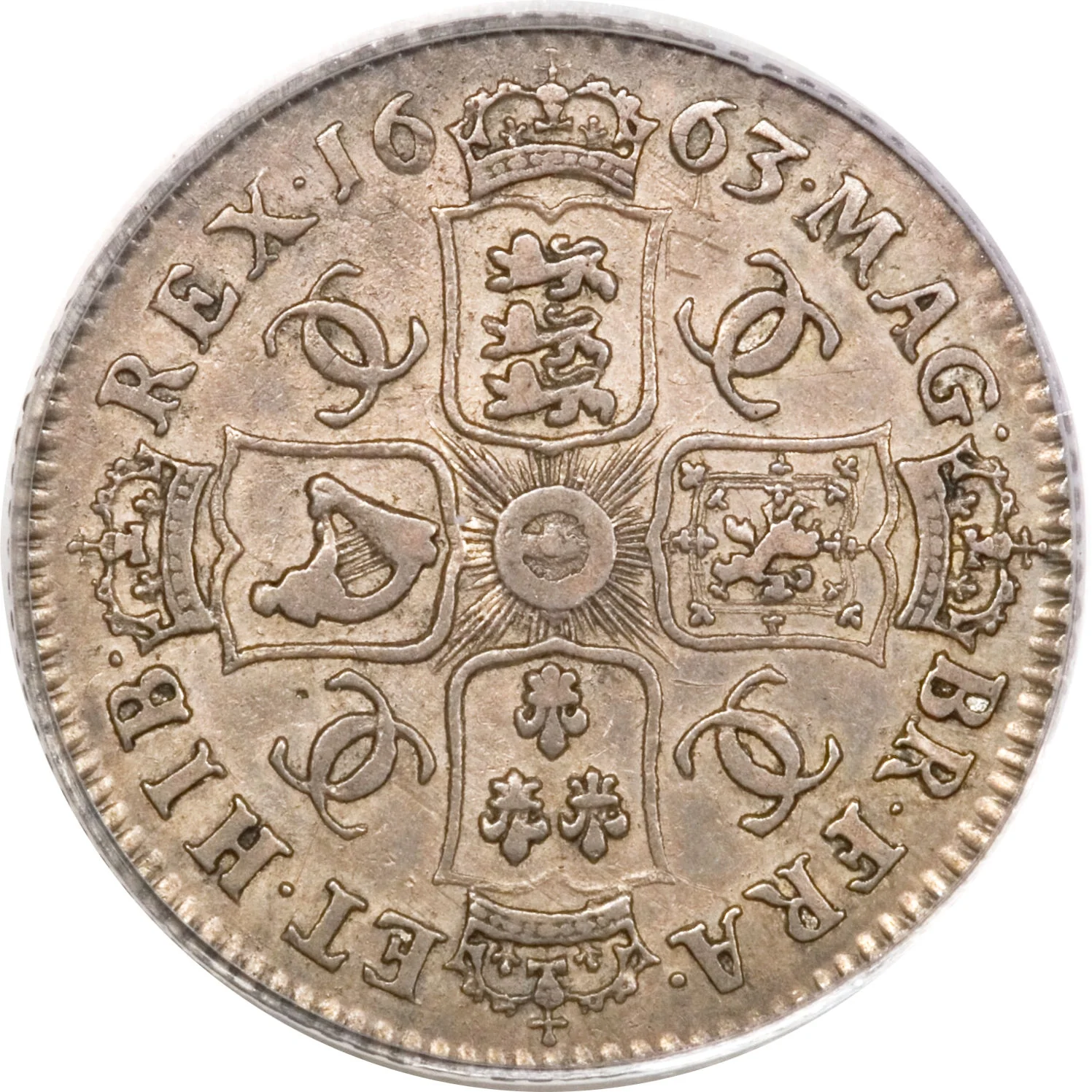
Description:
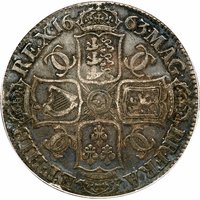
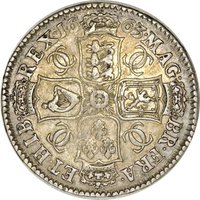
Crowned shields flank central Garter star, interlinked C's in angles, date above, legend around.
Inscription:
MAG· BR·FRA· ET·HIB REX·16 63·
Script: Latin
Edge
Milled
Mintings
| Year | Mint Mark | Mintage | Quality | Collection |
|---|---|---|---|---|
| 1663 | — | — | ||
| 1666 | — | — | ||
| 1668 | — | — | ||
| 1669 | — | — |
Historical background
In 1663, England’s currency system was in a state of transition and crisis, caught between a medieval past and a mercantile future. The primary issue was the widespread physical degradation of the nation's silver coinage. For decades, coins had been clipped (shaving metal from the edges) and counterfeited, reducing their intrinsic silver content and causing a severe loss of confidence. This led to Gresham’s Law in action: "bad money drives out good," as people hoarded full-weight coins and used only the debased ones for trade, disrupting commerce and government revenue. The situation was exacerbated by the fact that the official mint price for silver was below its market value, discouraging people from bringing bullion to be coined and worsening the shortage of sound money.
Recognising the threat to the economy and the Crown's finances, the government under King Charles II and his Chancellor of the Exchequer, Sir George Downing, took decisive action. The pivotal solution was the Great Recoinage Act of 1666, but its foundation was laid with the Mint Indenture of 1663, masterminded by Sir Thomas Wren and Sir William Parkhurst. This decree introduced a revolutionary technological innovation: machine-struck, milled-edge coinage produced at the Tower Mint. These new coins, starting with the famous "1663 Guinea" struck from gold brought by the Royal African Company, featured precise edges with lettering or patterning, making clipping immediately evident and forgery far more difficult.
The reforms of 1663, therefore, mark a critical turning point. By establishing a reliable, state-guaranteed currency, they aimed to restore public trust, stabilise the economy, and facilitate the growing trade of an expanding empire. The introduction of the guinea, named for the African gold used, also signalled England's growing colonial ambitions. While the full recoinage of silver would not be completed until after the 1666 Act, the groundwork of 1663 set England on a path toward a modern, secure monetary system, directly supporting the commercial and financial revolution that would follow.
Recognising the threat to the economy and the Crown's finances, the government under King Charles II and his Chancellor of the Exchequer, Sir George Downing, took decisive action. The pivotal solution was the Great Recoinage Act of 1666, but its foundation was laid with the Mint Indenture of 1663, masterminded by Sir Thomas Wren and Sir William Parkhurst. This decree introduced a revolutionary technological innovation: machine-struck, milled-edge coinage produced at the Tower Mint. These new coins, starting with the famous "1663 Guinea" struck from gold brought by the Royal African Company, featured precise edges with lettering or patterning, making clipping immediately evident and forgery far more difficult.
The reforms of 1663, therefore, mark a critical turning point. By establishing a reliable, state-guaranteed currency, they aimed to restore public trust, stabilise the economy, and facilitate the growing trade of an expanding empire. The introduction of the guinea, named for the African gold used, also signalled England's growing colonial ambitions. While the full recoinage of silver would not be completed until after the 1666 Act, the groundwork of 1663 set England on a path toward a modern, secure monetary system, directly supporting the commercial and financial revolution that would follow.
💎 Extremely Rare