

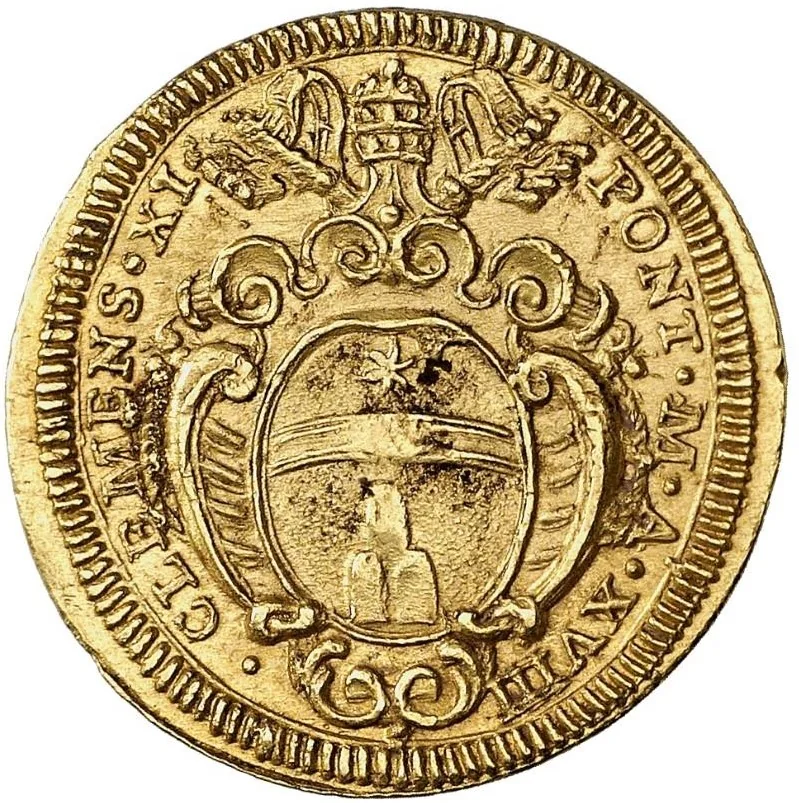
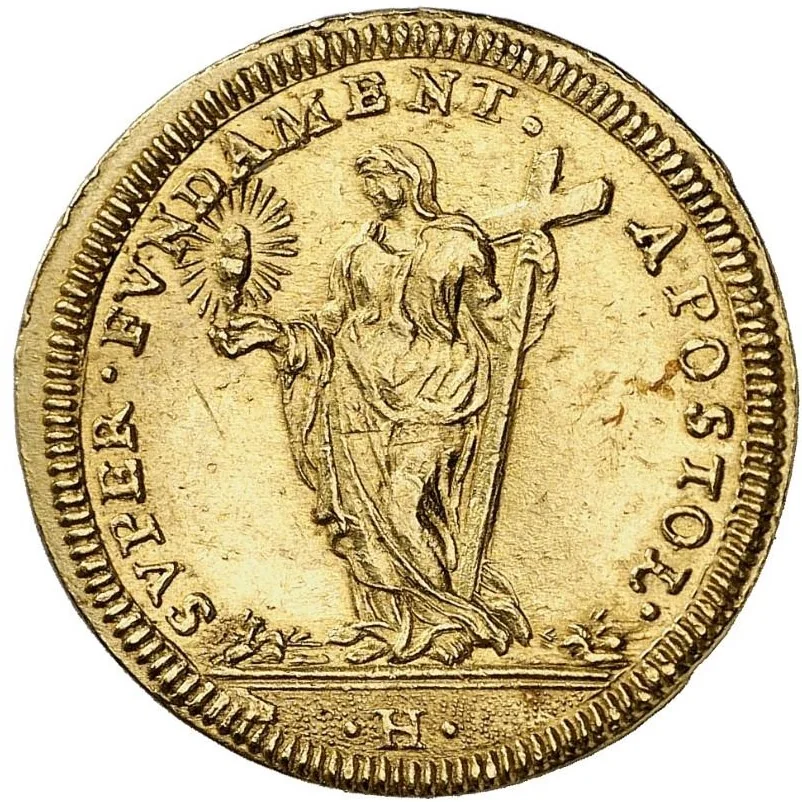
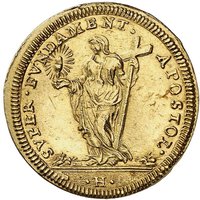
1 Scudo – Papal States
Vatican City
Context
Year: 1718
Country: Vatican City 
Issuer: Papal States
Ruler: Clement XI
Currency:
(1534—1835)
Demonetized: Yes
Material
References
KM: #Click to copy to clipboard771
Numista: #278616
Value
Bullion value: $575.62
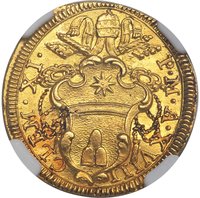
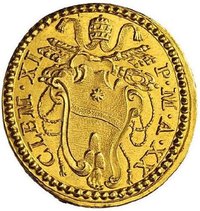
Obverse
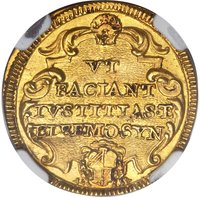
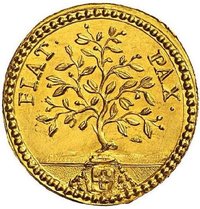
Reverse
Edge
Mintings
| Year | Mint Mark | Mintage | Quality | Collection |
|---|---|---|---|---|
| 1718 | H | — |
Historical background
In 1718, the Papal States found themselves in a precarious monetary situation, characterized by a severe shortage of circulating specie and a debased, chaotic coinage system. This crisis was a direct legacy of the extravagant spending of previous popes, the costs of maintaining courtly grandeur, and the financial strains of military engagements. The treasury was depleted, and to meet obligations, the Apostolic Chamber had repeatedly resorted to reducing the silver content in coins like the giulio and paolo, while also issuing low-value copper baiocchi. The result was a loss of public trust, rampant inflation for everyday goods, and a confusing multiplicity of coins whose actual metal value was often far below their official face value.
The situation was further complicated by the circulation of foreign currencies, particularly large silver scudi from Spain and France, which were hoarded for their reliable intrinsic value, thus draining the state of quality money. This practice, following Gresham's Law where "bad money drives out good," left the local economy dependent on unstable and inferior coinage. Pope Clement XI (1700-1721), reigning in 1718, was acutely aware of the problem but his earlier attempts at reform had been limited and largely ineffective. The monetary disorder stifled commerce, created uncertainty in contracts, and eroded the financial foundations of the state, making administrative and economic planning exceedingly difficult.
Consequently, 1718 represented a point of urgent recognition of the need for comprehensive reform, a process that would culminate after Clement XI's death. His successor, Pope Innocent XIII (1721-1724), would initiate a significant, though only partially successful, recoinage in 1723-1724. Therefore, the currency situation in 1718 is best understood as the distressing climax of long-standing fiscal mismanagement, setting the stage for a pivotal, if challenging, period of monetary restructuring in the early 1720s.
The situation was further complicated by the circulation of foreign currencies, particularly large silver scudi from Spain and France, which were hoarded for their reliable intrinsic value, thus draining the state of quality money. This practice, following Gresham's Law where "bad money drives out good," left the local economy dependent on unstable and inferior coinage. Pope Clement XI (1700-1721), reigning in 1718, was acutely aware of the problem but his earlier attempts at reform had been limited and largely ineffective. The monetary disorder stifled commerce, created uncertainty in contracts, and eroded the financial foundations of the state, making administrative and economic planning exceedingly difficult.
Consequently, 1718 represented a point of urgent recognition of the need for comprehensive reform, a process that would culminate after Clement XI's death. His successor, Pope Innocent XIII (1721-1724), would initiate a significant, though only partially successful, recoinage in 1723-1724. Therefore, the currency situation in 1718 is best understood as the distressing climax of long-standing fiscal mismanagement, setting the stage for a pivotal, if challenging, period of monetary restructuring in the early 1720s.
✨ Legendary