

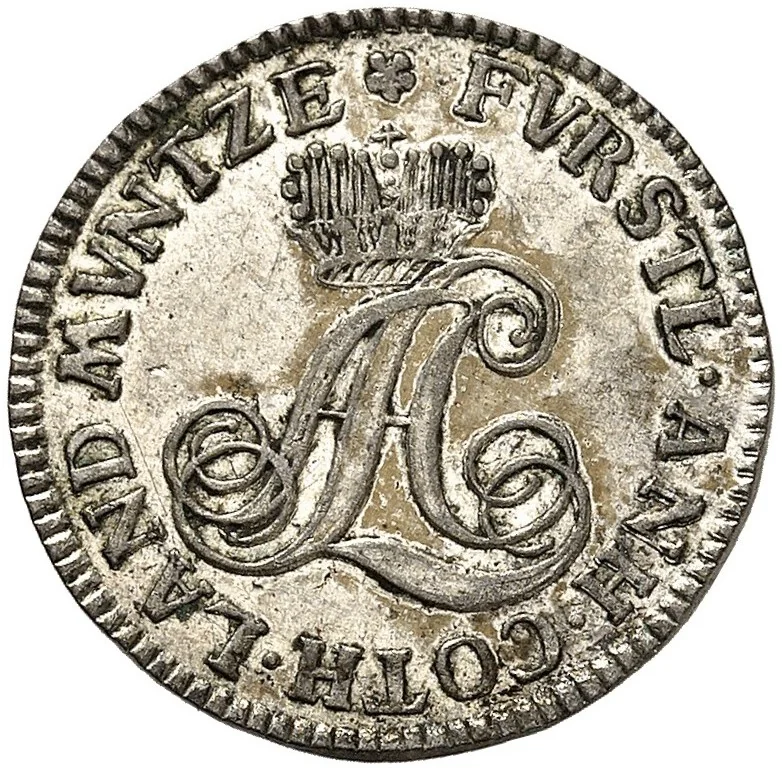
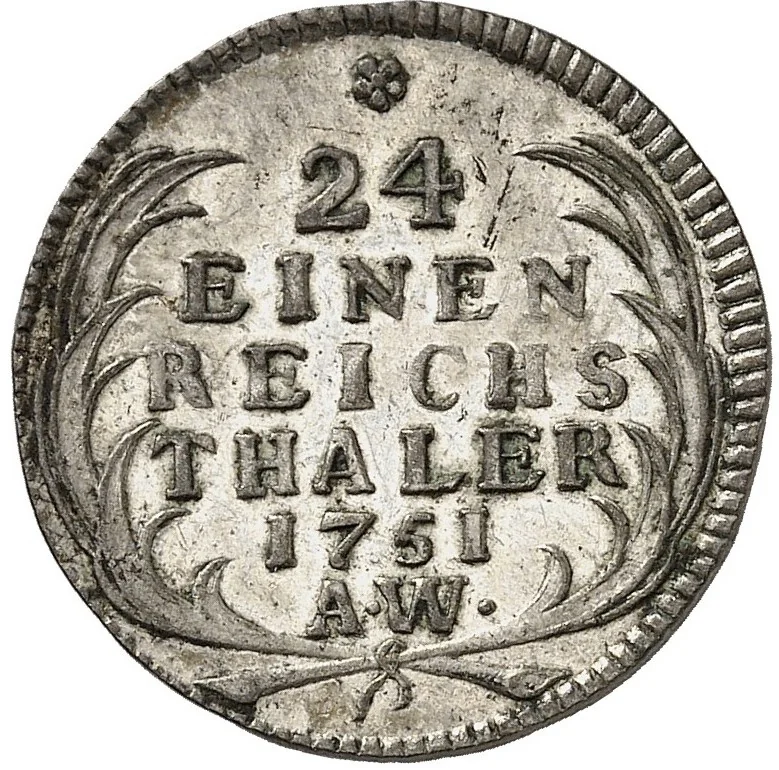
1⁄24 Thaler – Anhalt-Köthen
Germany
Context

References
KM: #Click to copy to clipboard33
Numista: #277736
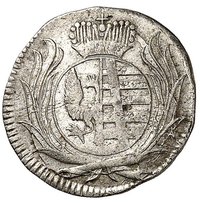
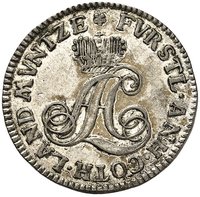
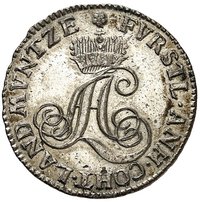
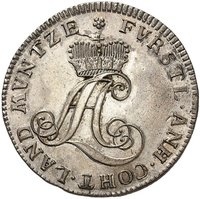
Obverse
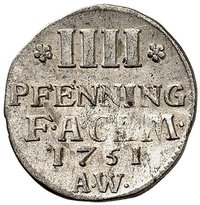
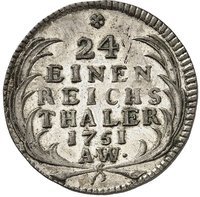
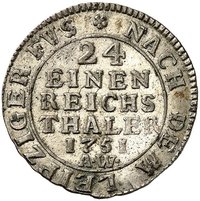
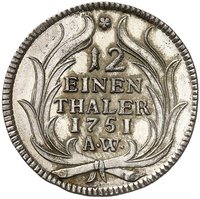
Reverse
Edge
Mints
| Name | Mark |
|---|---|
| Köthen | — |
Mintings
| Year | Mint Mark | Mintage | Quality | Collection |
|---|---|---|---|---|
| 1751 | — | — |
Historical background
In 1751, the currency situation in the small German principality of Anhalt-Köthen was complex and challenging, typical of the fragmented Holy Roman Empire. The state did not possess its own exclusive minting right but operated within a wider monetary system dominated by regional conventions. The principality primarily circulated coins from the Leipzig Monetary Convention of 1690, which aimed to standardize the Reichsthaler, Groschen, and Pfennig across central Germany. However, the actual money in use was a heterogeneous mix, including coins minted under the authority of the Anhalt duchies collectively, coins from neighboring states like Saxony and Brandenburg-Prussia, and older, debased currencies.
This multiplicity created persistent problems of valuation and trust. The intrinsic silver content of coins varied, leading to difficulties in exchange and facilitating practices like "culling," where higher-value coins were hoarded or melted down, leaving poorer-quality money in circulation. For Prince August Ludwig, who ruled until 1755, and his administration, this environment hampered commerce and state finance. The need to align with the monetary systems of larger, economically dominant neighbors was constant, as trade and obligations often required settlement in more stable, externally minted currency.
Consequently, the background of 1751 is one of monetary dependency and instability. While there was no major currency reform enacted that specific year, the situation underscored the principality's limited economic sovereignty. The circulation was characterized by a struggle to maintain a reliable standard of value amidst a flood of diverse coins, a reality that placed a burden on merchants and the treasury alike, and highlighted the broader challenges faced by small states in an empire with no unified monetary policy.
This multiplicity created persistent problems of valuation and trust. The intrinsic silver content of coins varied, leading to difficulties in exchange and facilitating practices like "culling," where higher-value coins were hoarded or melted down, leaving poorer-quality money in circulation. For Prince August Ludwig, who ruled until 1755, and his administration, this environment hampered commerce and state finance. The need to align with the monetary systems of larger, economically dominant neighbors was constant, as trade and obligations often required settlement in more stable, externally minted currency.
Consequently, the background of 1751 is one of monetary dependency and instability. While there was no major currency reform enacted that specific year, the situation underscored the principality's limited economic sovereignty. The circulation was characterized by a struggle to maintain a reliable standard of value amidst a flood of diverse coins, a reality that placed a burden on merchants and the treasury alike, and highlighted the broader challenges faced by small states in an empire with no unified monetary policy.
✨ Legendary