

½ Ducat – Denmark
Denmark
Context
Year: 1719
Issuer: Denmark 
Ruler: Frederick IV
Subdivision: ½ Ducat = 1 Speciedaler
Demonetized: Yes
Material
References
KM: #Click to copy to clipboard7
Numista: #275961
Value
Bullion value: $284.41
Obverse
Description:
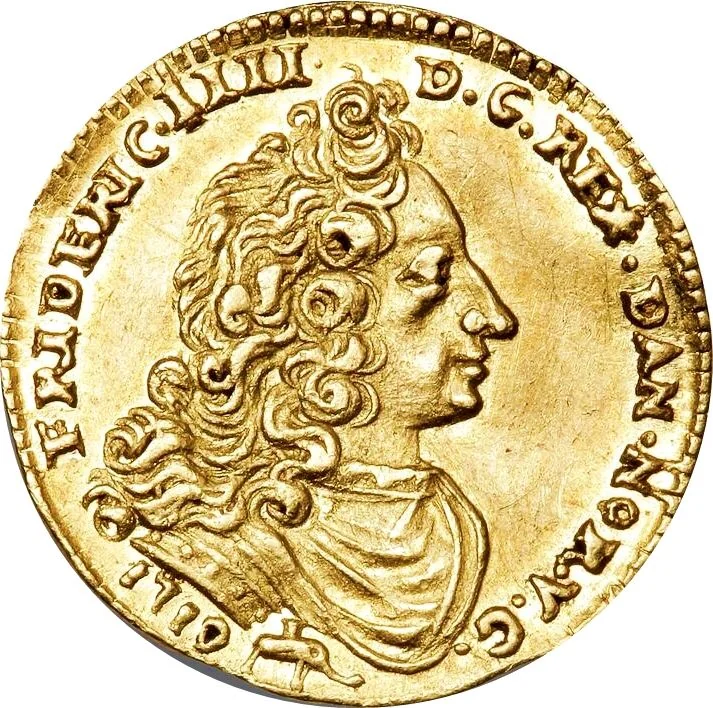
Right-facing draped bust of Frederik IV. Legend encircles, interrupted by hair. Date below shoulder.
Inscription:
FRIDERIC • IIII • | D. G. REX • DAN • NOR • V • G •
1719
1719
Script: Latin
Reverse
Description:
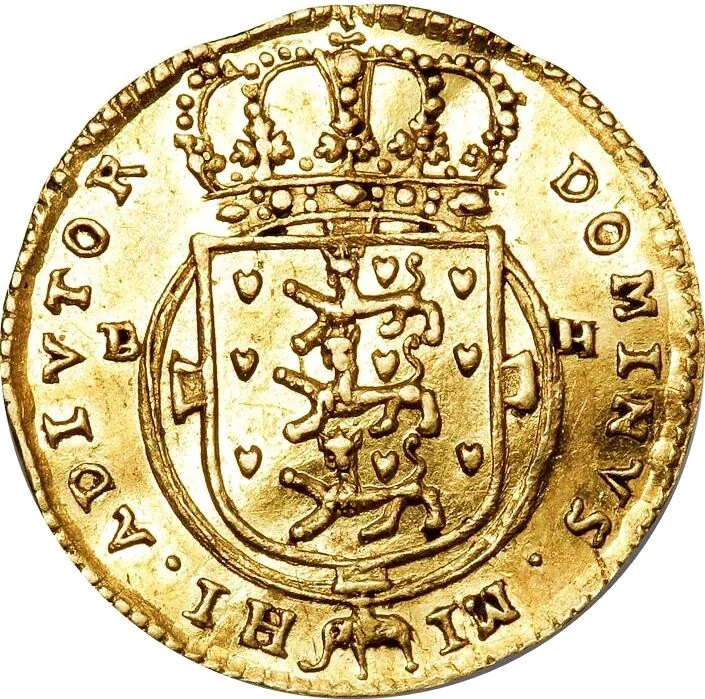
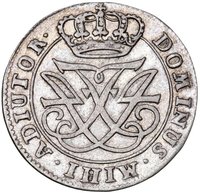
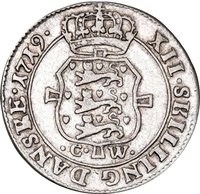
Shield with Danish arms above a cross, encircled by the Order of the Elephant. Mint marks flank the shield; king's motto on rim.
Inscription:
DOMINVS . MI | HI . ADIVTOR
B | H
B | H
Script: Latin
Edge
Mints
| Name | Mark |
|---|---|
| Rendsburg | BH |
Mintings
| Year | Mint Mark | Mintage | Quality | Collection |
|---|---|---|---|---|
| 1719 | BH | — |
Historical background
In 1719, Denmark operated under a silver standard, with the primary currency being the rigsdaler specie, a large silver coin containing approximately 25.28 grams of fine silver. However, the monetary system was complex and strained. The state treasury, deeply indebted from the Great Northern War (1700-1721), faced severe liquidity problems. To finance its obligations, the government had repeatedly issued inferior subsidiary coins, such as the rigsdaler courant, which traded at a significant discount to the silver specie. This created a dual-currency system where daily transactions used depreciated coins, while large-scale trade and state contracts were anchored to the silver standard, leading to confusion and instability.
The year itself was part of a critical period of monetary reform initiated by King Frederik IV and his advisor, General War Commissioner Johan Georg Holstein. In the preceding years, the state had attempted to recall and melt down debased coins, but these efforts were only partially successful. By 1719, the focus was on stabilizing the value of the rigsdaler courant and managing the enormous national debt. The government was actively using the newly established Kurantbanken (founded in 1736 but operating in precursor forms), a central bank-like institution, to issue credit notes and manage the currency, laying early groundwork for a more modern financial system.
Consequently, the currency situation in 1719 was one of transition and fragility. While the silver specie remained the theoretical anchor, the everyday economy relied on a paper and copper-backed currency whose value was politically managed and vulnerable to distrust. The pressures of wartime finance, a heavy debt burden, and the ongoing efforts to centralize and control the money supply defined the era, setting the stage for more structured reforms in the following decades under the absolutist monarchy.
The year itself was part of a critical period of monetary reform initiated by King Frederik IV and his advisor, General War Commissioner Johan Georg Holstein. In the preceding years, the state had attempted to recall and melt down debased coins, but these efforts were only partially successful. By 1719, the focus was on stabilizing the value of the rigsdaler courant and managing the enormous national debt. The government was actively using the newly established Kurantbanken (founded in 1736 but operating in precursor forms), a central bank-like institution, to issue credit notes and manage the currency, laying early groundwork for a more modern financial system.
Consequently, the currency situation in 1719 was one of transition and fragility. While the silver specie remained the theoretical anchor, the everyday economy relied on a paper and copper-backed currency whose value was politically managed and vulnerable to distrust. The pressures of wartime finance, a heavy debt burden, and the ongoing efforts to centralize and control the money supply defined the era, setting the stage for more structured reforms in the following decades under the absolutist monarchy.
Series: 1719 Denmark circulation coins
✨ Legendary