

1 skilling – Denmark
Add to wishlist
Denmark
Context
Material
References
KM: #
Numista: #62351
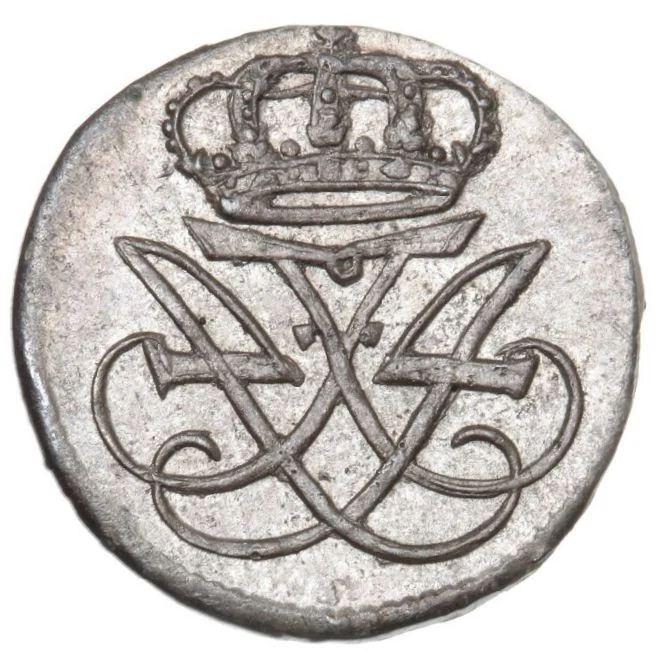
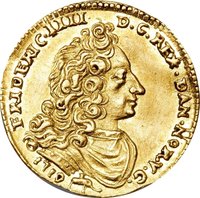
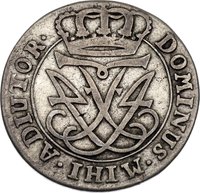
Obverse
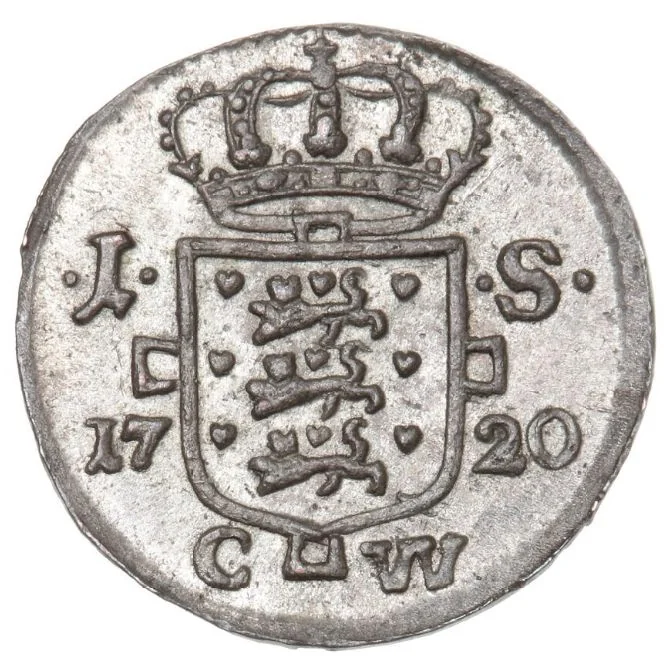
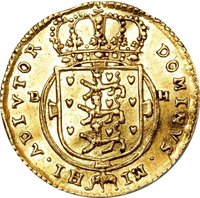
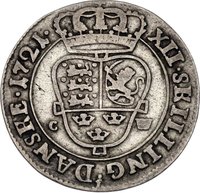
Reverse
Description:
Danish crowned shield divides value and date, mintmark below.
Inscription:
• 1 • | • S•
17 | 22
C | W
17 | 22
C | W
Script: Latin
Edge
Plain
Mintings
| Year | Mint Mark | Mintage | Quality | Collection |
|---|---|---|---|---|
| 1720 | CW | — | ||
| 1721 | CW | — | ||
| 1722 | CW | — | ||
| 1723 | CW | — |
Historical background
In 1720, Denmark found itself in a complex monetary situation shaped by the costly Great Northern War (1700-1721). The war had placed immense strain on state finances, leading to significant currency debasement. The primary circulating coin, the rigsdaler specie, was theoretically a silver coin, but the state had issued vast quantities of lower-quality subsidiary coins, such as the skilling, to fund military expenditures. This resulted in a dual system where the value of coins in daily transactions was often dictated by proclamation rather than their intrinsic metal content, causing confusion and inflation.
The situation was further complicated by the aftermath of the state bankruptcy of 1813, a reference to the earlier financial collapse under King Christian IV, whose consequences still lingered in the form of a weakened public trust in the currency. While the Kurant system (for domestic trade) and Specie system (for foreign trade and large transactions) were officially in place, the disparity between them grew. The silver rigsdaler specie was hoarded or used for international settlements, while a flood of depreciated copper and billon (low-grade silver) coins fueled the local economy, creating a chronic shortage of reliable small change for the populace.
Consequently, 1720 represents a period of monetary instability and transition. The state, under the absolute monarchy of Frederick IV, was grappling with the practical and political challenges of restoring confidence and order to the currency after years of wartime finance. Efforts to stabilize and unify the system would be a persistent administrative struggle, setting the stage for future reforms aimed at establishing a more secure and standardized national currency later in the 18th century.
The situation was further complicated by the aftermath of the state bankruptcy of 1813, a reference to the earlier financial collapse under King Christian IV, whose consequences still lingered in the form of a weakened public trust in the currency. While the Kurant system (for domestic trade) and Specie system (for foreign trade and large transactions) were officially in place, the disparity between them grew. The silver rigsdaler specie was hoarded or used for international settlements, while a flood of depreciated copper and billon (low-grade silver) coins fueled the local economy, creating a chronic shortage of reliable small change for the populace.
Consequently, 1720 represents a period of monetary instability and transition. The state, under the absolute monarchy of Frederick IV, was grappling with the practical and political challenges of restoring confidence and order to the currency after years of wartime finance. Efforts to stabilize and unify the system would be a persistent administrative struggle, setting the stage for future reforms aimed at establishing a more secure and standardized national currency later in the 18th century.
💎 Very Rare