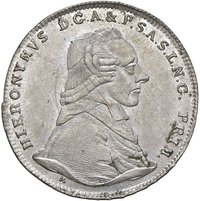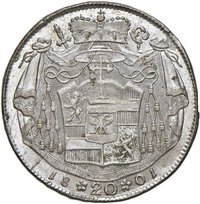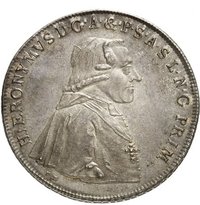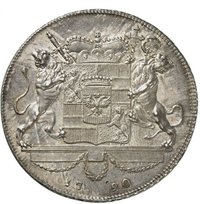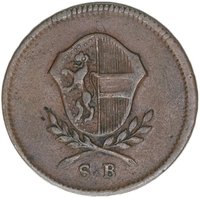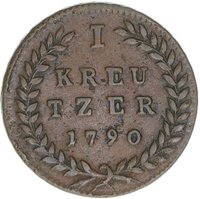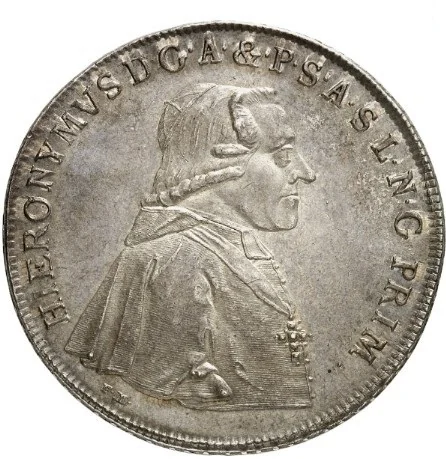
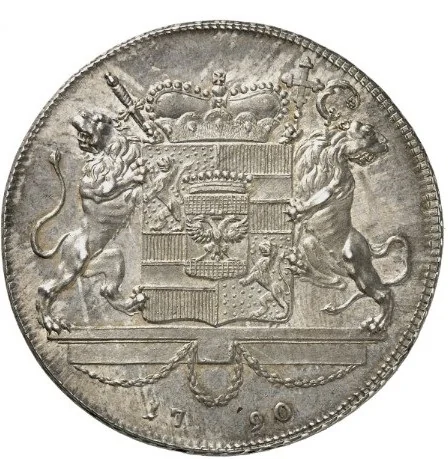
In 1790, the currency situation in the Prince-Archbishopric of Salzburg was complex and fragmented, reflecting the broader monetary disunity of the Holy Roman Empire. The principality did not have a fully independent minting authority but operated within a system of regional monetary conventions. Salzburg's primary trade currency was the
Conventionsgulden (also called the Florin), established by the Bavarian monetary convention of 1753, which aimed to standardize silver coinage across southern Germany and Austria. However, everyday commerce also relied on a confusing array of smaller subsidiary coins, including
Kreuzers and
Pfennigs, whose values and metal content could vary.
The stability of Salzburg's currency was directly tied to the fiscal health and policies of its ruler, Prince-Archbishop Hieronymus von Colloredo. An enlightened reformer, Colloredo faced constant financial pressure from the need to maintain the archbishopric's independence, fund his court, and support his ambitious modernization projects. While he managed the treasury more prudently than some predecessors, the state's revenues from salt mines, trade tolls, and agricultural tithes were often insufficient, leading to periodic budgetary shortfalls. This pressure created a temptation to engage in debasement—reducing the silver content in coins to generate more currency—a practice that risked inflation and loss of public trust.
Furthermore, the monetary landscape was practically complicated by the circulation of numerous foreign coins from neighboring states like Bavaria, Austria, and the Tyrol, as trade and travel integrated the region. This necessitated constant exchange and valuation, making transactions cumbersome for merchants and citizens alike. The situation was inherently unstable, as Salzburg's monetary fate was intertwined with the policies of larger powers, particularly the Habsburg Monarchy. Within two decades, this fragile system would vanish entirely: the secularization of 1803 ended the ecclesiastical state, and its incorporation into the Austrian Empire in 1816 brought it fully under the unified Habsburg currency system.