

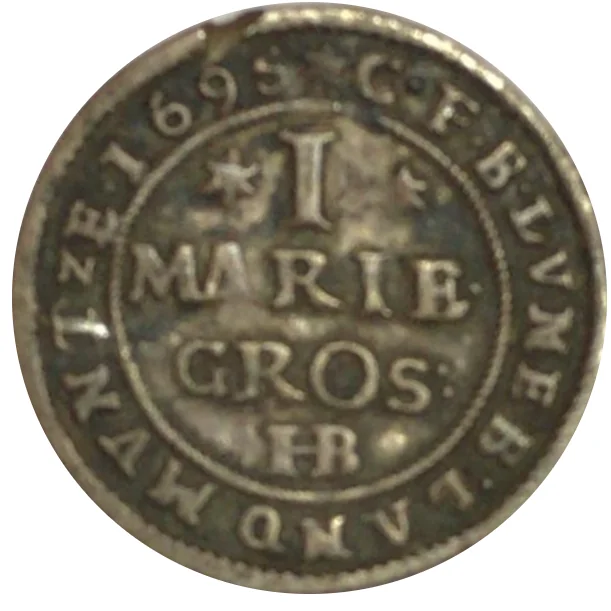
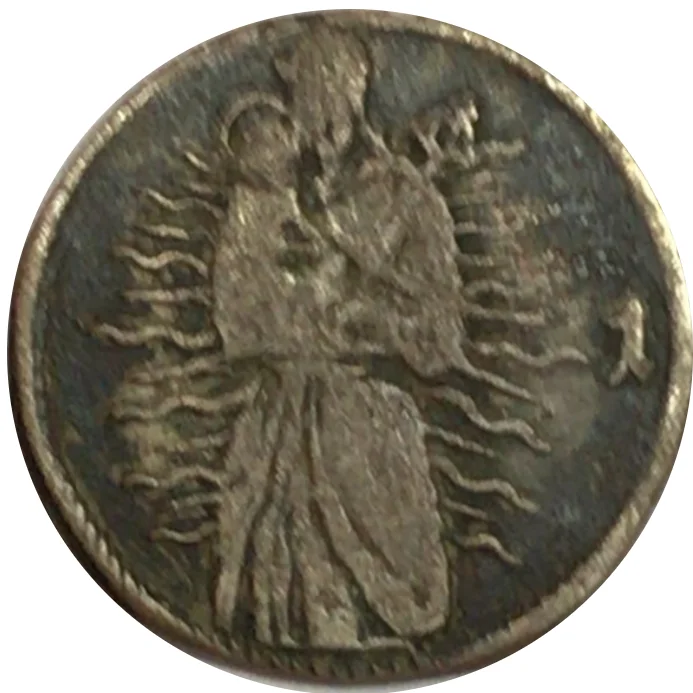
1 Mariengroschen – Brunswick-Lüneburg-Calenberg
Germany
Context
Years: 1693–1697
Country: Germany 
Issuer: Brunswick-Lüneburg-Calenberg
Ruler: Ernest Augustus
Currency:
Demonetized: Yes
Material
References
KM: #Click to copy to clipboard372
Numista: #275578
Value
Bullion value: $3.33
Obverse
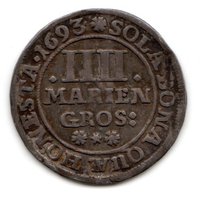
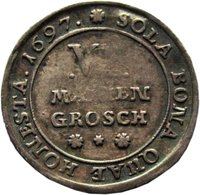
Description:
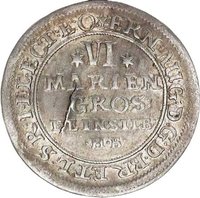
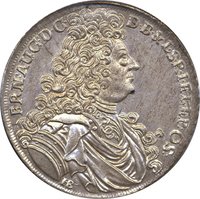
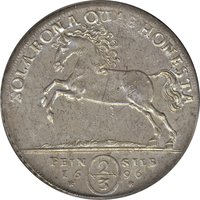
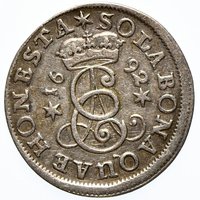
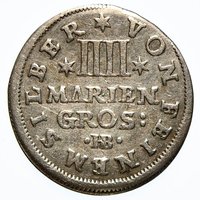
Central inscription in four lines with denomination.
Inscription:
1
MARIE
GROS
HB
C F BLVNENB. LAND MVNTZE
MARIE
GROS
HB
C F BLVNENB. LAND MVNTZE
Script: Latin
Reverse
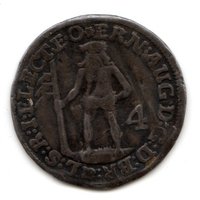
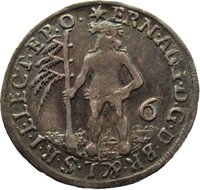
Description:
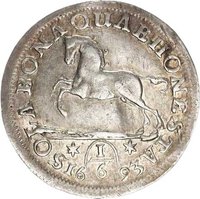
Saint Mary, haloed and holding a scepter and nimbate child, with denomination at right.
Inscription:
1
Script: Latin
Edge
Mints
| Name | Mark |
|---|---|
| Clausthal | — |
Mintings
| Year | Mint Mark | Mintage | Quality | Collection |
|---|---|---|---|---|
| 1693 | — | — | ||
| 1695 | — | — | ||
| 1697 | — | — |
Historical background
In 1693, the Duchy of Brunswick-Lüneburg, specifically the Principality of Calenberg under Duke Ernst August, was entangled in the complex and debased monetary landscape of the Holy Roman Empire. The period was defined by the Kipper- und Wipperzeit, an era of rampant currency manipulation where numerous states, including neighboring principalities, were debasing their coinage to fund military expenditures, particularly for the ongoing Nine Years' War. This created a chaotic system where the intrinsic silver value of coins was often far below their face value, leading to inflation, loss of public trust, and severe disruption to trade.
Duke Ernst August faced significant pressure to participate in these practices to raise revenue for his own ambitions, which included securing the prestigious electoral title for his house. However, he pursued a more cautious and strategic policy than some of his contemporaries. Rather than engaging in the most extreme debasement, his mints in Hanover and Zellerfeld primarily focused on issuing Reichstaler and smaller denominations that, while still adjusted for profit, attempted to maintain a relatively stable silver content compared to the severely degraded coins flooding the region from other states.
Consequently, Calenberg's currency in 1693 existed in a precarious middle ground. It was not immune to the empire-wide crisis, experiencing inflationary pressures and dealing with the influx of poor-quality foreign coins. Yet, under Ernst August's calculated management, it avoided the worst excesses, providing a slightly more reliable medium of exchange within his territories. This policy was part of a broader effort to demonstrate stability and legitimacy, ultimately supporting his successful bid to become Elector of Hanover in 1692, a status that would have profound implications for the dynasty's future, including its ascent to the British throne.
Duke Ernst August faced significant pressure to participate in these practices to raise revenue for his own ambitions, which included securing the prestigious electoral title for his house. However, he pursued a more cautious and strategic policy than some of his contemporaries. Rather than engaging in the most extreme debasement, his mints in Hanover and Zellerfeld primarily focused on issuing Reichstaler and smaller denominations that, while still adjusted for profit, attempted to maintain a relatively stable silver content compared to the severely degraded coins flooding the region from other states.
Consequently, Calenberg's currency in 1693 existed in a precarious middle ground. It was not immune to the empire-wide crisis, experiencing inflationary pressures and dealing with the influx of poor-quality foreign coins. Yet, under Ernst August's calculated management, it avoided the worst excesses, providing a slightly more reliable medium of exchange within his territories. This policy was part of a broader effort to demonstrate stability and legitimacy, ultimately supporting his successful bid to become Elector of Hanover in 1692, a status that would have profound implications for the dynasty's future, including its ascent to the British throne.
✨ Legendary