


Obverse
Description:
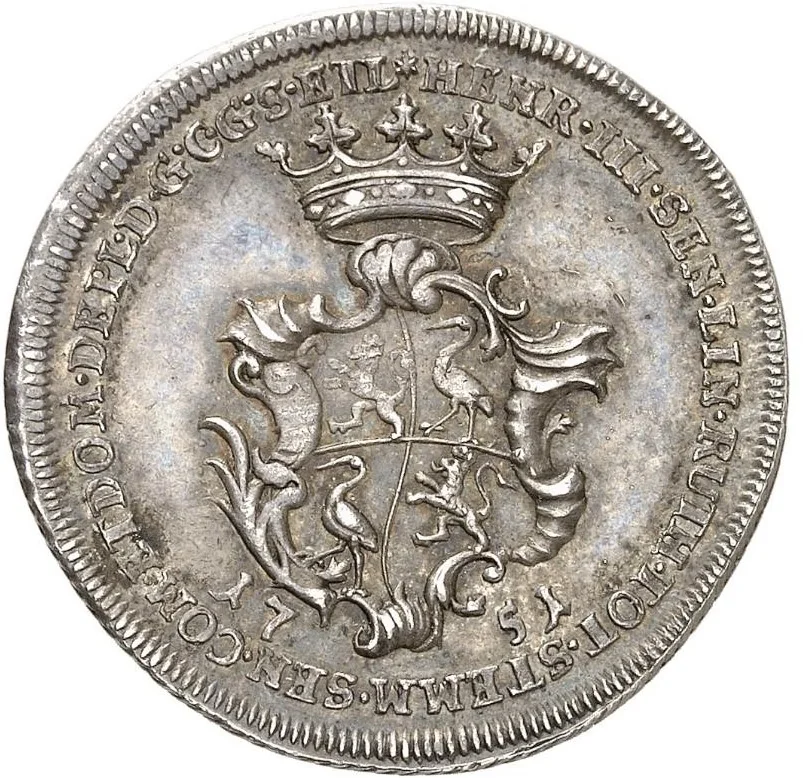
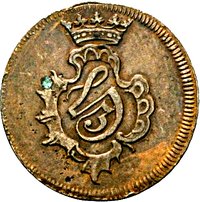
Crowned arms in baroque frame with date.
Inscription:
HENR III SEN LIN RUTH TOT STEMM SEN COM ET DOM DEPL D G C G S ETL
1751
1751
Script: Latin
Reverse
Description:
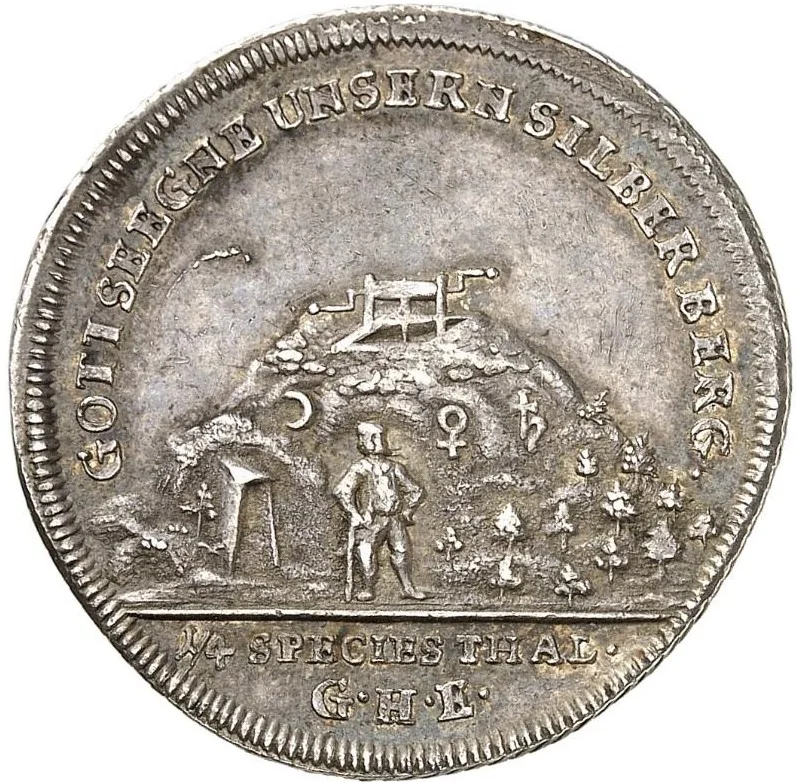
Mine interior
Inscription:
GOTT SEGNE UNSERN SILBERBERG
1/4 SPECIES THAL
G H E
1/4 SPECIES THAL
G H E
Script: Latin
Edge
Plain
Mints
| Name | Mark |
|---|---|
| Saalfeld | — |
Mintings
| Year | Mint Mark | Mintage | Quality | Collection |
|---|---|---|---|---|
| 1751 | — | — |
Historical background
In 1751, the small Thuringian principality of Reuss-Untergreiz, like many minor German states of the Holy Roman Empire, faced a complex and challenging currency situation. The region was part of a fractured monetary landscape where dozens of sovereign entities minted their own coins, leading to chronic instability. Reuss-Untergreiz itself issued limited coinage, primarily Groschen and Kreuzer, but these circulated alongside a multitude of foreign coins, notably the more influential Saxon and Prussian talers, creating constant confusion over exchange rates and values.
The core problem was a severe shortage of high-quality, full-weight specie (coin). This often led to the circulation of debased, clipped, or worn coins, while good coins were hoarded or melted down—a classic example of Gresham's Law. Furthermore, the principality was economically fragile, with its revenues heavily dependent on agriculture and limited trade, making it difficult to maintain a stable and trusted currency. This monetary chaos hampered commerce, complicated tax collection for the ruling Count, and created vulnerability to external economic pressures.
Consequently, the monetary policy of Reuss-Untergreiz was largely reactive and defensive. The state authority likely issued periodic Münzedikte (currency decrees) to set official exchange rates for the plethora of circulating coins in an attempt to bring order. However, these efforts were of limited success against the larger market forces and the sheer volume of foreign currency. Thus, in 1751, the currency situation was one of persistent instability, a daily inconvenience for its subjects, and a significant administrative burden for its government, reflecting the broader monetary fragmentation of the Empire.
The core problem was a severe shortage of high-quality, full-weight specie (coin). This often led to the circulation of debased, clipped, or worn coins, while good coins were hoarded or melted down—a classic example of Gresham's Law. Furthermore, the principality was economically fragile, with its revenues heavily dependent on agriculture and limited trade, making it difficult to maintain a stable and trusted currency. This monetary chaos hampered commerce, complicated tax collection for the ruling Count, and created vulnerability to external economic pressures.
Consequently, the monetary policy of Reuss-Untergreiz was largely reactive and defensive. The state authority likely issued periodic Münzedikte (currency decrees) to set official exchange rates for the plethora of circulating coins in an attempt to bring order. However, these efforts were of limited success against the larger market forces and the sheer volume of foreign currency. Thus, in 1751, the currency situation was one of persistent instability, a daily inconvenience for its subjects, and a significant administrative burden for its government, reflecting the broader monetary fragmentation of the Empire.
✨ Legendary