

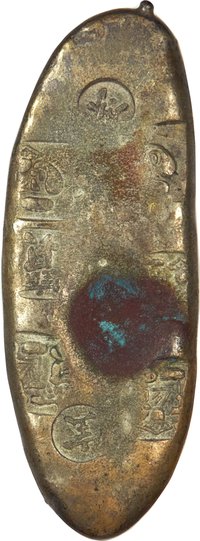
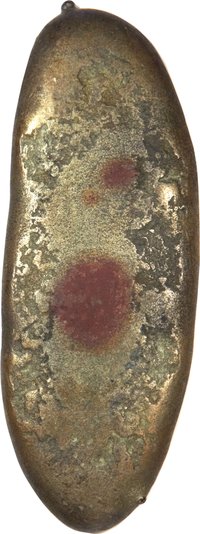
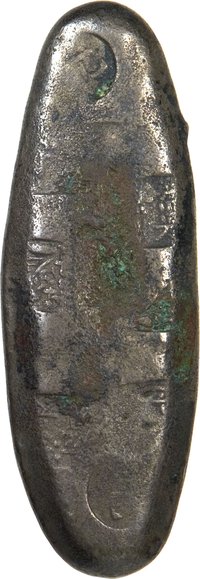
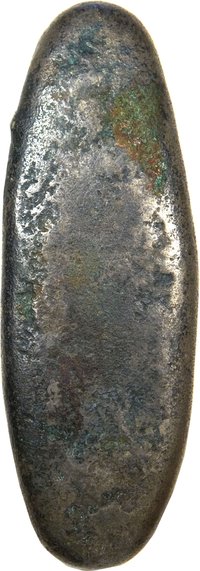
mameitagin "hōei futatsuhō mameitagin" – Japan
Add to wishlist
Japan
Context
Material
Shape: Irregular round
Composition: 50% Silver
Magnetic: No
Technique: Hammered
Alignment: Medal alignment
flip
References
KM: #
Numista: #27233
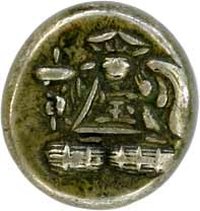
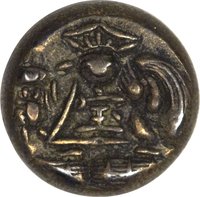
Obverse
Description:
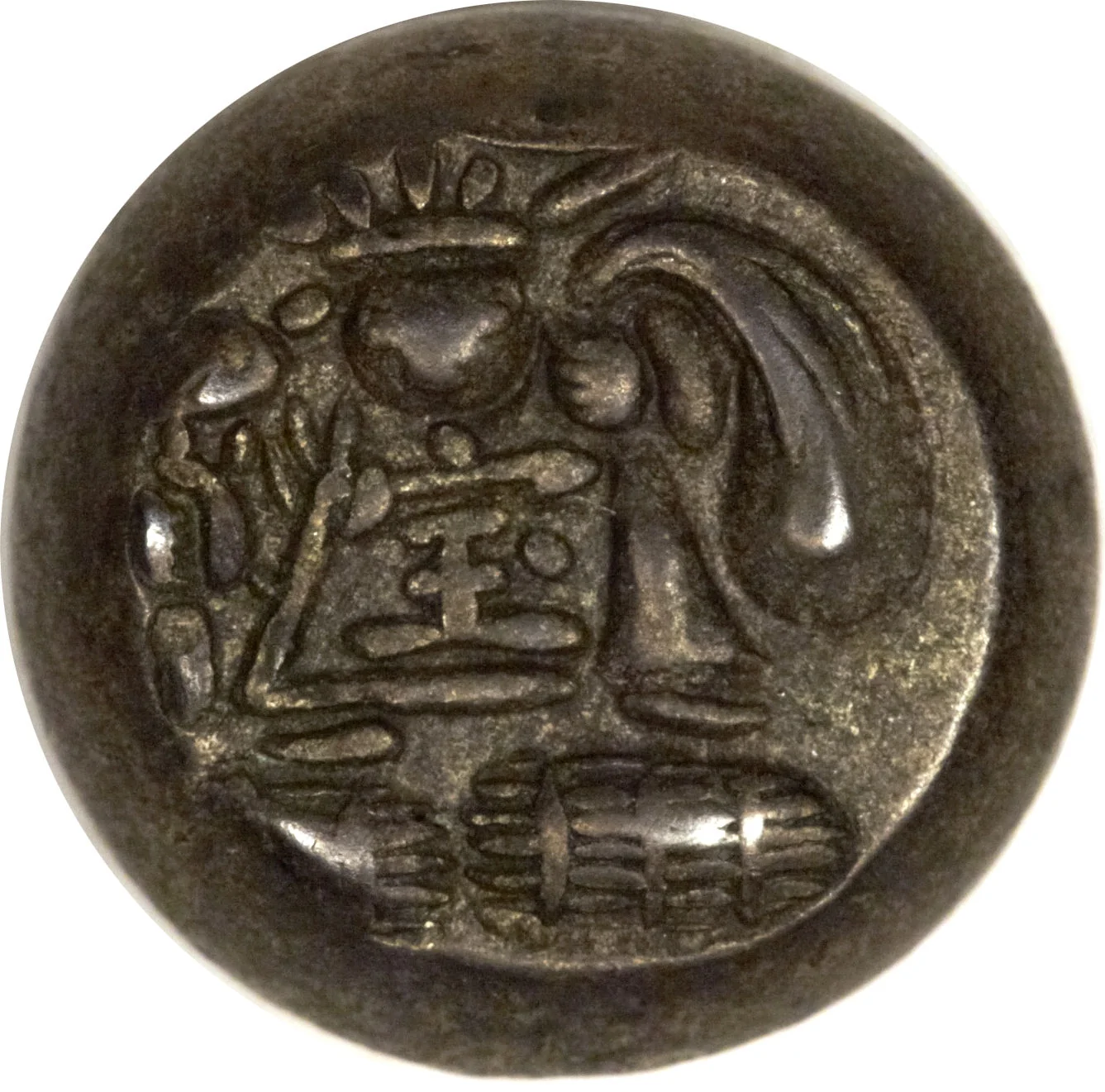
Daikoku: God of wealth and prosperity.
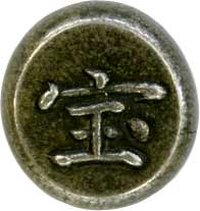
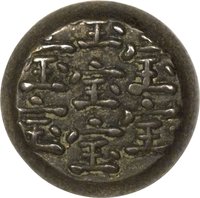
Reverse
Description:
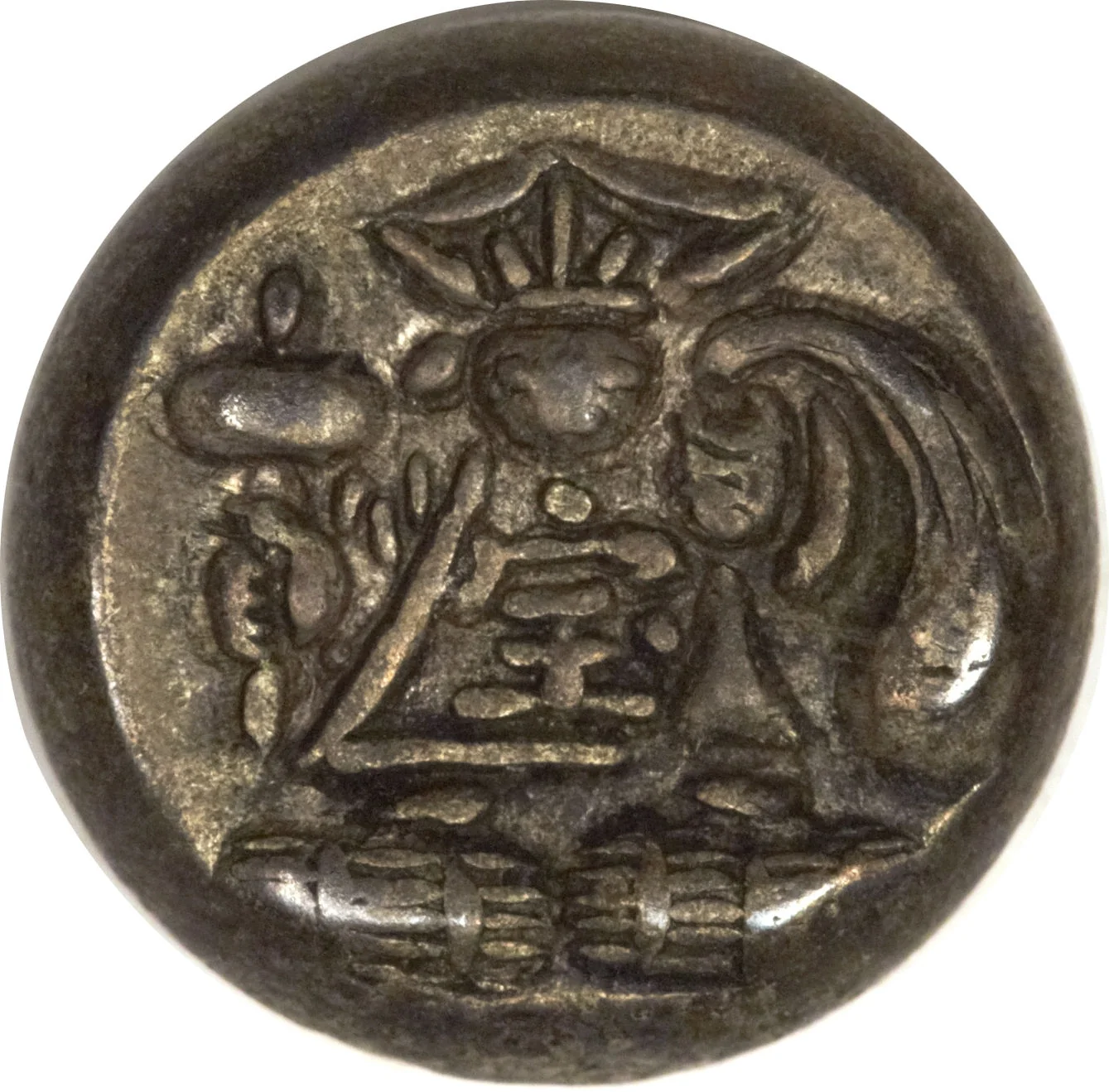
Daikoku: God of wealth and prosperity.
Edge
Mintings
| Year | Mint Mark | Mintage | Quality | Collection |
|---|---|---|---|---|
| — | — | — |
Historical background
In 1706, Japan's currency system was in a state of significant strain and complexity under the Tokugawa shogunate. The nation operated on a tri-metallic system of gold (koban and ryō), silver (chōgin and momme), and copper zeni coins, each with its own domains of use—gold for large lordly transactions, silver for regional merchant trade, and copper for daily commoner life. Critically, these metals did not have a fixed exchange rate with one another; their values fluctuated daily on money-changing tables in major cities like Osaka and Edo, creating a dynamic and often unstable financial environment. This period fell within the Genroku era (1688-1704), which had just ended, an age of booming commerce and cultural flourishing that had increased monetary demand and put pressure on the shogunate's minting resources.
The root of the 1706 crisis lay in decades of aggressive currency debasement, a policy masterminded by the shogunate's finance magistrate, Ogata Kōan. Facing chronic budget deficits, the government repeatedly reduced the precious metal content in coins while maintaining their face value. For instance, the Genroku koban gold coin, minted from 1695, contained significantly less gold than its predecessor. While this created short-term profit for the treasury, it led to severe inflation, a loss of public trust in the currency, and rampant counterfeiting. By 1706, the economic distortions from these debasements were acutely felt: price instability plagued markets, and the intricate, fluctuating exchange rates between gold, silver, and copper became a source of confusion and exploitation.
Recognizing the destabilizing effects, the shogunate under Tokugawa Tsunayoshi had already initiated the Hōei Recoinage in 1706, a direct attempt to restore stability. This policy involved issuing new, purer coins—like the Hōei koban—and recalling the debased Genroku-era currency. However, the recoinage was poorly managed; the exchange rate for old coins was set unfavourably, causing public outcry and further disruption. Thus, in 1706, Japan was caught at a pivotal and turbulent moment, transitioning from an era of inflationary debasement to a painful and only partially effective government correction, with merchants and the populace grappling with the volatile consequences of state monetary policy.
The root of the 1706 crisis lay in decades of aggressive currency debasement, a policy masterminded by the shogunate's finance magistrate, Ogata Kōan. Facing chronic budget deficits, the government repeatedly reduced the precious metal content in coins while maintaining their face value. For instance, the Genroku koban gold coin, minted from 1695, contained significantly less gold than its predecessor. While this created short-term profit for the treasury, it led to severe inflation, a loss of public trust in the currency, and rampant counterfeiting. By 1706, the economic distortions from these debasements were acutely felt: price instability plagued markets, and the intricate, fluctuating exchange rates between gold, silver, and copper became a source of confusion and exploitation.
Recognizing the destabilizing effects, the shogunate under Tokugawa Tsunayoshi had already initiated the Hōei Recoinage in 1706, a direct attempt to restore stability. This policy involved issuing new, purer coins—like the Hōei koban—and recalling the debased Genroku-era currency. However, the recoinage was poorly managed; the exchange rate for old coins was set unfavourably, causing public outcry and further disruption. Thus, in 1706, Japan was caught at a pivotal and turbulent moment, transitioning from an era of inflationary debasement to a painful and only partially effective government correction, with merchants and the populace grappling with the volatile consequences of state monetary policy.
Series: 1706 Japan circulation coins
✨ Legendary