

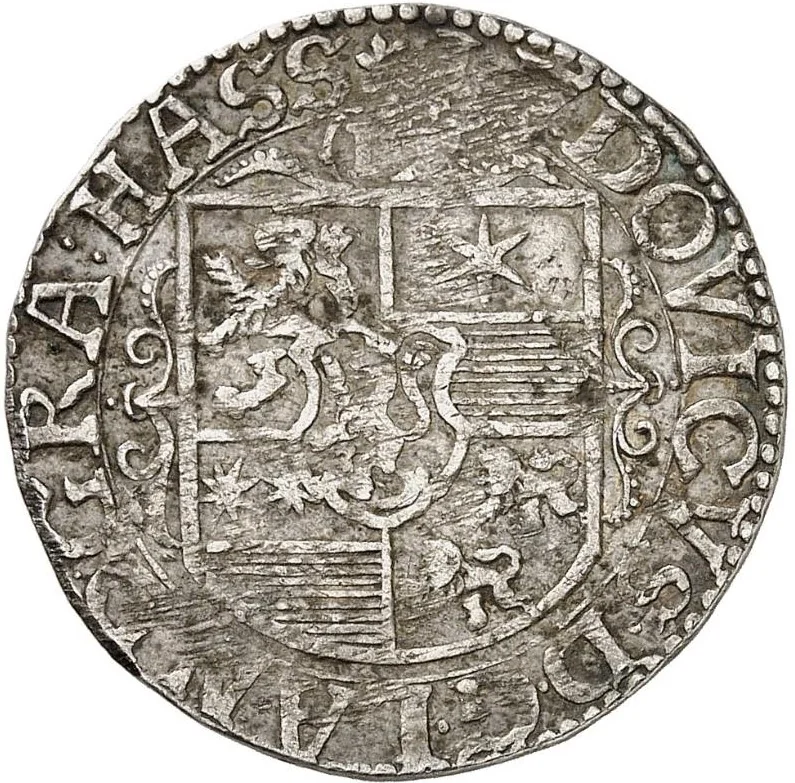
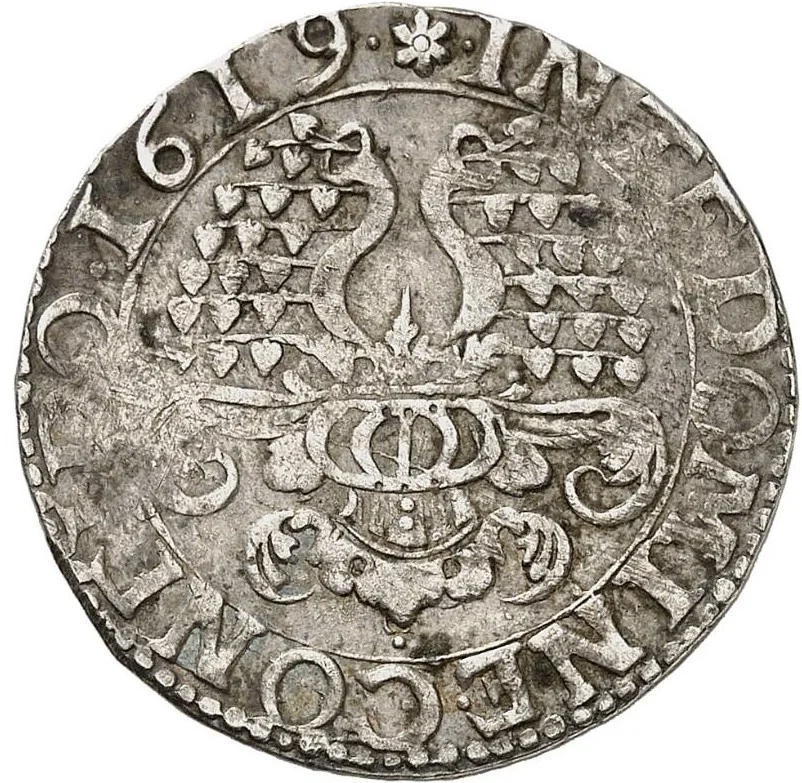
12 Kreuzers – Landgraviate of Hesse-Darmstadt
Context
Year: 1619
Issuer: Landgraviate of Hesse-Darmstadt
Ruler: Louis V
Currency:
(1568—1805)
Demonetized: Yes
Material
References
KM: #Click to copy to clipboard10
Numista: #271199
Value
Bullion value: $11.03
Obverse
Description:
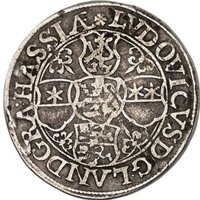
Spanish shield with 12 Hessian arms above.
Inscription:
LVDOVICVS • D • G • LANDGRA: HASS •*•
12
12
Script: Latin
Reverse
Edge
Mints
| Name | Mark |
|---|---|
| Darmstadt | — |
Mintings
| Year | Mint Mark | Mintage | Quality | Collection |
|---|---|---|---|---|
| 1619 | — | — |
Historical background
In 1619, the Landgraviate of Hesse-Darmstadt, like much of the Holy Roman Empire, was navigating a complex and deteriorating monetary landscape on the eve of the Thirty Years' War. The region operated within the Empire's overarching monetary framework, which relied on the Reichsthaler as a large silver coin for trade and accounting, and smaller regional coins for daily use. However, the system was plagued by the widespread practice of Kipper- und Wipperzeit (clipping and culling), where numerous states, including neighboring principalities, were debasing their coinage by reducing precious metal content to fund expenditures, flooding the market with inferior money.
Landgrave Ludwig V, known as "the Faithful," faced significant fiscal pressures, including inheritance disputes with Hesse-Kassel and the looming religious-political conflicts. While he maintained a reputation for relative monetary integrity compared to more aggressive debasers, his government still struggled to insulate its economy. The inflow of debased coins from neighboring territories caused Gresham's Law ("bad money drives out good") to take hold, as people hoarded the full-value Hesse-Darmstadt coins and passed the inferior ones, leading to inflation, price instability, and a loss of public trust in the currency.
Consequently, the primary monetary concerns in Hesse-Darmstadt in 1619 were defensive: managing the corrosive influx of foreign debased coinage and maintaining the stability of its own currency to preserve economic order. This was a precarious balancing act between state finances and market confidence. The outbreak of full-scale war just a year later would exponentially worsen these pressures, forcing even traditionally prudent states into further monetary manipulation to survive the coming decades of conflict.
Landgrave Ludwig V, known as "the Faithful," faced significant fiscal pressures, including inheritance disputes with Hesse-Kassel and the looming religious-political conflicts. While he maintained a reputation for relative monetary integrity compared to more aggressive debasers, his government still struggled to insulate its economy. The inflow of debased coins from neighboring territories caused Gresham's Law ("bad money drives out good") to take hold, as people hoarded the full-value Hesse-Darmstadt coins and passed the inferior ones, leading to inflation, price instability, and a loss of public trust in the currency.
Consequently, the primary monetary concerns in Hesse-Darmstadt in 1619 were defensive: managing the corrosive influx of foreign debased coinage and maintaining the stability of its own currency to preserve economic order. This was a precarious balancing act between state finances and market confidence. The outbreak of full-scale war just a year later would exponentially worsen these pressures, forcing even traditionally prudent states into further monetary manipulation to survive the coming decades of conflict.
✨ Legendary