

1 Ruble – Russian Empire
Russia
Context
Years: 1730–1733
Country: Russia 
Issuer: Russian Empire
Ruler: Anna I
Currency:
(1700—1917)
Demonetized: Yes
Total mintage: 382,220
Material
References
KM: #Click to copy to clipboard192.1
Numista: #26986
Value
Bullion value: $59.96
Obverse
Description:
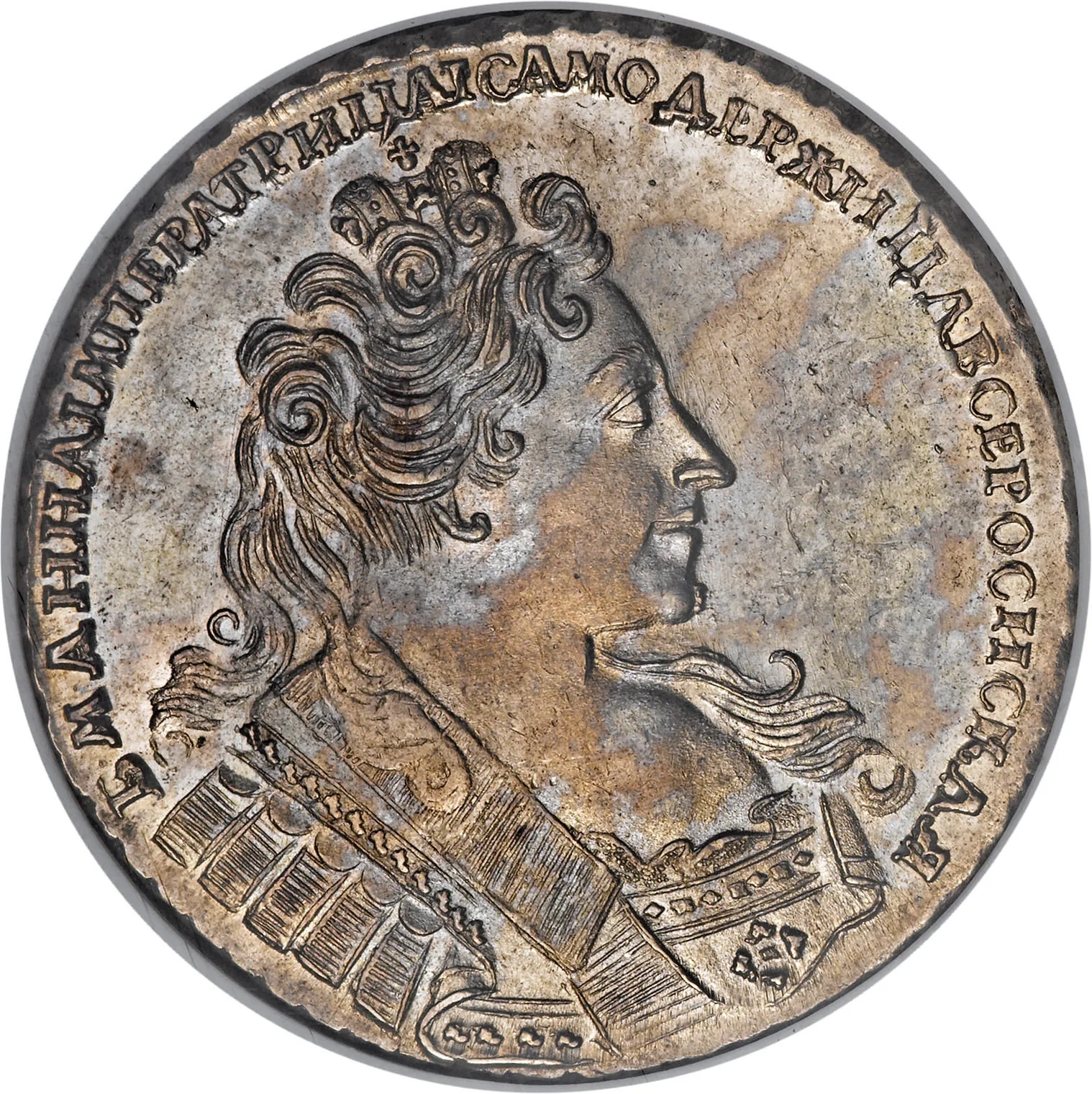
Empress Anna's portrait.
Inscription:
Б∙М∙АННАIМПЕРАТРИЦАIСАМОДЕРЖИЦА∙ВСЕРОСИСКАЯ
Script: Cyrillic
Reverse
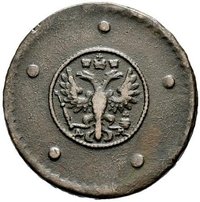
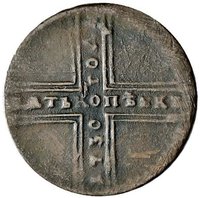
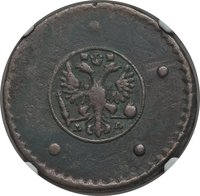
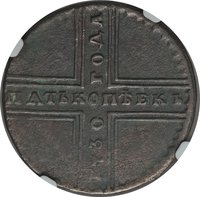
Description:
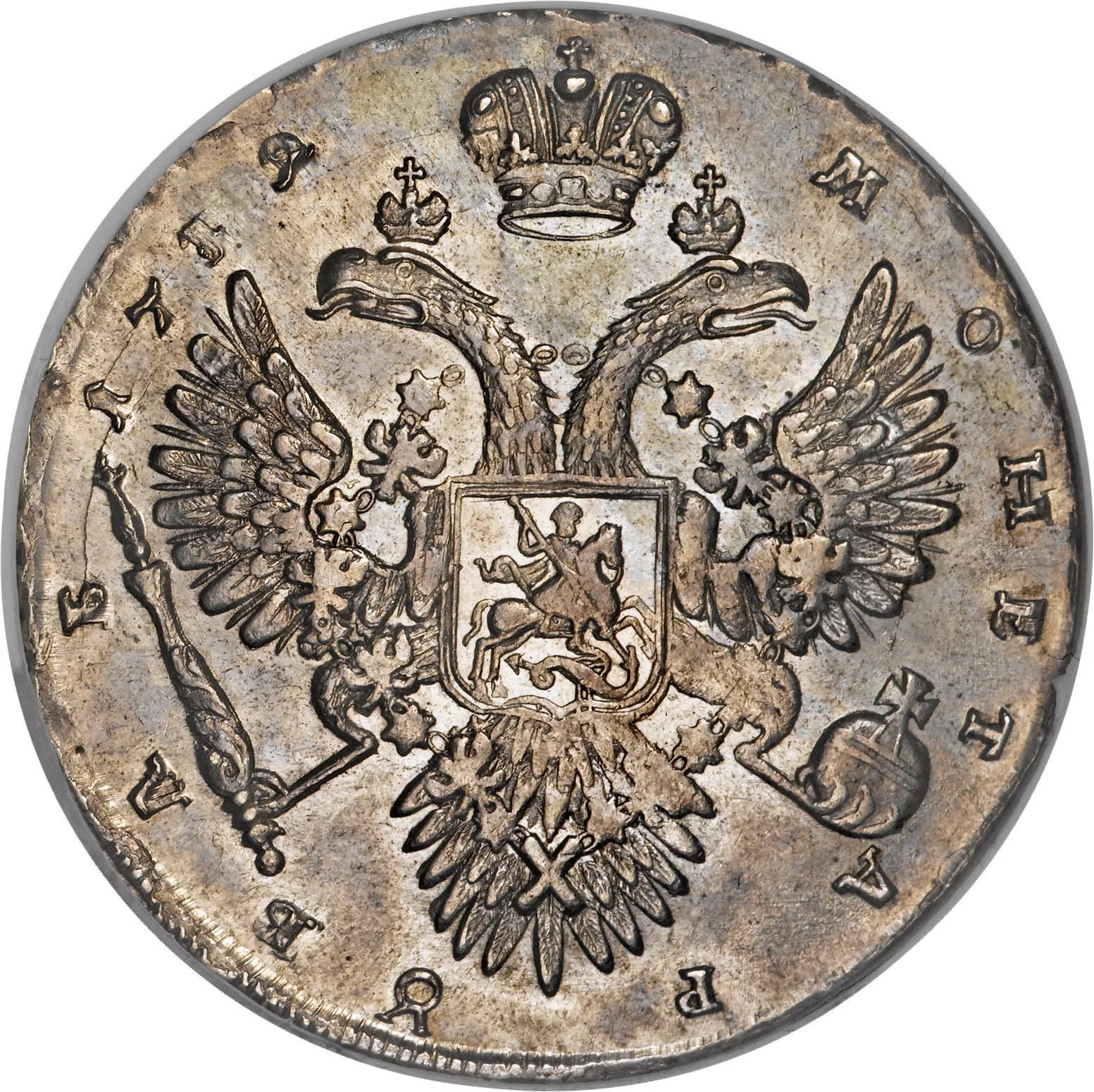
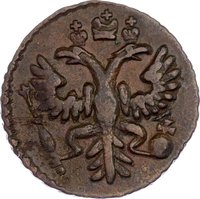
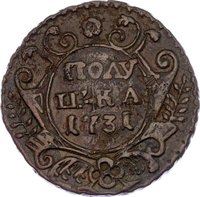
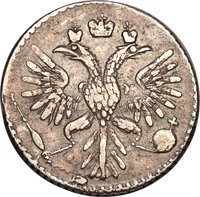
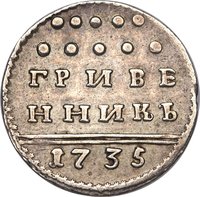
Crowned double-headed eagle surrounded by legend, value, and date.
Inscription:
МОНЕТА РƔБЛЬ 1732
Script: Cyrillic
Edge
Patterned
Categories
| Person> Monarch |
| Symbols> Coat of Arms |
Mints
| Name | Mark |
|---|---|
| Kadashevsky Mint | — |
Mintings
| Year | Mint Mark | Mintage | Quality | Collection |
|---|---|---|---|---|
| 1730 | — | 382,220 | ||
| 1731 | — | — | ||
| 1732 | — | — | ||
| 1733 | — | — |
Historical background
In 1730, the currency system of the Russian Empire was defined by a chronic shortage of small-denomination copper coins and a reliance on a cumbersome and inefficient monetary structure. The state's primary coinage was the silver kopeck and its multiples, but these were too valuable for everyday retail trade, creating a severe practical problem for the common population. To facilitate small transactions, the large, heavy plate money (platezhnyye rublî)—copper sheets minted under Peter the Great—remained in circulation, but their weight and bulk made them impractical.
This situation was a direct legacy of Peter I's Great Reforms, which had aimed to modernize the Russian economy but left a disjointed system. His financial policies, including the introduction of the copper plate money to fund the Great Northern War, had strained the treasury and caused inflation. While the government under Empress Anna Ioannovna (who ascended the throne in 1730) recognized the monetary disorder, initial efforts were cautious. The state continued to mint the unpopular copper plates while also producing smaller silver coins, but failed to address the core imbalance between the need for small change and the available supply.
Consequently, the currency situation stifled internal commerce and fostered public discontent. The lack of efficient small coinage led to widespread use of cut-up pieces of silver coins (küsok), further complicating trade and reducing state control over the money supply. This period of monetary instability set the stage for more significant reforms later in Anna's reign, particularly the decision in the mid-1730s to finally demonetize the copper plate money and introduce a new, more functional copper coinage, marking a pivotal step toward a unified monetary system.
This situation was a direct legacy of Peter I's Great Reforms, which had aimed to modernize the Russian economy but left a disjointed system. His financial policies, including the introduction of the copper plate money to fund the Great Northern War, had strained the treasury and caused inflation. While the government under Empress Anna Ioannovna (who ascended the throne in 1730) recognized the monetary disorder, initial efforts were cautious. The state continued to mint the unpopular copper plates while also producing smaller silver coins, but failed to address the core imbalance between the need for small change and the available supply.
Consequently, the currency situation stifled internal commerce and fostered public discontent. The lack of efficient small coinage led to widespread use of cut-up pieces of silver coins (küsok), further complicating trade and reducing state control over the money supply. This period of monetary instability set the stage for more significant reforms later in Anna's reign, particularly the decision in the mid-1730s to finally demonetize the copper plate money and introduce a new, more functional copper coinage, marking a pivotal step toward a unified monetary system.
💎 Very Rare