

1 ruble – Russian Empire
Add to wishlist
Russia
Context
Material
References
KM: #
Numista: #26980
Value
Bullion value: $51.97
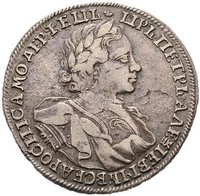
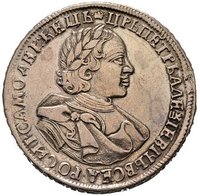
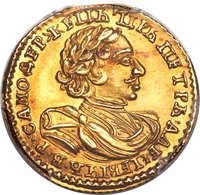
Obverse
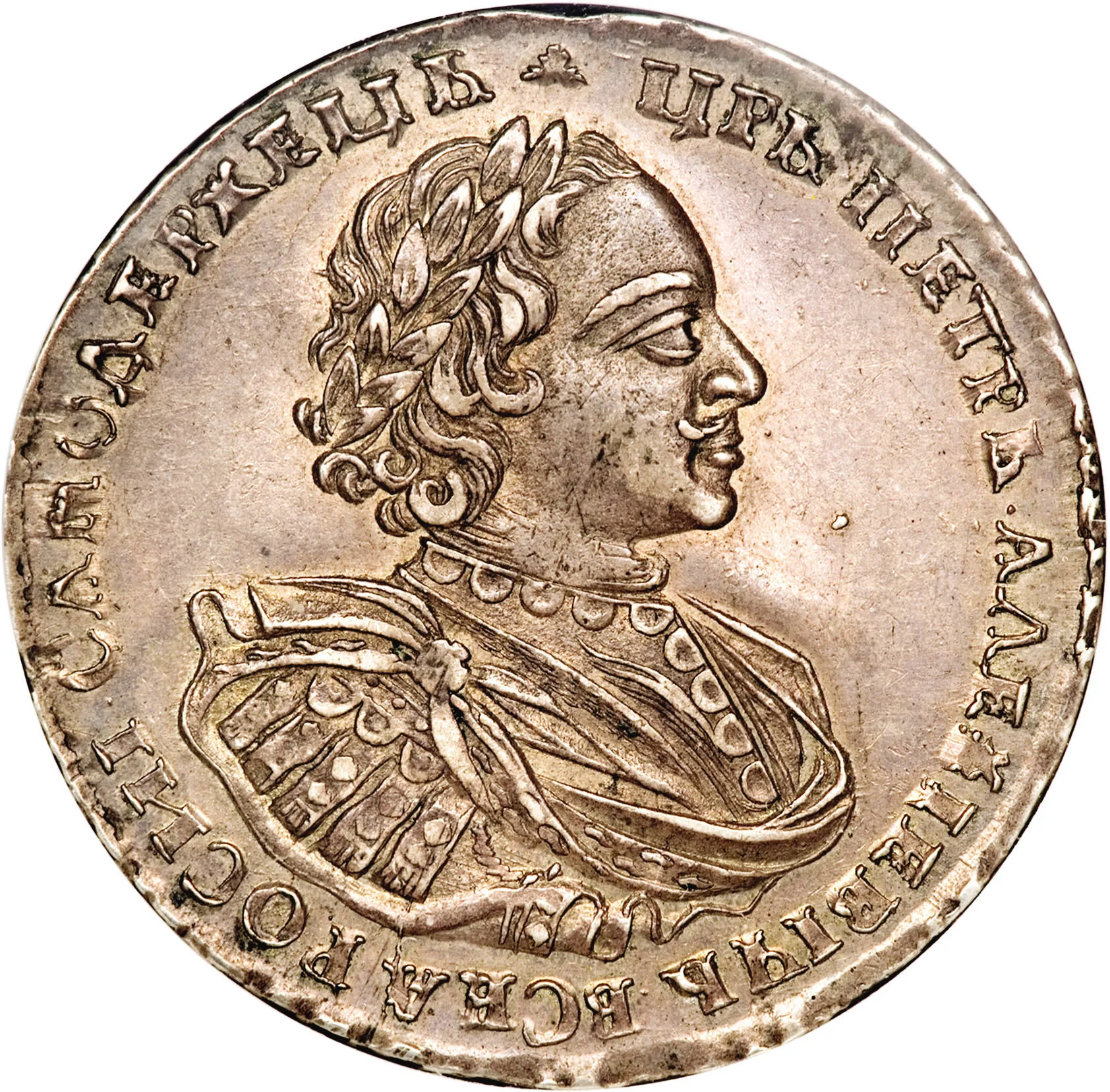
Description:
Peter I bust with encircling legend.
Inscription:
ЦРЬ·ПЕТРЬ·АЛЕѮИЕВIЧЬ·ВСЕѦ·РОСИI·САМОДЕРЖЕЦЬ
Script: Cyrillic
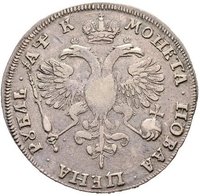
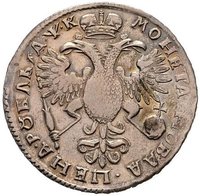
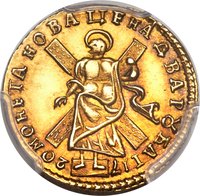
Reverse
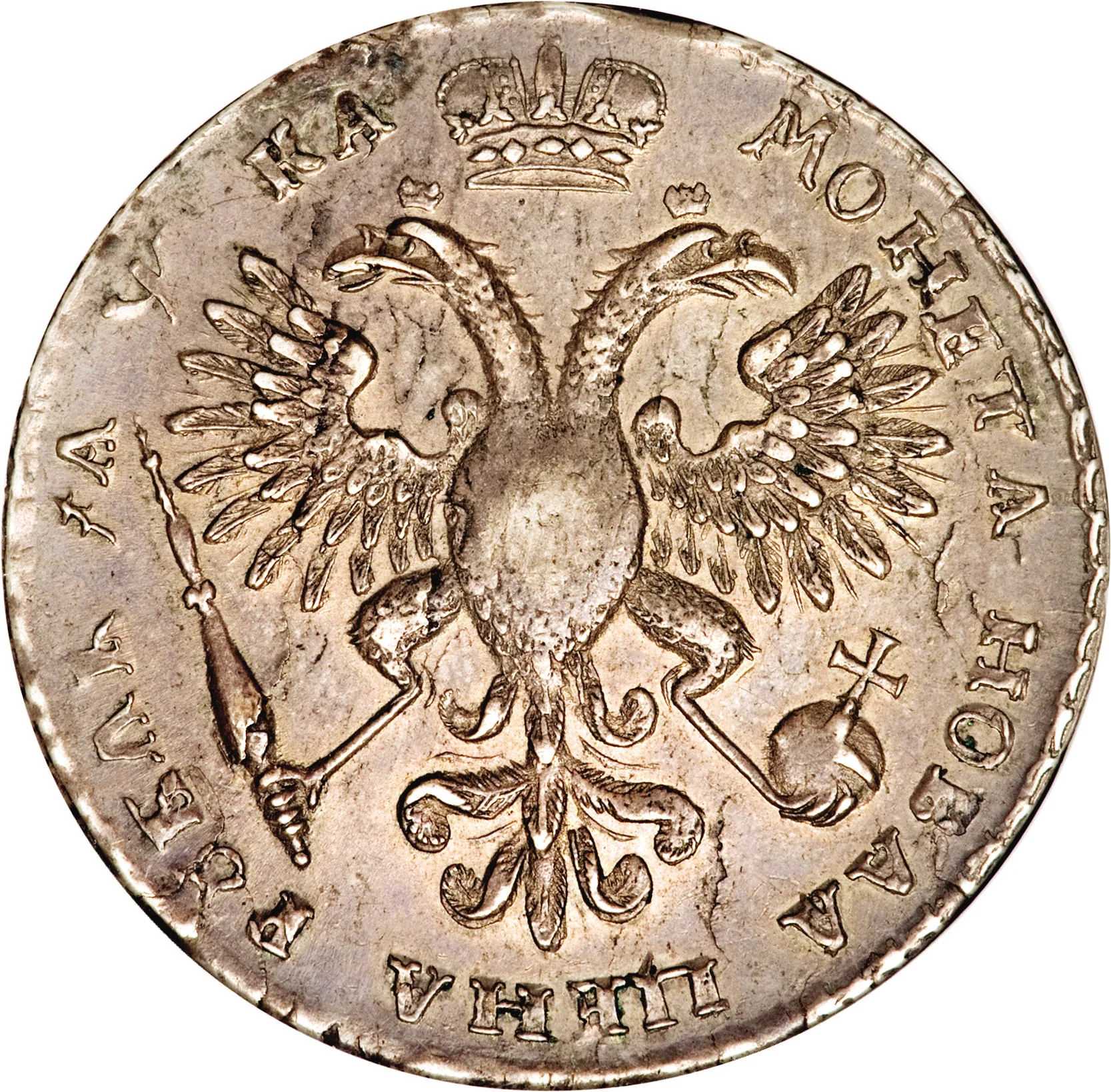
Description:
Double-headed eagle crowned, surrounded by legend.
Inscription:
МОНЕТА НОВАѦ ЦЕНА РƔБЛЬ ҂А Ψ КА
Script: Cyrillic
Edge
Smooth with lettering
Legend:
МОСКОВЬСКI УКАЗЬНЫ РУБЛЕВIКЪ МАНЕТНАГО ДВОРА
Categories
| Symbol> Double-headed eagle |
Mints
| Name | Mark |
|---|---|
| Kadashevsky Mint | — |
Mintings
| Year | Mint Mark | Mintage | Quality | Collection |
|---|---|---|---|---|
| 1720 | — | — | ||
| 1721 | — | — |
Historical background
By 1720, the Russian Empire's currency system was in a state of profound crisis, a direct consequence of Peter the Great's expensive military campaigns, particularly the Great Northern War. To finance his modernizing army and the new capital of St. Petersburg, the state had resorted to a drastic measure: the systematic debasement of the silver coinage. Starting in 1711, the silver content of kopecks was repeatedly reduced, and new, lighter coins were minted from existing ones, generating short-term profit but triggering severe inflation and a collapse in public trust.
The monetary landscape became chaotic, characterized by a confusing multiplicity of coins. Alongside the degraded silver kopeks, there were old pre-Peter copper dengas and new, large copper polushkas. Most significantly, the government had introduced a novel and unstable copper currency—the so-called "payment" ruble—which was a heavy copper plate with a stamped state guarantee but no intrinsic silver value. This created a disastrous dual system where the silver ruble and the copper "payment" ruble had wildly different market values, crippling domestic trade and state finances as people hoarded old, purer coins.
Recognizing the unsustainable situation, Peter I and his officials were actively seeking a solution. The year 1720 itself was a pivotal point of study and planning, laying the groundwork for the comprehensive monetary reform that would be enacted in the following years. The state aimed to move toward a standardized, European-style decimal system based on the ruble and its fractions, and to restore stability by ending the debasement and establishing reliable minting practices, a goal that would culminate in the reforms of 1723-1724.
The monetary landscape became chaotic, characterized by a confusing multiplicity of coins. Alongside the degraded silver kopeks, there were old pre-Peter copper dengas and new, large copper polushkas. Most significantly, the government had introduced a novel and unstable copper currency—the so-called "payment" ruble—which was a heavy copper plate with a stamped state guarantee but no intrinsic silver value. This created a disastrous dual system where the silver ruble and the copper "payment" ruble had wildly different market values, crippling domestic trade and state finances as people hoarded old, purer coins.
Recognizing the unsustainable situation, Peter I and his officials were actively seeking a solution. The year 1720 itself was a pivotal point of study and planning, laying the groundwork for the comprehensive monetary reform that would be enacted in the following years. The state aimed to move toward a standardized, European-style decimal system based on the ruble and its fractions, and to restore stability by ending the debasement and establishing reliable minting practices, a goal that would culminate in the reforms of 1723-1724.
💎 Extremely Rare