

1 Poltina – Russian Empire
Russia
Context

Material
References
KM: #Click to copy to clipboard106.1
Numista: #26977
Value
Bullion value: $33.78
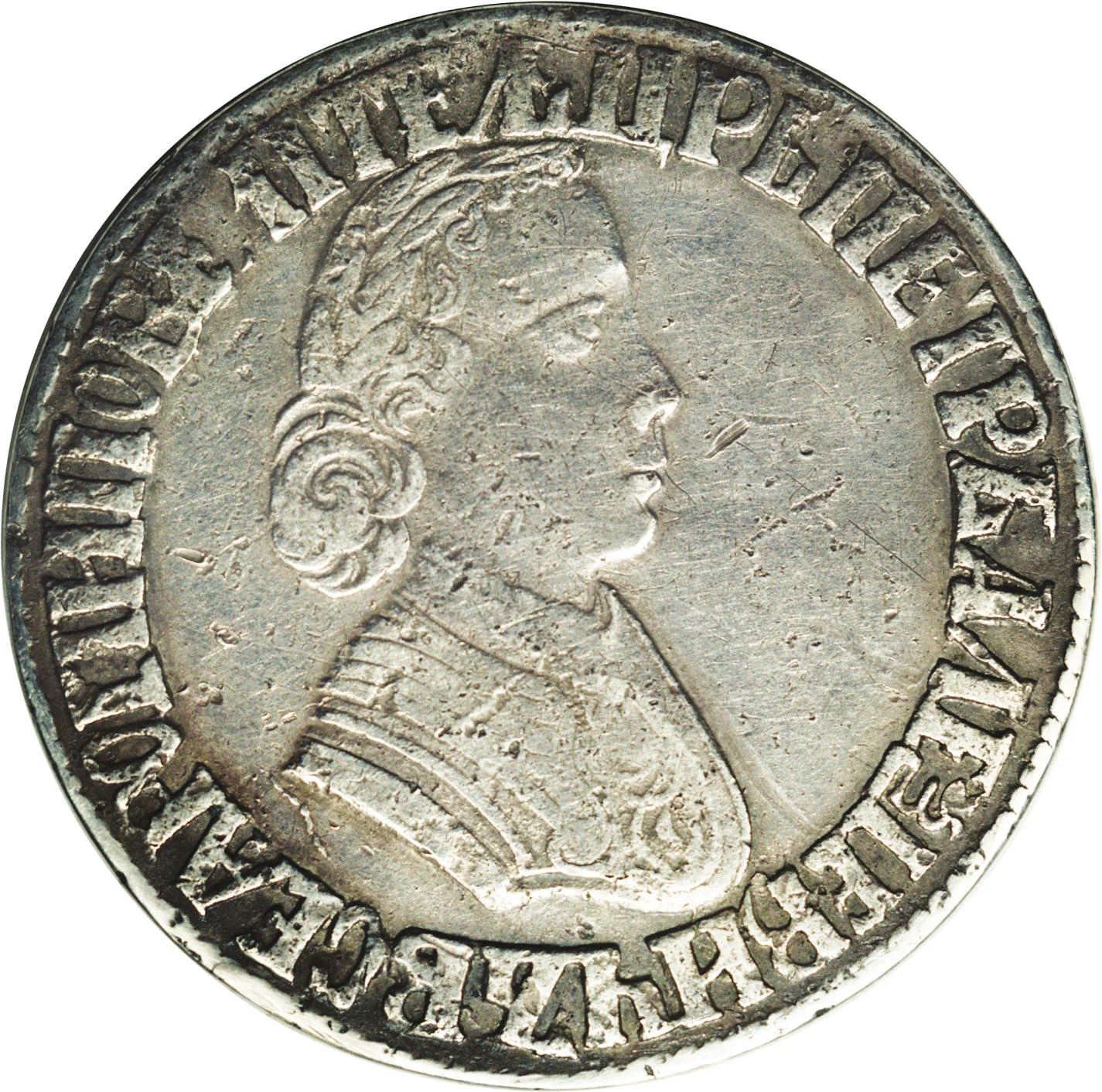
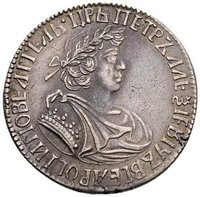
Obverse
Description:
Bust of Peter I, right profile.
Inscription:
ЦРЬ ПЕТРЪ АЛЕѮIЕВИЧЪ ВСЕѦ РОСIИ ПОВЕЛIТЕЉ
Script: Cyrillic
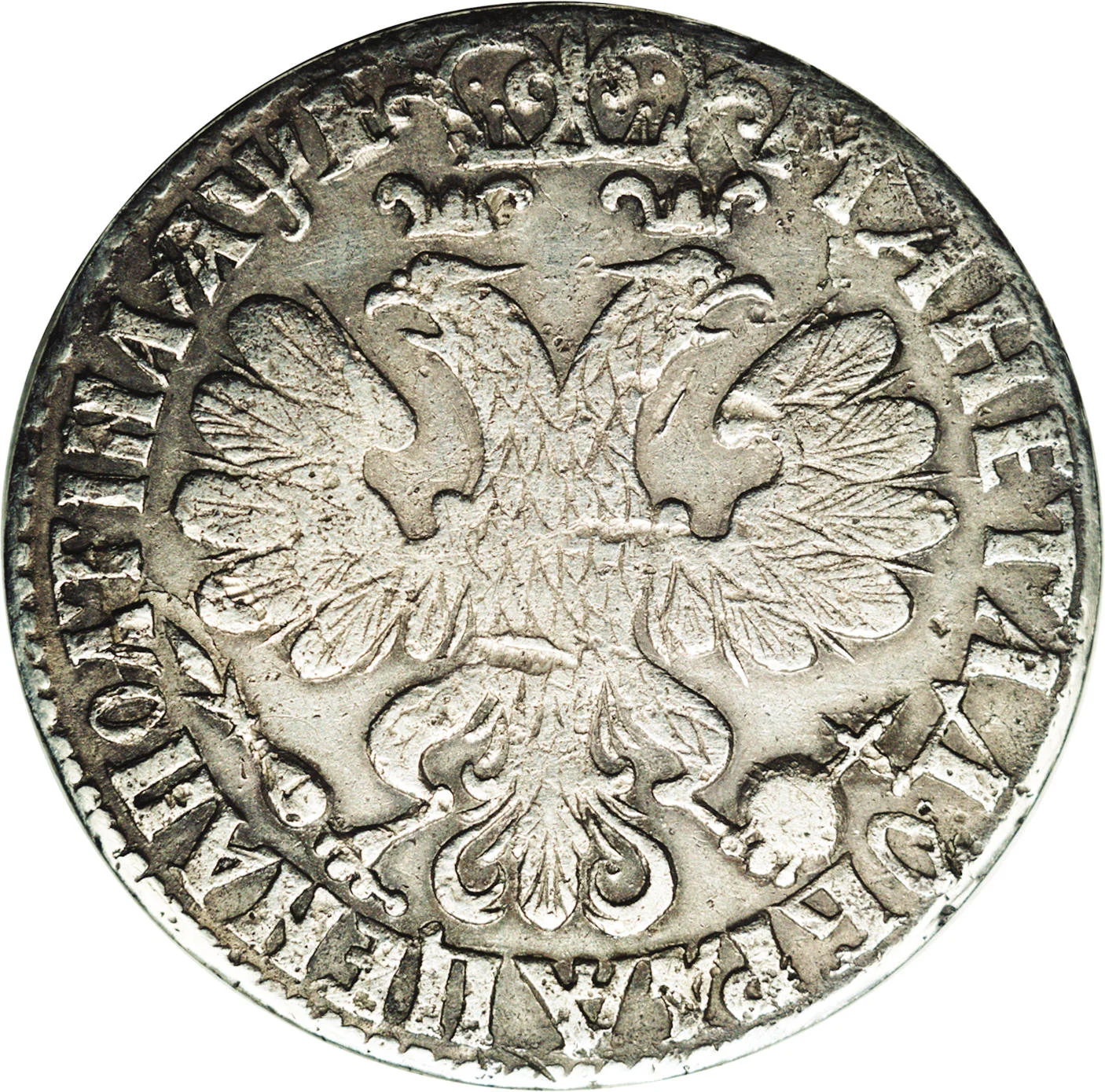
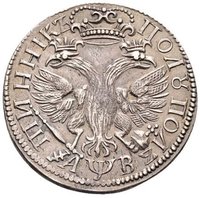
Reverse
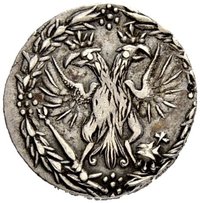
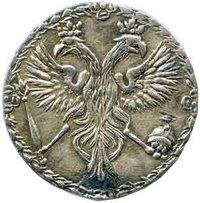
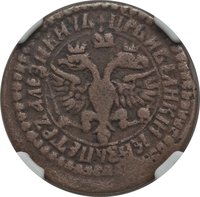
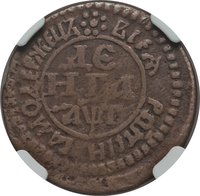
Description:
Double-headed crowned eagle.
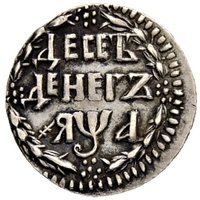
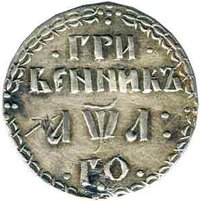
Inscription:
МАНЕТА ДОБРАѦ ЦЕНА ПОЛТИНА ҂АΨЕ
Script: Cyrillic
Edge
Plain
Mints
| Name | Mark |
|---|---|
| Kadashevsky Mint | — |
Mintings
| Year | Mint Mark | Mintage | Quality | Collection |
|---|---|---|---|---|
| 1701 | — | — | ||
| 1702 | — | — | ||
| 1703 | — | — | ||
| 1704 | — | — | ||
| 1705 | — | — |
Historical background
In 1701, the currency system of the Russian Empire was in a state of profound crisis and transformation, driven by the fiscal demands of the Great Northern War (1700-1721). Tsar Peter I, engaged in a costly conflict with Sweden, faced a severe shortage of silver, the traditional metal for high-denomination coins. To finance his military ambitions and the modernization of the state, he resorted to a drastic debasement of the coinage. The government significantly reduced the silver content in existing coins like the kopeck and, most notably, began minting large quantities of new copper coins—the denga and polushka—and mandating they be accepted at the same value as their silver predecessors.
This policy, effectively a form of hidden taxation, led to rapid inflation, a collapse in public trust, and widespread economic hardship. The sudden influx of low-value copper currency disrupted markets, as the intrinsic value of the coins was a fraction of their face value. Peasants and soldiers, often paid in this devalued copper, found their purchasing power drastically eroded, leading to social unrest, including the violent Bulavin Rebellion (1707-1708) which was partly fueled by economic grievances. The state’s financial manipulations created a dual circulation of old, higher-silver coins (which were hoarded) and the new, inferior ones.
Thus, the currency situation in 1701 was not a stable system but the opening act of a turbulent period of monetary experiment. Peter’s actions, while fiscally expedient in the short term, underscored the pre-modern nature of Russia’s economy, where the sovereign’s will could forcibly alter monetary value. This crisis would eventually compel Peter to seek more systematic reforms, culminating in the major monetary overhaul of the 1710s that introduced standardized, machine-minted silver rubles and copper minor coins, laying the foundation for a more modern financial system.
This policy, effectively a form of hidden taxation, led to rapid inflation, a collapse in public trust, and widespread economic hardship. The sudden influx of low-value copper currency disrupted markets, as the intrinsic value of the coins was a fraction of their face value. Peasants and soldiers, often paid in this devalued copper, found their purchasing power drastically eroded, leading to social unrest, including the violent Bulavin Rebellion (1707-1708) which was partly fueled by economic grievances. The state’s financial manipulations created a dual circulation of old, higher-silver coins (which were hoarded) and the new, inferior ones.
Thus, the currency situation in 1701 was not a stable system but the opening act of a turbulent period of monetary experiment. Peter’s actions, while fiscally expedient in the short term, underscored the pre-modern nature of Russia’s economy, where the sovereign’s will could forcibly alter monetary value. This crisis would eventually compel Peter to seek more systematic reforms, culminating in the major monetary overhaul of the 1710s that introduced standardized, machine-minted silver rubles and copper minor coins, laying the foundation for a more modern financial system.
✨ Legendary