

1 grossus – South Prussia
Add to wishlist
Germany
Context
Years: 1796–1798
Country: Germany
Issuer: South Prussia
Ruler: Frederick William II
Currency:
(1793—1807)
Subdivision: 1 grossus = 1 Groschen
Demonetized: Yes
Material
References
KM: #
Numista: #26929
Obverse
Description:
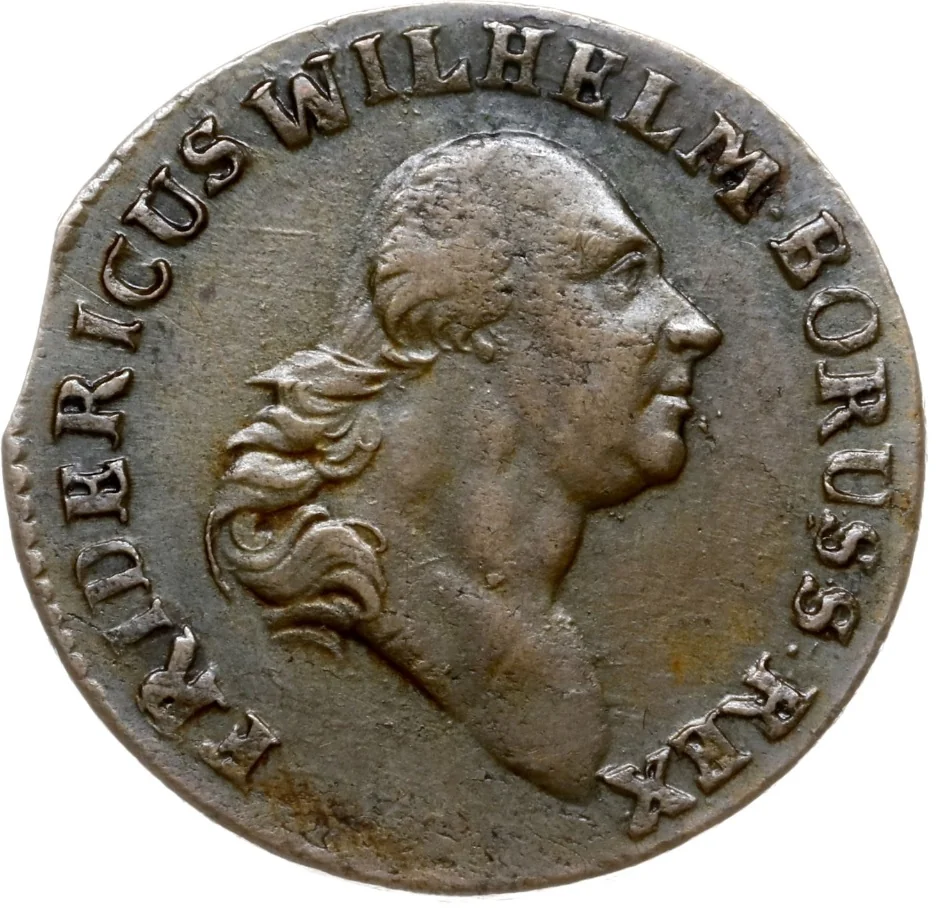
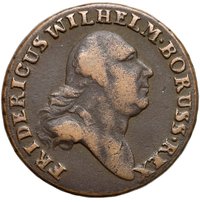
Bust of Friedrich Wilhelm II (1744–1797).
Inscription:
FRIDERICUS WILHELM⦁ BORUSS⦁ REX
Script: Latin
Reverse
Description:
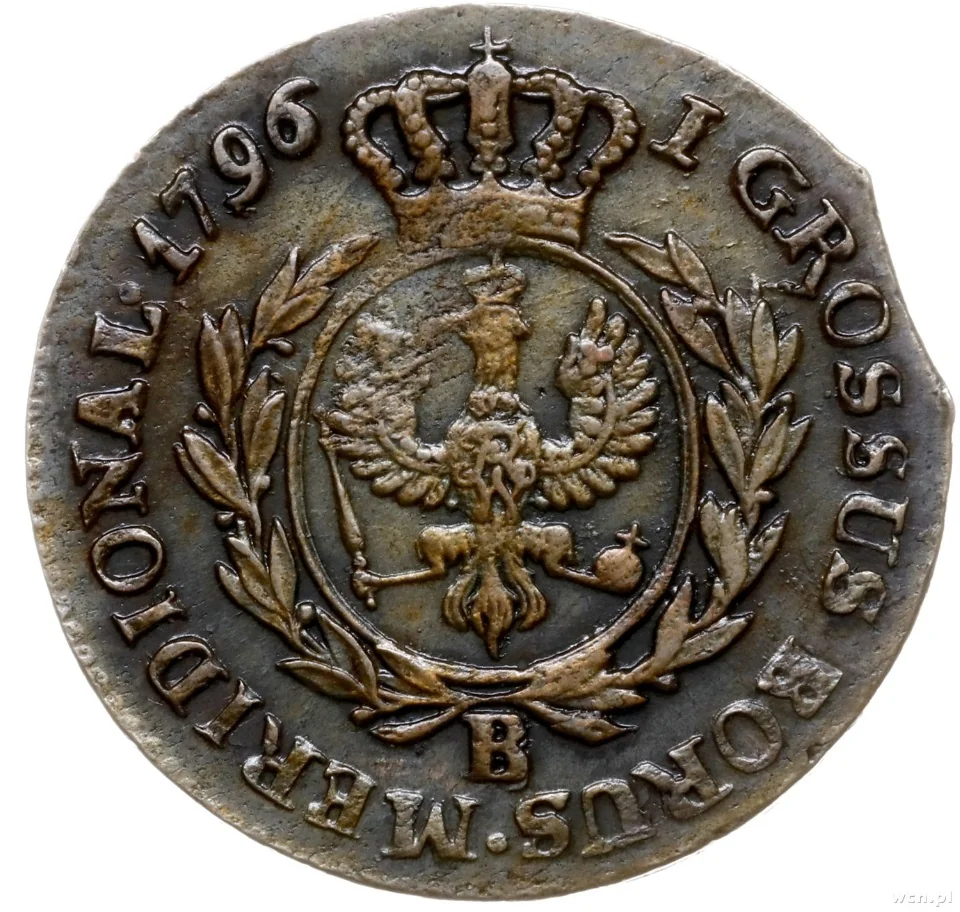
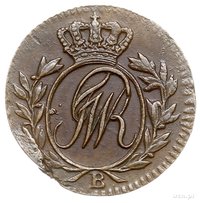
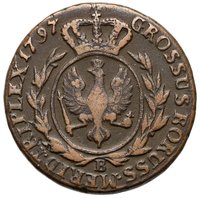
Crowned arms in wreath.
Inscription:
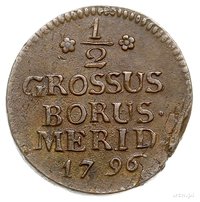
I⦁ GROSSUS BORUSS⦁ MERIDIONAL⦁ 1796
B
B
Script: Latin
Edge
Plain
Mints
| Name | Mark |
|---|---|
| Wrocław | B |
| Königsberg | E |
Historical background
Following the Third Partition of Poland in 1795, the newly created province of South Prussia found itself in a state of profound monetary chaos. The territory was a patchwork of former Polish lands, each with a legacy of different currencies in circulation, primarily the debased Polish złoty and a multitude of foreign coins, including Prussian thalers, Saxon coins, and Austrian gulden. The Prussian state, under King Frederick William III, faced the immediate challenge of imposing monetary order to facilitate taxation, pay its officials and garrison troops, and integrate the province into the broader Prussian economic system.
The official policy was to replace all existing currencies with the standard Prussian Reichsthaler, but implementation in 1796 was slow and problematic. The government set exchange rates for the old Polish coins, but these were often set below their perceived market value, leading to widespread hoarding of specie and public reluctance to surrender old money. This, combined with a general shortage of small change for everyday transactions, created a dual crisis: a lack of confidence in the new authority's money and a practical barrier to commerce, which stifled the province's economic recovery.
Consequently, the currency situation in South Prussia in 1796 was characterized by a tense transition. While Prussian authorities were determined to assert fiscal control as a symbol of sovereignty, the reality on the ground was one of confusion, scarcity, and a lingering attachment to the familiar monetary systems of the former Polish-Lithuanian Commonwealth. This unstable environment hampered efficient administration and trade, reflecting the broader difficulties of integrating annexed territories into the Prussian state through coercive monetary policy.
The official policy was to replace all existing currencies with the standard Prussian Reichsthaler, but implementation in 1796 was slow and problematic. The government set exchange rates for the old Polish coins, but these were often set below their perceived market value, leading to widespread hoarding of specie and public reluctance to surrender old money. This, combined with a general shortage of small change for everyday transactions, created a dual crisis: a lack of confidence in the new authority's money and a practical barrier to commerce, which stifled the province's economic recovery.
Consequently, the currency situation in South Prussia in 1796 was characterized by a tense transition. While Prussian authorities were determined to assert fiscal control as a symbol of sovereignty, the reality on the ground was one of confusion, scarcity, and a lingering attachment to the familiar monetary systems of the former Polish-Lithuanian Commonwealth. This unstable environment hampered efficient administration and trade, reflecting the broader difficulties of integrating annexed territories into the Prussian state through coercive monetary policy.
🌟 Uncommon