

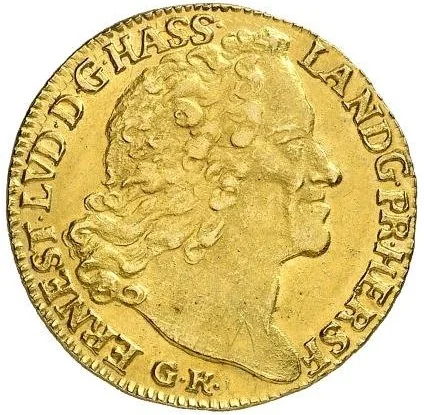
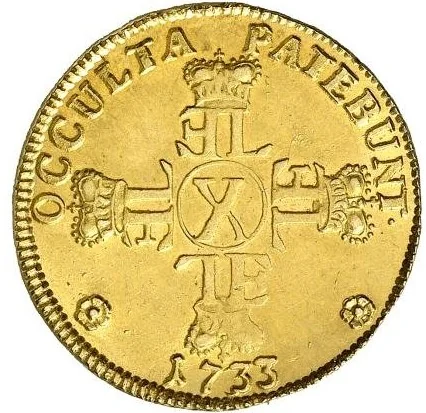
1 Carolin – Landgraviate of Hesse-Darmstadt
Context
Year: 1733
Issuer: Landgraviate of Hesse-Darmstadt
Ruler: Ernest Louis
Currency:
(1568—1805)
Demonetized: Yes
Material
References
KM: #Click to copy to clipboard162
Numista: #268292
Value
Bullion value: $1245.33
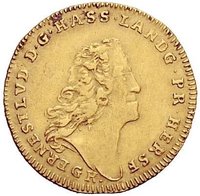
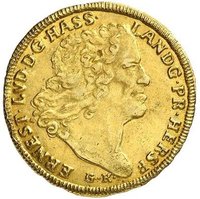
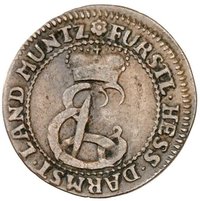
Obverse
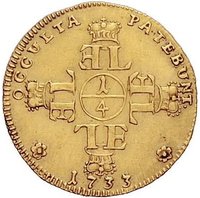
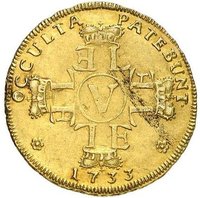
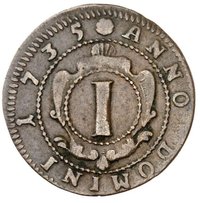
Reverse
Description:
Crowned cruciform monograms, central value.
Inscription:
OCCULTA PATEBUNT
EL EL EL EL
X
1733
EL EL EL EL
X
1733
Script: Latin
Edge
Mints
| Name | Mark |
|---|---|
| Darmstadt | — |
Mintings
| Year | Mint Mark | Mintage | Quality | Collection |
|---|---|---|---|---|
| 1733 | — | — |
Historical background
In 1733, the currency situation in the Landgraviate of Hesse-Darmstadt was characterized by significant fragmentation and instability, common across the Holy Roman Empire. The landgraviate did not have a monopoly on coinage; instead, it operated within a complex monetary landscape where multiple authorities, including neighboring states, ecclesiastical territories, and free cities, issued their own coins. These currencies, with varying weights, metal contents, and values, all circulated simultaneously within Hesse-Darmstadt's borders, leading to chronic confusion for daily commerce and facilitating widespread debasement.
The primary unit of account was the Reichsthaler, a large silver coin defined by Imperial decree. However, everyday transactions relied on a plethora of smaller regional coins, such as Kreuzers and Gulden, whose exchange rates against the Reichsthaler fluctuated. Landgrave Ernst Ludwig, facing persistent financial pressures from maintaining his court and administration, periodically engaged in the practice of issuing debased coinage—reducing the precious metal content—to generate short-term revenue. This practice, while fiscally tempting, eroded public trust, distorted trade, and often led to Gresham's Law ("bad money drives out good money"), as older, full-value coins were hoarded or melted down.
Consequently, the year 1733 fell within a period of ongoing monetary weakness and administrative challenge. The landgraviate lacked a unified, stable currency system, which hampered economic development and state-building efforts. Effective monetary reform would only begin to materialize later in the century, particularly under Landgrave Louis IX, who sought greater standardization. Thus, in 1733, merchants and subjects in Hesse-Darmstadt navigated a marketplace where the value of money was uncertain, a direct reflection of the decentralized political structure of the Empire.
The primary unit of account was the Reichsthaler, a large silver coin defined by Imperial decree. However, everyday transactions relied on a plethora of smaller regional coins, such as Kreuzers and Gulden, whose exchange rates against the Reichsthaler fluctuated. Landgrave Ernst Ludwig, facing persistent financial pressures from maintaining his court and administration, periodically engaged in the practice of issuing debased coinage—reducing the precious metal content—to generate short-term revenue. This practice, while fiscally tempting, eroded public trust, distorted trade, and often led to Gresham's Law ("bad money drives out good money"), as older, full-value coins were hoarded or melted down.
Consequently, the year 1733 fell within a period of ongoing monetary weakness and administrative challenge. The landgraviate lacked a unified, stable currency system, which hampered economic development and state-building efforts. Effective monetary reform would only begin to materialize later in the century, particularly under Landgrave Louis IX, who sought greater standardization. Thus, in 1733, merchants and subjects in Hesse-Darmstadt navigated a marketplace where the value of money was uncertain, a direct reflection of the decentralized political structure of the Empire.
✨ Legendary