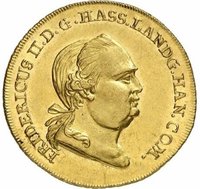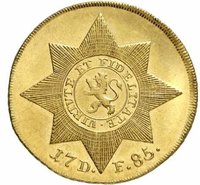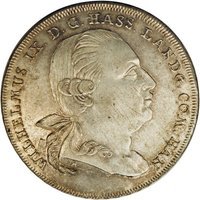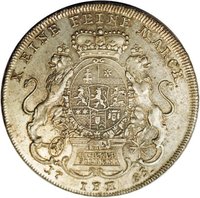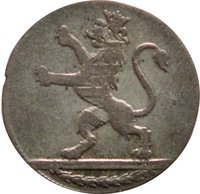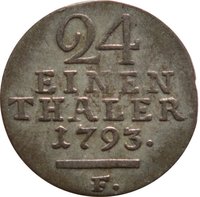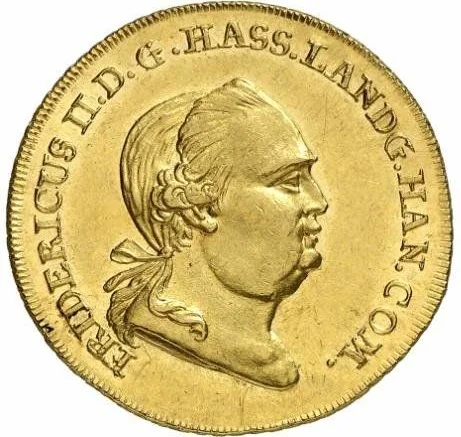
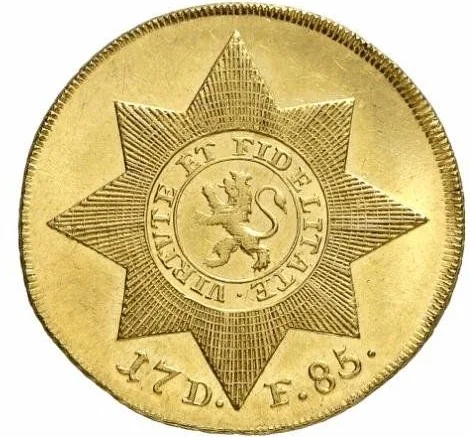
In 1785, the Landgraviate of Hesse-Cassel, under Landgrave Frederick II, possessed a notoriously complex and fragmented currency system. This was not a unified monetary zone but a mosaic of different coins and standards, a legacy of its history as a state assembled from various territories and its strategic position in the heart of the Holy Roman Empire. The landgraviate officially used the
Reichsthaler as its accounting unit, but in practice, a plethora of physical currencies circulated. These included local issues like the
Hessen-Casselischer Thaler, various German regional coins from neighboring states, and significant quantities of foreign specie, particularly French
Louis d'or and Dutch ducats, reflecting Hesse-Cassel's active role in international mercenary trade and finance.
This multiplicity created chronic problems of exchange and confidence. The value of coins was based on their precious metal content, and the constant inflow and outflow of varied currencies led to fluctuating exchange rates and widespread confusion in commerce. Debasement of coinage by neighboring princes further eroded trust. While the landgraviate's own mint produced coins, it struggled to assert a dominant, stable currency, leading to a reliance on older, trusted foreign gold coins for major transactions and state reserves. This environment was ripe for exploitation by money changers and caused significant inconvenience and risk for merchants and the populace.
The situation was, however, underpinned by a paradoxical strength: the landgraviate's treasury was famously wealthy. Frederick II and his predecessor had amassed vast reserves, primarily through the lucrative business of renting Hessian soldiers to foreign powers, most notably Britain during the American Revolutionary War. Thus, while the everyday currency system was fragmented and cumbersome, the state itself was financially robust, with coffers filled with stable foreign gold. This disconnect between a chaotic public monetary circulation and a solid fiscal foundation would characterize Hesse-Cassel's economy until the Napoleonic Wars forced sweeping reforms.