Logo Title
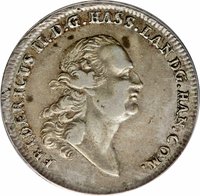
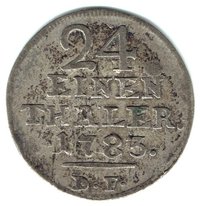
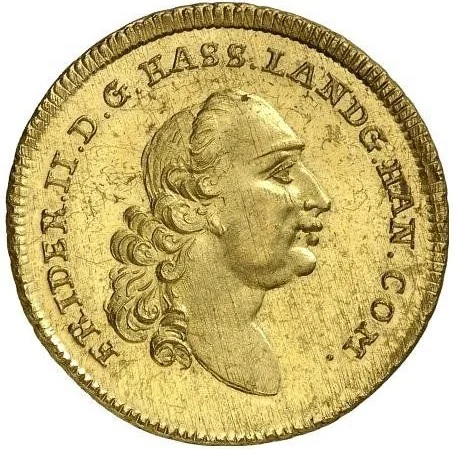
obverse
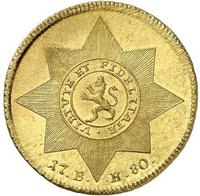
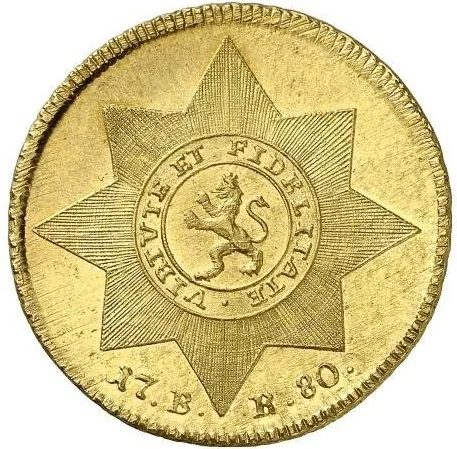
reverse
Fritz Rudolf Künker GmbH & Co. KG, Osnabrück and Lübke & Wiedemann KG, Leonberg

2 Friedrichs d'Or – Landgraviate of Hesse-Cassel

Context
Year: 1780
Currency:
Subdivision: 2 Friedrichs d'Or = 10 Thalers
Demonetized: Yes
Material
Weight: 13.3 g
Gold weight: 11.97 g
Shape: Round
Composition: 90% Gold
Magnetic: No
Alignment: Medal alignment
Obverse
OBVERSE ↑
flip
Reverse
REVERSE ↑
References
KM: #Click to copy to clipboard521
Numista: #268184
Value
Bullion value: $1992.57

Obverse

Description:
Go right
Inscription:
FRIDER II D G HASS LANDG HAN COM
Script: Latin

Reverse

Description:
Lion arms inside star, date beneath.
Inscription:
VIRTVTE ET FIDELITATE

1780

BR
Script: Latin

Edge

Mints

NameMark
Kassel

Mintings

YearMint MarkMintageQualityCollection
1780

Historical background

In 1780, the Landgraviate of Hesse-Cassel, under Landgrave Frederick II, possessed one of the most complex and fragmented currency systems in the Holy Roman Empire. The territory did not have a single, unified coinage but was instead a monetary mosaic. The official currency was based on the Reichsthaler, a silver standard unit decreed by imperial law, but daily transactions were dominated by a plethora of circulating Gute Groschen and Albuses. Furthermore, the landgravial mint in Kassel produced its own coins, while numerous other mints operated by lesser nobles and ecclesiastical entities within Hesse-Cassel's borders also issued coinage, leading to a bewildering variety of denominations and standards.

This fragmentation was exacerbated by the widespread circulation of foreign coins, particularly from neighboring states like Hanover and Brunswick, as well as Dutch and French currency. The value of these coins fluctuated based on their actual silver content, which often differed from their face value, creating a constant challenge for trade and taxation. Consequently, elaborate and officially published exchange tables (Münztabellen) were essential for merchants and officials to navigate the daily calculations required for business, as the simple act of making change could involve multiple coin types.

The situation was further strained by the Landgrave's own financial policies. Frederick II, famously known as the "Millionaire Prince," derived immense wealth from renting Hessian soldiers to Great Britain during the American Revolutionary War. While this filled the state coffers, it also increased the volume of foreign specie (especially British subsidies) flowing into the economy, complicating the monetary landscape further. The government attempted to control and profit from this system through minting regulations and exchange operations, but the fundamental lack of uniformity remained a significant hindrance to economic cohesion and administrative efficiency within the landgravate.
Legendary