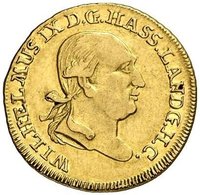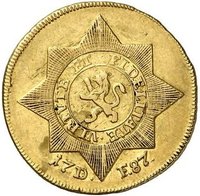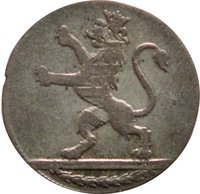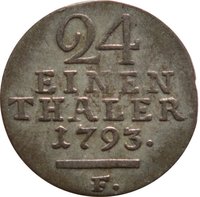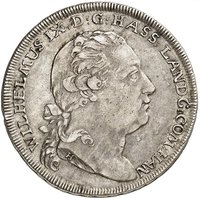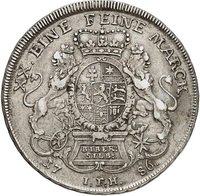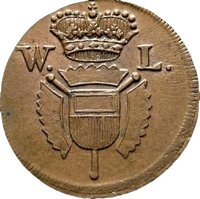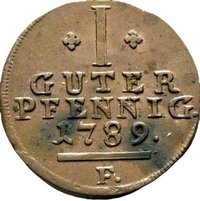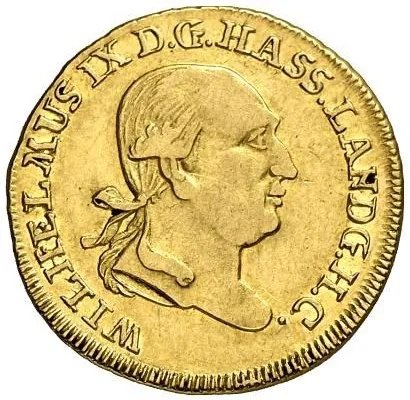
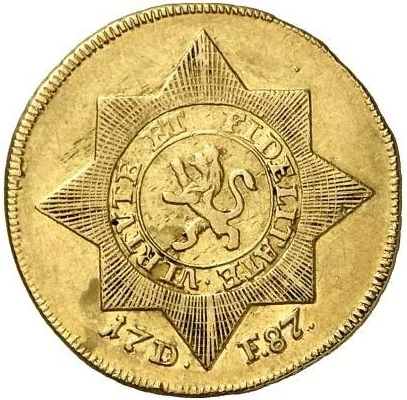
In 1786, the currency situation in the Landgraviate of Hesse-Cassel was one of notable complexity and relative strength, largely due to the fiscal policies of Landgrave Frederick II (reigned 1760-1785) and his successor, William IX. The principality was famously wealthy, its coffers swollen not only by efficient tax collection and agricultural exports but also by the controversial but highly profitable practice of leasing Hessian soldiers as mercenaries to foreign powers, most notably Great Britain during the American War of Independence. This substantial income, managed with thrift, provided a strong bullion reserve, which underpinned the stability of the local currency.
The circulating medium was a tangled mosaic of various coins. Alongside the Landgraviate's own issued
Taler and smaller denominations, there was a significant presence of foreign currencies, particularly the
Reichsthaler from the Holy Roman Empire and regional rivals like the Prussian
Thaler. This proliferation was common in the politically fragmented German lands, where numerous states minted their own coins, all theoretically adhering to the imperial monetary ordinances (
Reichsmünzfuß) that set silver standards. In practice, however, the simultaneous circulation of these coins, alongside older, debased issues, created a persistent challenge for commerce, requiring constant calculation of exchange rates and inherent value.
Consequently, while Hesse-Cassel's treasury was robust, the everyday monetary experience for merchants and citizens was one of administrative friction. The need for frequent assay and exchange hampered trade efficiency. This situation would prompt Landgrave William IX, upon his accession in 1785, to initiate monetary reforms aimed at simplification and standardization, seeking to assert greater control over the currency in circulation and to leverage the state's financial strength for economic modernization, setting the stage for changes in the subsequent decade.