Logo Title
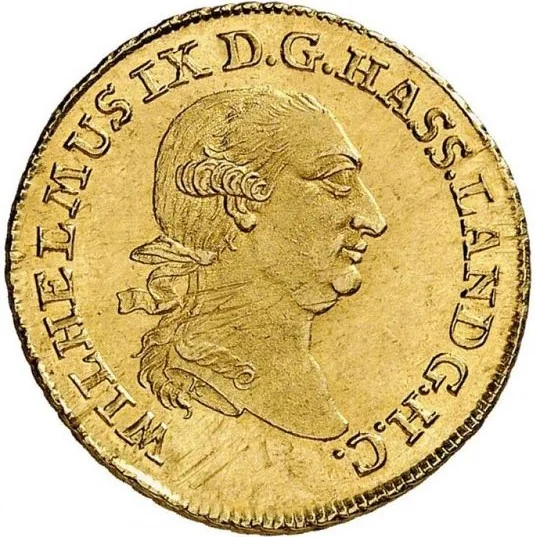
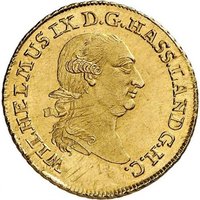
obverse
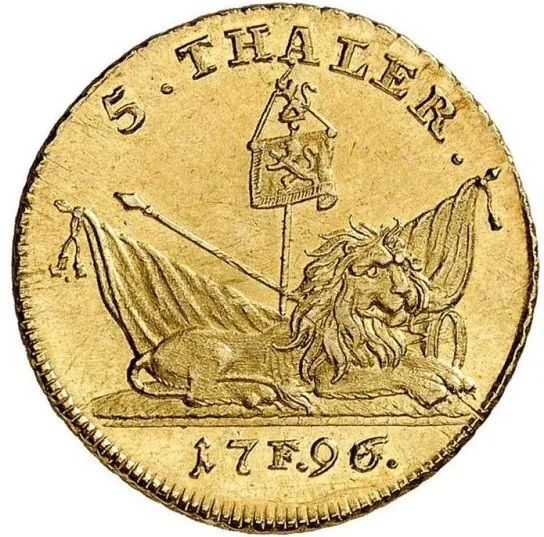
reverse
Fritz Rudolf Künker GmbH & Co. KG, Osnabrück and Lübke & Wiedemann KG, Leonberg
Context
Years: 1791–1801
Ruler: William IX
Currency:
Subdivision: 5 Thalers = 1 Pistole
Demonetized: Yes
Material
Weight: 6.65 g
Gold weight: 5.99 g
Shape: Round
Composition: 90% Gold
Magnetic: No
Alignment: Medal alignment
Obverse
OBVERSE ↑
flip
Reverse
REVERSE ↑
References
KM: #Click to copy to clipboard545
Numista: #268170
Value
Bullion value: $996.28

Obverse

Description:
Go right
Inscription:
WILHELMUS IX D G HASS LAND G H C
Script: Latin

Reverse

Description:
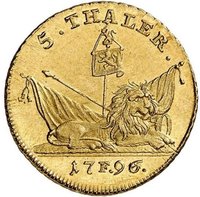
Lion before a crowned shield, flanked by flags, fasces, and swords.
Inscription:
5 THALER

1796

F
Script: Latin

Edge

Mints

NameMark
Kassel

Mintings

YearMint MarkMintageQualityCollection
1791
1792
1793
1794
1795
1796
1797
1798
1799
1800
1801

Historical background

In 1791, the currency situation in the Landgraviate of Hesse-Cassel was complex and fragmented, a common legacy of the Holy Roman Empire's decentralized political structure. The primary unit of account was the Reichsthaler, but the actual circulating medium was a bewildering array of physical coins. These included not only coins minted by the Landgrave himself in Cassel but also various Reichsthaler and Gulden from neighboring German states, as well as older, debased regional coins. This proliferation created constant challenges for trade and daily transactions, requiring published exchange tables (Wechseltabellen) and expert money-changers to navigate the values of dozens of different coins in circulation.

Economically, the Landgraviate was notably prosperous under Landgrave William IX (who became Elector William I in 1803), largely due to a well-managed state and a notorious source of income: the hiring out of Hessian soldiers to foreign powers, most notably Great Britain during the American Revolutionary War. The substantial subsidies and treaty payments from this practice filled the state's coffers, providing a unusual degree of monetary stability. This wealth allowed the treasury to maintain a relatively sound and trusted silver coinage from its own mints, which helped anchor the local monetary system amidst the surrounding chaos.

However, this stability was relative and faced persistent pressures. The core problem remained the lack of a uniform, exclusive currency. The coexistence of multiple coinage systems invited clipping, counterfeiting, and arbitrage, leading to frequent official decrees attempting to fix exchange rates and outlaw the use of certain debased foreign coins. Furthermore, the Landgraviate's economy was increasingly integrated into wider European trade and finance, making it vulnerable to regional monetary disturbances. Thus, while Hesse-Cassel's fiscal strength provided a buffer, its monetary landscape in 1791 was still a tangled web of old and new, local and foreign, valued and debased coinage.

Series: 1791 Landgraviate of Hesse-Cassel circulation coins

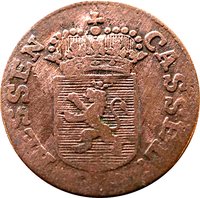
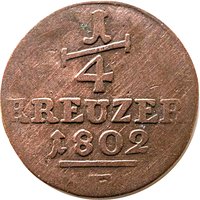
1 Heller obverse
1 Heller reverse
1 Heller
1791-1803
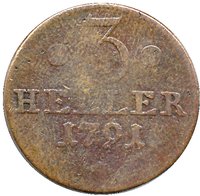
3 Hellers obverse
3 Hellers reverse
3 Hellers
1791
5 Thalers obverse
5 Thalers reverse
5 Thalers
1791-1801
Legendary