

1 Thaler – Aachen
Germany
Context
Years: 1637–1657
Country: Germany 
Issuer: Aachen
Period:
(1166—1798)
Ruler: Ferdinand III
Currency:
(1504—1798)
Demonetized: Yes
References
KM: #Click to copy to clipboard53
Numista: #267465
Value
Bullion value: $81.31
Obverse
Description:
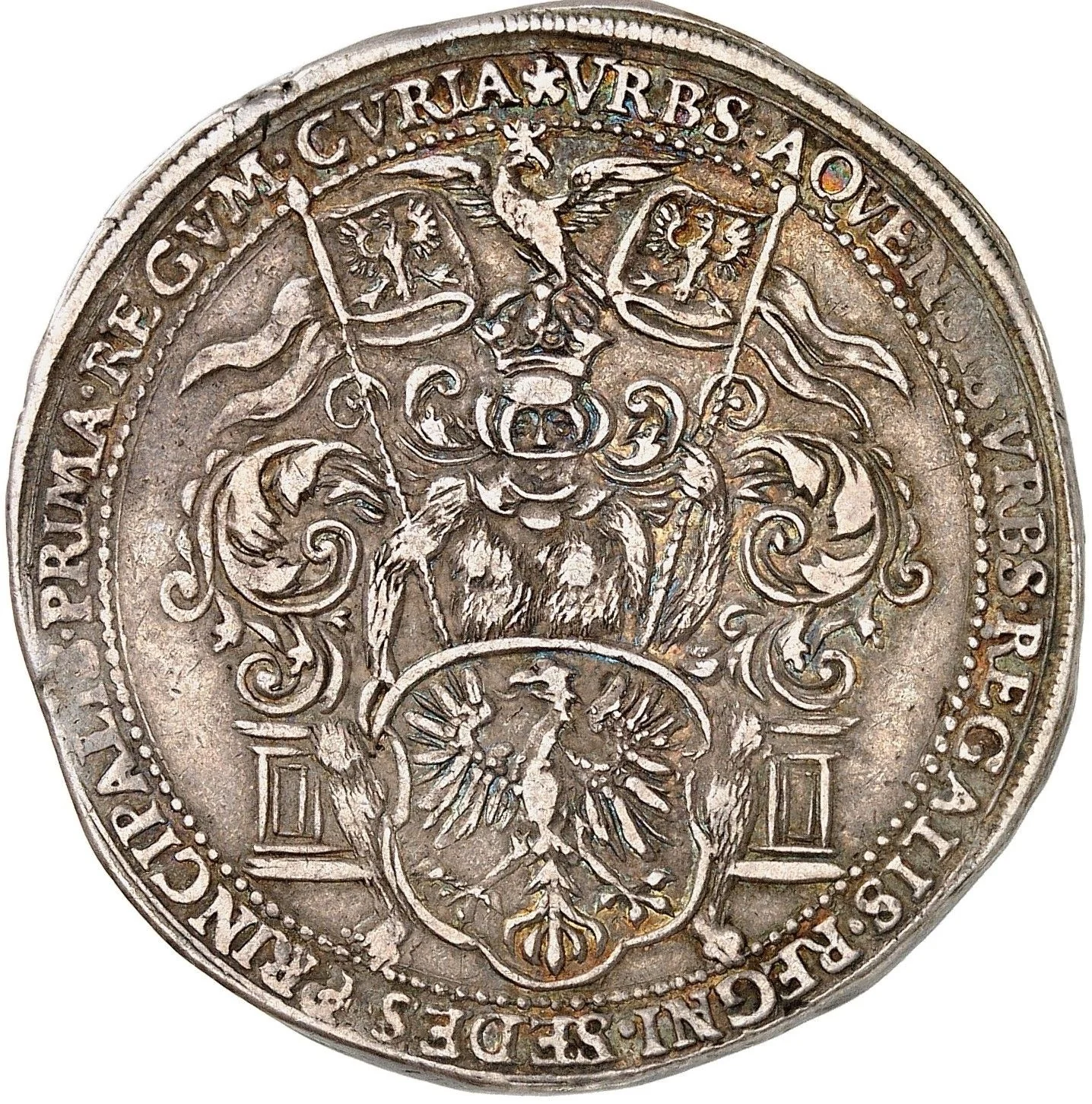
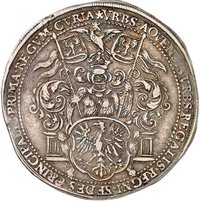
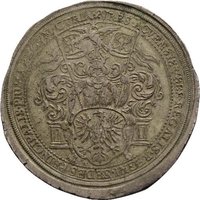
Helmeted wildman crowned by an eagle bearing flags, behind a city coat of arms.
Inscription:
VRBS AQVENSIS VRBS REGALIS REGNIS SEDES PRINCIPALIS PRIMA REGIM CVRIA
Script: Latin
Reverse
Description:
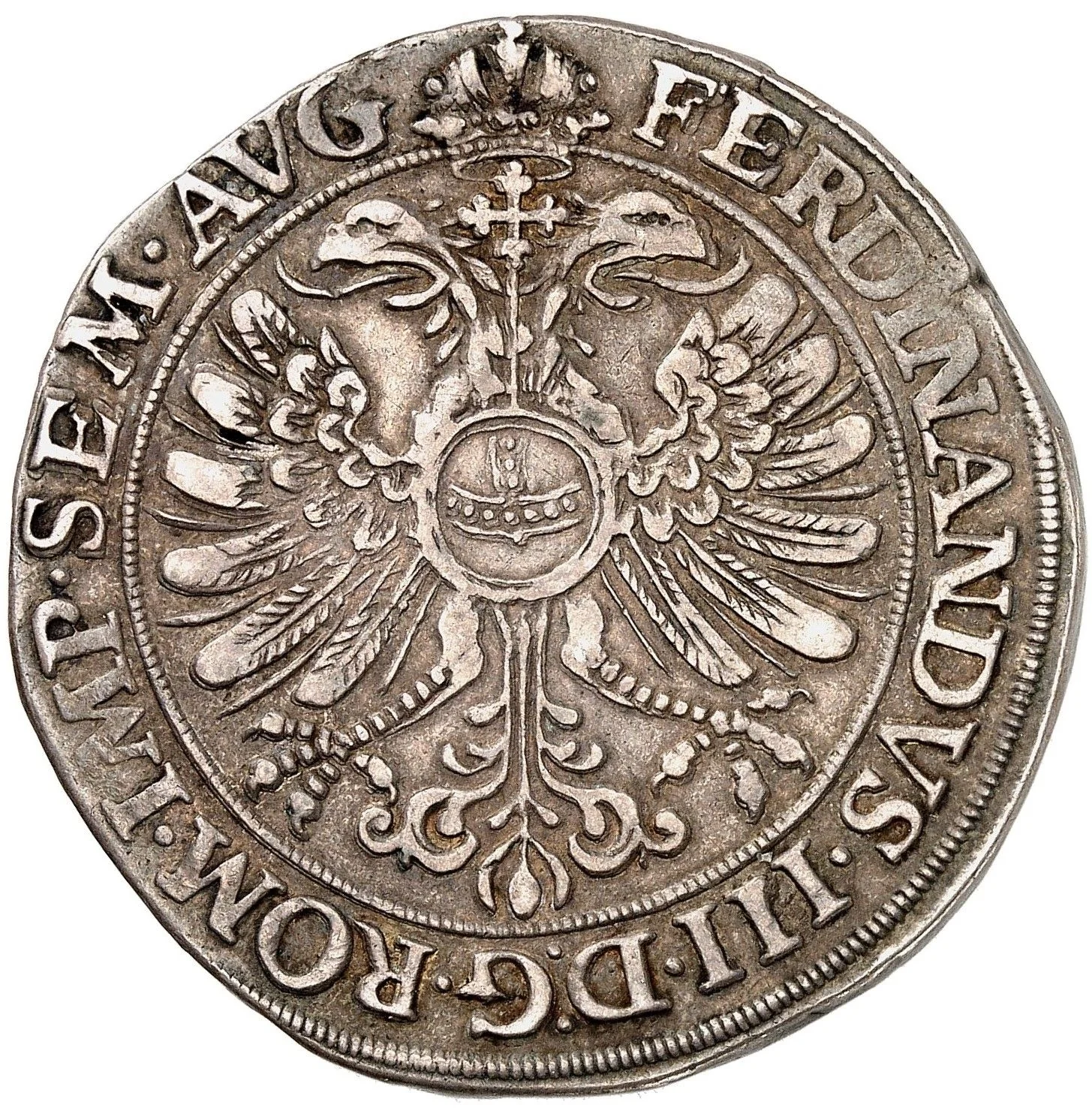
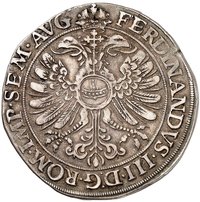
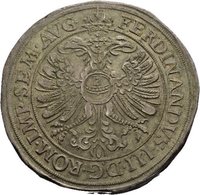
Imperial eagle with orb, crowned, bearing Ferdinand III's titles.
Inscription:
FERDINANDVS III D G ROM IMP SEM AVG
Script: Latin
Edge
Mintings
| Year | Mint Mark | Mintage | Quality | Collection |
|---|---|---|---|---|
| — | — | — |
Historical background
In 1637, the Free Imperial City of Aachen, like much of the Holy Roman Empire, was embroiled in the profound economic and monetary chaos of the Thirty Years' War. The city's official currency was based on the Reichsthaler, a large silver coin defined by imperial ordinance, but the practical monetary landscape was a fragmented and degraded mess. Decades of war had led to severe debasement, as various territorial princes and cities, including Aachen's neighbors, struck inferior coins to finance their armies, flooding the region with coins of unreliable silver content.
This period was characterized by the widespread circulation of Kippermünzen (debased coinage) and the practice of Kipper und Wipper, where bad money drove out the good. Aachen's merchants and citizens had to constantly navigate a confusing array of domestic and foreign coins, including Spanish Reales, Dutch Guilders, and local Albus and Groschen, each with fluctuating exchange rates. The city council would have issued periodic Münztaxen (currency valuation ordinances) to set official exchange rates for these myriad coins in an attempt to stabilize local trade, but these were often quickly overtaken by market realities and further inflationary pressures.
The situation placed immense strain on Aachen's traditional economy, built on cloth production and its prestigious status as an imperial coronation site. Trade was hampered, prices were volatile, and the city's financial administration was consumed by the daily struggle to manage specie flows and maintain public confidence. Ultimately, the monetary disarray of 1637 reflected Aachen's vulnerable position: a self-governing city caught in a vast war, its economic sovereignty undermined by imperial-wide monetary collapse and the desperate fiscal policies of warring states.
This period was characterized by the widespread circulation of Kippermünzen (debased coinage) and the practice of Kipper und Wipper, where bad money drove out the good. Aachen's merchants and citizens had to constantly navigate a confusing array of domestic and foreign coins, including Spanish Reales, Dutch Guilders, and local Albus and Groschen, each with fluctuating exchange rates. The city council would have issued periodic Münztaxen (currency valuation ordinances) to set official exchange rates for these myriad coins in an attempt to stabilize local trade, but these were often quickly overtaken by market realities and further inflationary pressures.
The situation placed immense strain on Aachen's traditional economy, built on cloth production and its prestigious status as an imperial coronation site. Trade was hampered, prices were volatile, and the city's financial administration was consumed by the daily struggle to manage specie flows and maintain public confidence. Ultimately, the monetary disarray of 1637 reflected Aachen's vulnerable position: a self-governing city caught in a vast war, its economic sovereignty undermined by imperial-wide monetary collapse and the desperate fiscal policies of warring states.
✨ Legendary