

6 Marks – Aachen
Germany
Context
Year: 1620
Country: Germany 
Issuer: Aachen
Period:
(1166—1798)
Ruler: Ferdinand II
Currency:
(1504—1798)
Demonetized: Yes
Material

References
KM: #Click to copy to clipboard13
Numista: #267455
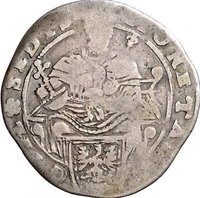
Obverse
Description:
Charlemagne, half-length portrait
Inscription:
MON REG SEDIS IMP VRBIS AQVIS GRAN
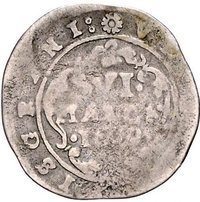
Reverse
Description:
Inscription: three lines with value and date inside circle, surrounded by Ferdinand II legend.
Inscription:
FERDINAND II D G RO IM SE AVG
VI
MARCK
VI
MARCK
Edge
Mintings
| Year | Mint Mark | Mintage | Quality | Collection |
|---|---|---|---|---|
| 1620 | — | — |
Historical background
In 1620, the Free Imperial City of Aachen, a prosperous center of trade and pilgrimage within the Holy Roman Empire, operated within a complex and fragmented monetary system. Like most of the Empire, it did not mint its own sovereign coinage but relied on a multitude of circulating currencies. The legal framework was provided by the Imperial Coinage Ordinances (Reichsmünzordnungen), which aimed to standardize the silver content of the Reichsthaler and its subdivisions. However, in practice, Aachen's economy was flooded with a variety of physical coins: nearby regional thalers from Cologne and Jülich, smaller local Albuses and Groschen, and a plethora of foreign coins brought by merchants and pilgrims, particularly from the Spanish Netherlands.
This monetary plurality created significant challenges for the city council and merchants. The constant inflow of coins of varying weight, fineness, and origin led to chronic problems of debasement and counterfeiting. "Bad money" (coins with less intrinsic silver) tended to drive "good money" (full-weight coins) out of circulation, as described by Gresham's Law, causing instability. The city authorities were therefore perpetually engaged in publishing official exchange rates (Münztaxen) that listed the acceptable value of dozens of coin types in relation to the notional Reichsthaler, attempting to bring order to the marketplace and protect municipal revenues and trade contracts.
The situation was further strained by the early tremors of the Thirty Years' War (1618-1648). While major fighting had not yet reached the Lower Rhine, the geopolitical and economic uncertainty was already affecting commerce and the flow of precious metals. The need to finance defence preparations and the potential for disrupted trade routes put additional pressure on Aachen's monetary system. Thus, in 1620, the city's currency environment was one of precarious balance—managed daily through meticulous ordinances but fundamentally vulnerable to the wider political and military storm gathering around it.
This monetary plurality created significant challenges for the city council and merchants. The constant inflow of coins of varying weight, fineness, and origin led to chronic problems of debasement and counterfeiting. "Bad money" (coins with less intrinsic silver) tended to drive "good money" (full-weight coins) out of circulation, as described by Gresham's Law, causing instability. The city authorities were therefore perpetually engaged in publishing official exchange rates (Münztaxen) that listed the acceptable value of dozens of coin types in relation to the notional Reichsthaler, attempting to bring order to the marketplace and protect municipal revenues and trade contracts.
The situation was further strained by the early tremors of the Thirty Years' War (1618-1648). While major fighting had not yet reached the Lower Rhine, the geopolitical and economic uncertainty was already affecting commerce and the flow of precious metals. The need to finance defence preparations and the potential for disrupted trade routes put additional pressure on Aachen's monetary system. Thus, in 1620, the city's currency environment was one of precarious balance—managed daily through meticulous ordinances but fundamentally vulnerable to the wider political and military storm gathering around it.

✨ Legendary