

2 Marks – Aachen
Germany
Context
Years: 1727–1728
Country: Germany 
Issuer: Aachen
Period:
(1166—1798)
Ruler: Charles VI
Currency:
(1504—1798)
Demonetized: Yes
Material
References
KM: #Click to copy to clipboard39
Numista: #267405
Obverse
Description:
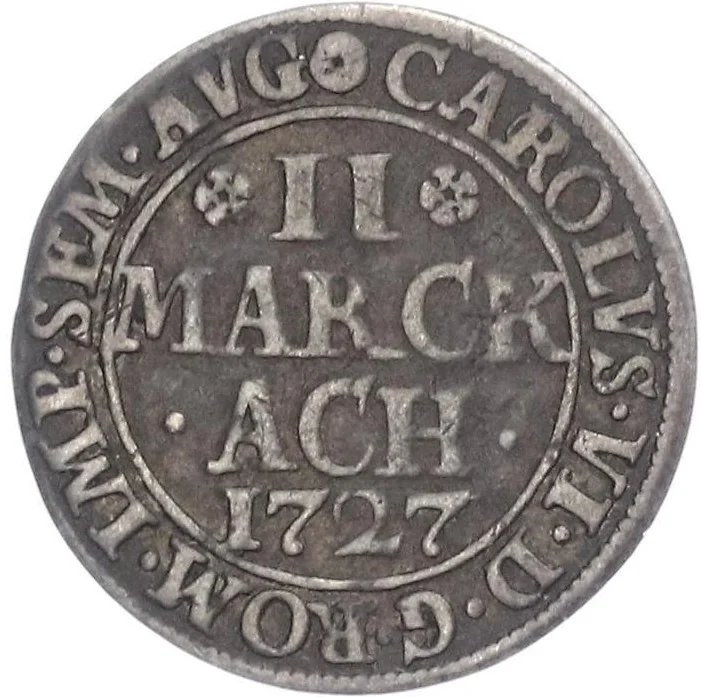
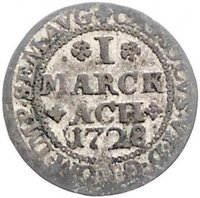
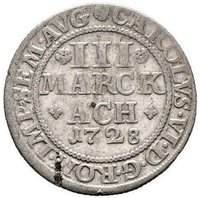
Imperial eagle with orb, bearing Karl VI's titles.
Inscription:
CAROLVS VI D G ROM IMP SEM AVG
Script: Latin
Reverse
Description:
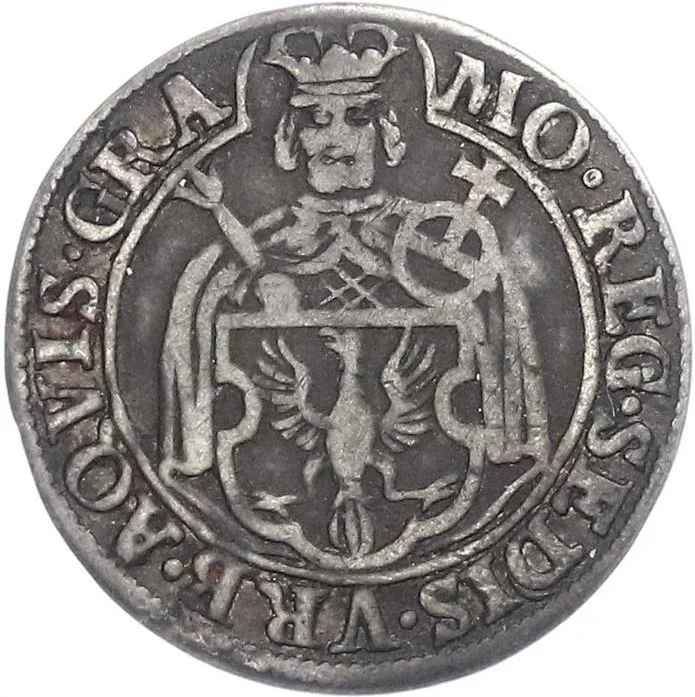
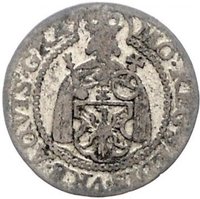
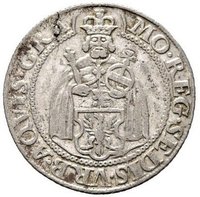
Charlemagne half-figure above arms
Inscription:
MO REG SEDI VRBIS AQVIS GRA
II
MARCK
ACH
1727
II
MARCK
ACH
1727
Script: Latin
Edge
Mints
| Name | Mark |
|---|---|
| Aachen | — |
Mintings
| Year | Mint Mark | Mintage | Quality | Collection |
|---|---|---|---|---|
| 1727 | — | — | ||
| 1728 | — | — |
Historical background
In 1727, the Free Imperial City of Aachen, a historic center of trade and pilgrimage within the Holy Roman Empire, navigated a complex and often chaotic currency landscape. Like most of the Empire, Aachen lacked a uniform coinage system. Its economy operated amidst a bewildering array of circulating coins: local issues from the city's own mint, regional currencies from neighbouring territories like Jülich and Cologne, and a flood of foreign coins from the Dutch Republic, the Spanish Netherlands, and France. This proliferation created constant challenges for merchants and citizens, requiring expert knowledge of ever-shifting exchange rates and the intrinsic silver or gold content of hundreds of different pieces.
The city authorities attempted to maintain control through official "currency ordinances" (Münzordnungen), which set the legal value (tariff) for accepted coins. However, these decrees were a constant battle against economic reality. A key problem was the widespread practice of clipping and debasement, where coins were physically reduced or minted with less precious metal than their face value declared. This led to Gresham's Law in action: "bad" debased money drove "good" full-weight coins out of circulation, as people hoarded the latter or melted them down for bullion. Consequently, Aachen's trade suffered from uncertainty, and the city council frequently had to reissue ordinances, devaluing certain coins and banning others to try to stabilize local commerce.
This monetary fragmentation was more than an economic nuisance; it reflected Aachen's political position. As an Imperial City, Aachen possessed the privilege of minting its own coins (a right it exercised cautiously), but it remained subject to the broader monetary policies of the Emperor. Furthermore, its location at the crossroads of major European powers meant its economy was deeply influenced by the monetary policies of its powerful neighbours, particularly the stable Dutch guilder. Thus, in 1727, Aachen's currency situation was a microcosm of the Holy Roman Empire itself—a patchwork of local sovereignty intertwined with external pressures, where the quest for monetary order was perpetual and elusive.
The city authorities attempted to maintain control through official "currency ordinances" (Münzordnungen), which set the legal value (tariff) for accepted coins. However, these decrees were a constant battle against economic reality. A key problem was the widespread practice of clipping and debasement, where coins were physically reduced or minted with less precious metal than their face value declared. This led to Gresham's Law in action: "bad" debased money drove "good" full-weight coins out of circulation, as people hoarded the latter or melted them down for bullion. Consequently, Aachen's trade suffered from uncertainty, and the city council frequently had to reissue ordinances, devaluing certain coins and banning others to try to stabilize local commerce.
This monetary fragmentation was more than an economic nuisance; it reflected Aachen's political position. As an Imperial City, Aachen possessed the privilege of minting its own coins (a right it exercised cautiously), but it remained subject to the broader monetary policies of the Emperor. Furthermore, its location at the crossroads of major European powers meant its economy was deeply influenced by the monetary policies of its powerful neighbours, particularly the stable Dutch guilder. Thus, in 1727, Aachen's currency situation was a microcosm of the Holy Roman Empire itself—a patchwork of local sovereignty intertwined with external pressures, where the quest for monetary order was perpetual and elusive.
✨ Legendary