

5 Thalers – Brunswick-Lüneburg-Celle
Germany
Context
Year: 1657
Country: Germany 
Issuer: Brunswick-Lüneburg-Celle
Ruler: Christian Louis
Currency:
Demonetized: Yes
Material
References
KM: #Click to copy to clipboard245
Numista: #266672
Value
Bullion value: $417.40
Obverse
Description:
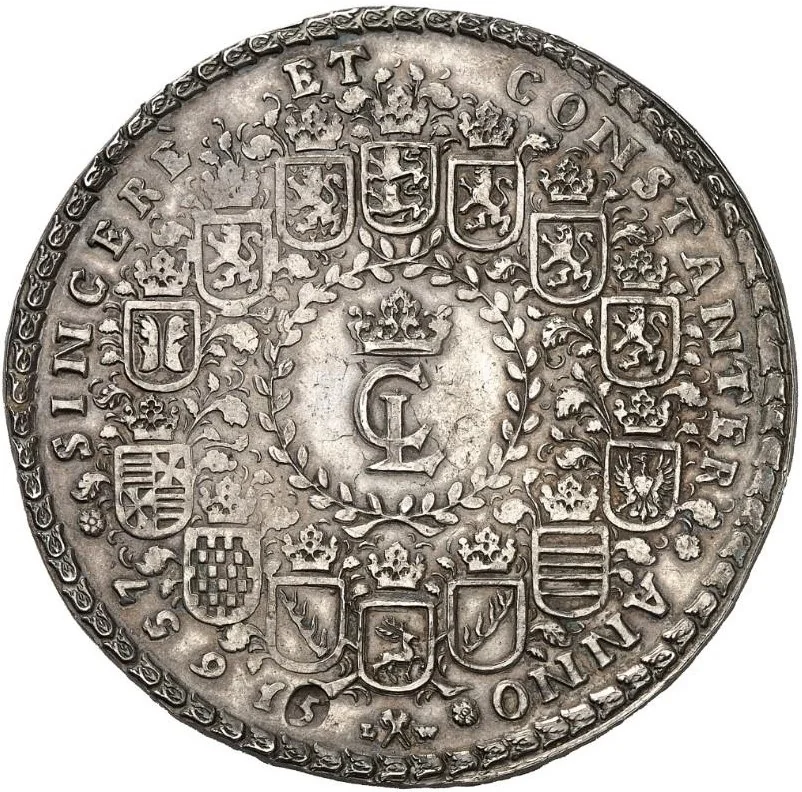
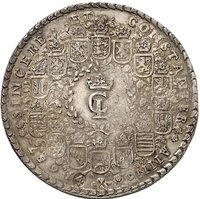
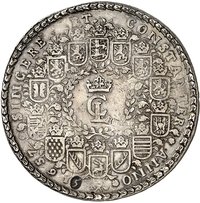
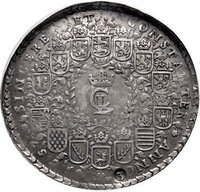
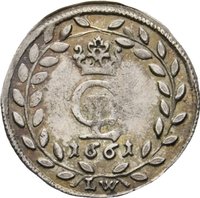
Monogram & coat of arms
Inscription:
SINCERE ET CONSTANTER ANNO 1654
CL
5
LW
CL
5
LW
Reverse
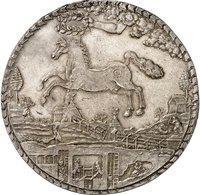
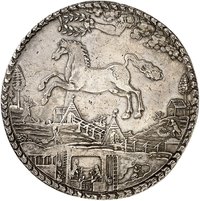
Description:
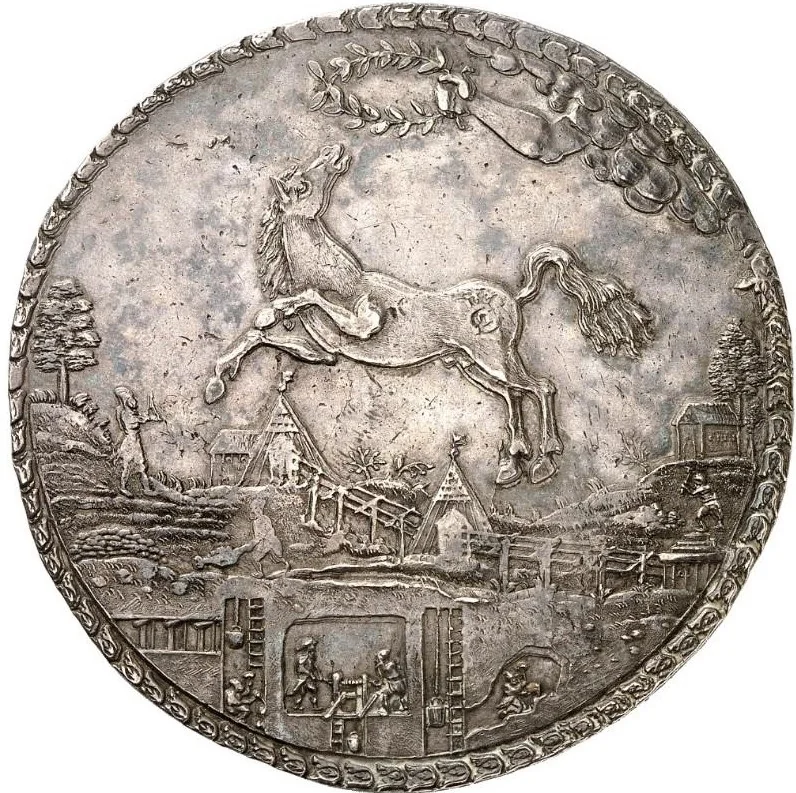
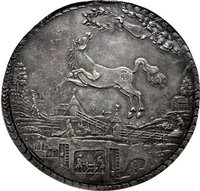
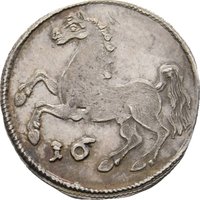
Horse leaping left over a mine.
Inscription:
CL
Edge
Mints
| Name | Mark |
|---|---|
| Clausthal | — |
Mintings
| Year | Mint Mark | Mintage | Quality | Collection |
|---|---|---|---|---|
| 1657 | — | — |
Historical background
In 1657, the Duchy of Brunswick-Lüneburg, specifically the Principality of Celle under Duke Christian Louis, was entangled in the complex and debilitating monetary chaos common across the Holy Roman Empire after the Thirty Years' War. The region suffered from a severe proliferation of debased coinage, as various territorial rulers and even cities exercised their minting rights (Münzregal) to produce inferior coins, often with reduced silver content, to generate short-term revenue. This practice, alongside the influx of even more debased foreign coins, led to a classic "bad money drives out good" scenario (Gresham's Law), where sound, full-value coins were hoarded or melted down, leaving circulation to the unreliable and inflationary currency.
The situation was exacerbated by the Duchy's participation in a network of competing monetary agreements. Northern German states attempted to stabilize trade through regional Münzvereine (currency unions), which set standards for Reichsthalers, Groschen, and Pfennigs. However, these agreements were fragile and frequently violated, as the temptation for individual princes to profit from seigniorage (the profit from minting) was high. In Celle, this meant that while official rates existed, the actual monetary landscape was a confusing patchwork of coins of uncertain value, undermining both commerce and public trust.
Consequently, the year 1657 fell within a period of ongoing monetary crisis and attempted reform. Duke Christian Louis faced immense pressure from merchants and his own administration to restore monetary order, a prerequisite for economic recovery. The background is therefore one of administrative struggle: efforts to enforce existing currency treaties, control the output of local mints, and police the circulation of foreign coins were constant, but largely defensive actions against a deep-seated structural problem that would plague the region for decades more.
The situation was exacerbated by the Duchy's participation in a network of competing monetary agreements. Northern German states attempted to stabilize trade through regional Münzvereine (currency unions), which set standards for Reichsthalers, Groschen, and Pfennigs. However, these agreements were fragile and frequently violated, as the temptation for individual princes to profit from seigniorage (the profit from minting) was high. In Celle, this meant that while official rates existed, the actual monetary landscape was a confusing patchwork of coins of uncertain value, undermining both commerce and public trust.
Consequently, the year 1657 fell within a period of ongoing monetary crisis and attempted reform. Duke Christian Louis faced immense pressure from merchants and his own administration to restore monetary order, a prerequisite for economic recovery. The background is therefore one of administrative struggle: efforts to enforce existing currency treaties, control the output of local mints, and police the circulation of foreign coins were constant, but largely defensive actions against a deep-seated structural problem that would plague the region for decades more.
✨ Legendary