

1 Mark – Norway
Norway
Context
Years: 1681–1686
Issuer: Norway 
Ruler: Christian V
Currency:
(1523—1746)
Subdivision: 1 Mark = 16 Skilling
Demonetized: Yes
Material
References
KM: #Click to copy to clipboard146
Numista: #110300
Value
Bullion value: $10.59
Obverse
Description:
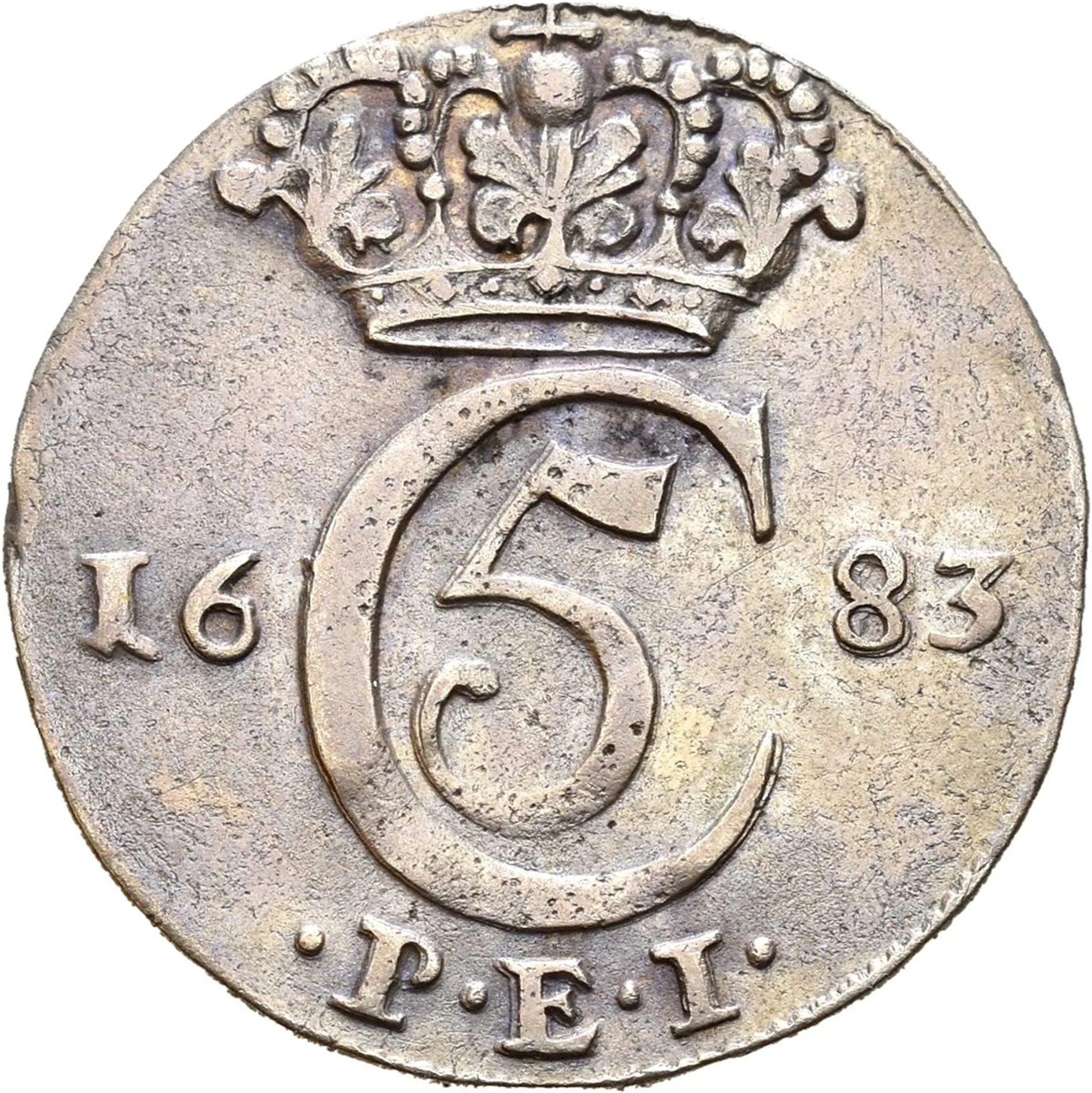
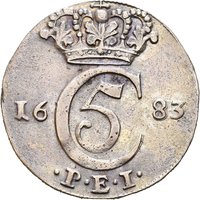
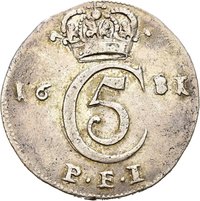
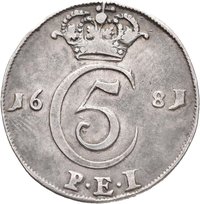
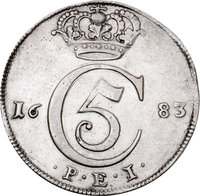
Christian V monogram crowns date, inscription below. Beaded rim ring.
Inscription:
16 83
C5
·P·E·I·
C5
·P·E·I·
Script: Latin
Reverse
Description:
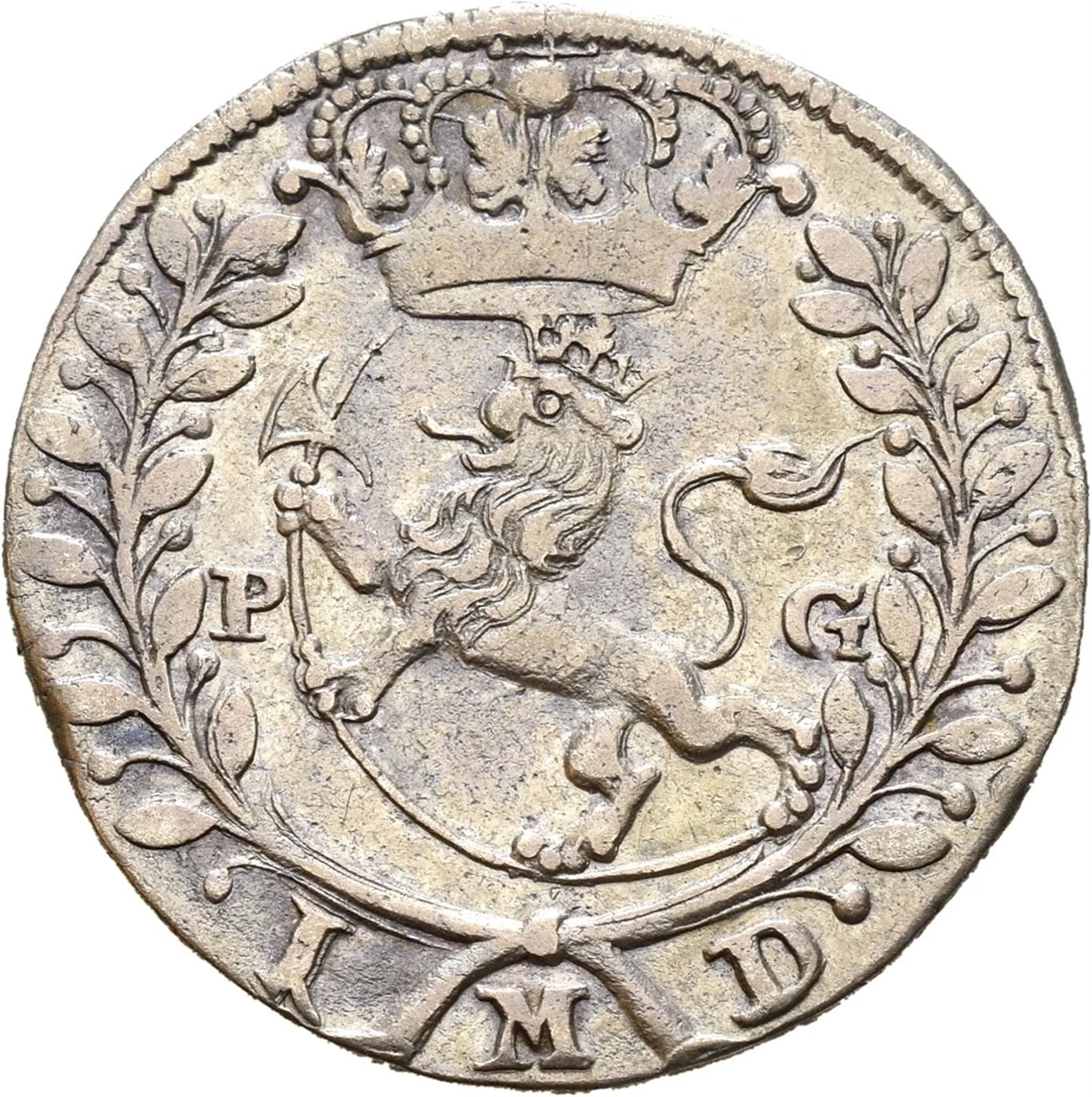
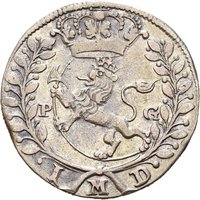
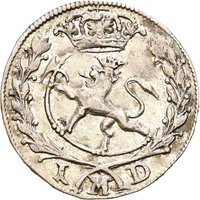
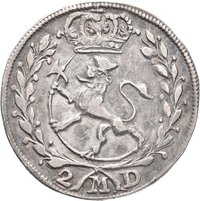
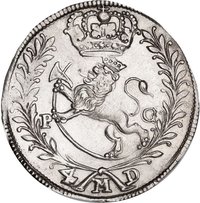
Norwegian lion with axe facing left in a laurel wreath, mintmaster initials flanking lion. Large crown above, value below, beaded rim.
Inscription:
P G
1 M D
1 M D
Script: Latin
Edge
Mints
| Name | Mark |
|---|---|
| Christiania | — |
Mintings
| Year | Mint Mark | Mintage | Quality | Collection |
|---|---|---|---|---|
| 1681 | — | — | ||
| 1682 | — | — | ||
| 1683 | — | — | ||
| 1685 | — | — | ||
| 1686 | — | — |
Historical background
In 1681, Norway was part of the dual monarchy of Denmark-Norway, and its currency system was fundamentally dictated by Copenhagen. The primary circulating coin was the silver riksdaler, but the monetary landscape was chaotic and problematic. A severe shortage of official coinage plagued the realm, leading to a proliferation of worn, clipped, and counterfeit coins in daily use. Furthermore, a confusing array of foreign coins, particularly from the German states and the Netherlands, circulated with fluctuating and unofficial values, creating uncertainty for both commerce and tax collection.
This instability was exacerbated by the government's own financial practices. To raise funds for its costly wars, the crown had repeatedly debased the currency by reducing the silver content in minted coins while mandating they retain their face value. This led to Gresham's Law in action, where "good" unclipped silver coins were hoarded or exported, leaving the degraded currency in circulation. The result was chronic inflation, a loss of public trust in the coinage, and significant disruption to trade, which was particularly damaging for a nation dependent on exports like timber and fish.
Recognizing the crisis, the state was in the early stages of a response. The year 1681 fell within the reign of King Christian V, whose government was working toward a major monetary reform. This effort would culminate in the introduction of the kurantdaler in 1683, a new currency unit intended to stabilize the system by defining a fixed silver standard and reorganizing the subsidiary coinage. Thus, the situation in 1681 was one of deep monetary distress, but also a pivotal moment on the cusp of a concerted, top-down effort to impose order and restore confidence in the kingdom's currency.
This instability was exacerbated by the government's own financial practices. To raise funds for its costly wars, the crown had repeatedly debased the currency by reducing the silver content in minted coins while mandating they retain their face value. This led to Gresham's Law in action, where "good" unclipped silver coins were hoarded or exported, leaving the degraded currency in circulation. The result was chronic inflation, a loss of public trust in the coinage, and significant disruption to trade, which was particularly damaging for a nation dependent on exports like timber and fish.
Recognizing the crisis, the state was in the early stages of a response. The year 1681 fell within the reign of King Christian V, whose government was working toward a major monetary reform. This effort would culminate in the introduction of the kurantdaler in 1683, a new currency unit intended to stabilize the system by defining a fixed silver standard and reorganizing the subsidiary coinage. Thus, the situation in 1681 was one of deep monetary distress, but also a pivotal moment on the cusp of a concerted, top-down effort to impose order and restore confidence in the kingdom's currency.
Series: 1681 Norway circulation coins
✨ Legendary