

25 centimes – France
Add to wishlist
France
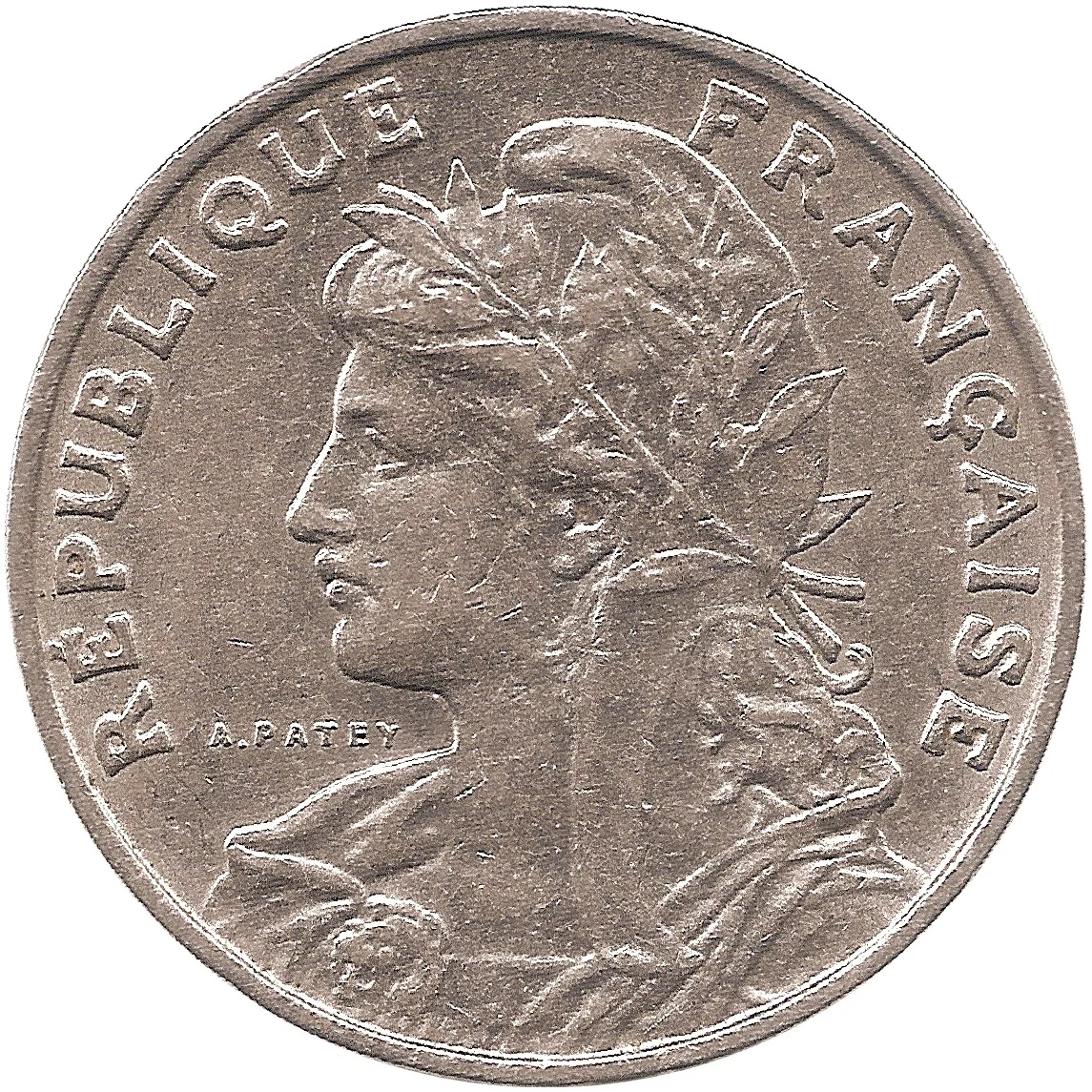
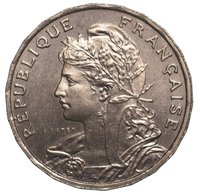
Obverse
Description:
Liberty head left.
Inscription:
RÉPUBLIQUE FRANÇAISE
A.PATEY
A.PATEY
Translation:
FRENCH REPUBLIC
A.PATEY
A.PATEY
Script: Latin
Language: French
Engraver: Henri-Auguste Patey
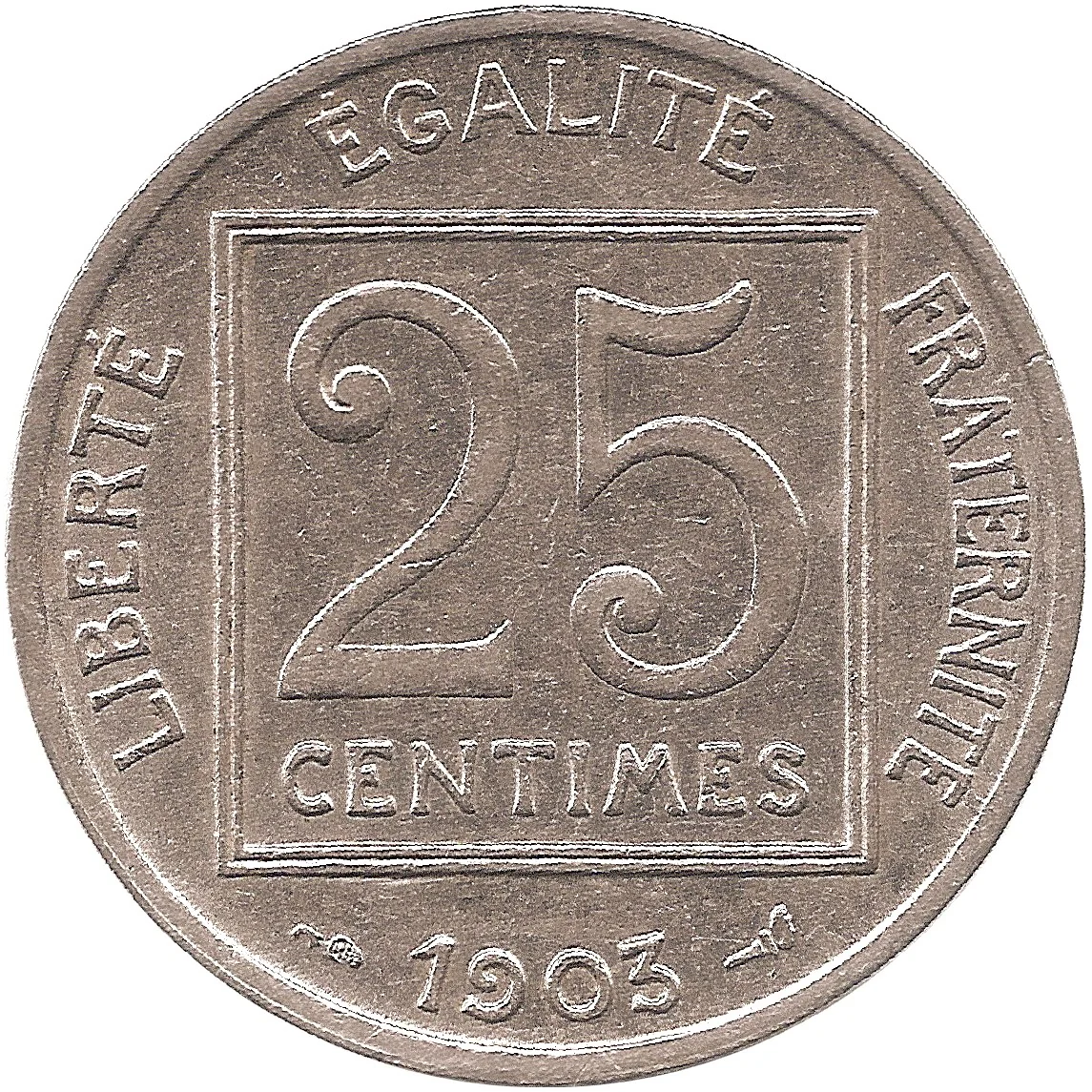
Reverse
Description:
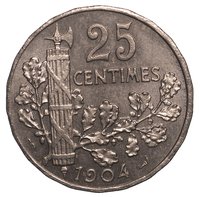
Central square denomination, bottom date, flanked by cornucopia and torch.
Inscription:
LIBERTÉ ÉGALITÉ FRATERNITÉ
25
CENTIMES
1903
25
CENTIMES
1903
Translation:
LIBERTY EQUALITY FRATERNITY
25
CENTIMES
1903
25
CENTIMES
1903
Script: Latin
Language: French
Engraver: Henri-Auguste Patey
Edge
Plain
Mints
| Name | Mark |
|---|---|
| Monnaie de Paris | — |
Mintings
| Year | Mint Mark | Mintage | Quality | Collection |
|---|---|---|---|---|
| 1903 | — | — | ||
| 1904 | — | — |
Historical background
In 1903, France operated under the franc germinal, a currency system established by Napoleon in 1803 that had proven remarkably durable. This system was bimetallic, defining the franc in terms of both gold and silver at a fixed ratio (1 gram of fine gold = 15.5 grams of fine silver). While the official standard was bimetallism, in practice France had transitioned to a de facto gold standard by this period. The Latin Monetary Union (LMU), which France spearheaded in 1865, still technically existed, aiming to standardize coinage across several European nations. However, by 1903, the union was under significant strain due to member states overproducing silver coins, which disrupted the fixed metal ratios and caused monetary instability.
Domestically, the currency was stable and trusted, backed by substantial gold reserves held by the Bank of France. The banknotes in circulation, while not yet legal tender for private transactions (a status only granted in 1870 during the Franco-Prussian War), were widely accepted. The economy relied on a mix of gold coins (like the 20-franc Napoléon), silver coins for mid-level transactions, and fractional bronze and copper coins for everyday use. The system was deeply embedded in the national psyche, representing a century of financial stability and economic progress.
Internationally, the situation was more complex. The flaws in the Latin Monetary Union were becoming increasingly apparent, and France, along with other major powers like Britain and Germany, was moving inexorably toward a pure international gold standard. The year 1903 fell within a quiet period before the final collapse of the LMU in the 1920s, but it was a time of underlying tension. French monetary authorities were effectively managing a system that was outwardly robust but built on an outdated bimetallic foundation, all while navigating the pressures of global finance that would soon demand a clearer, gold-based framework.
Domestically, the currency was stable and trusted, backed by substantial gold reserves held by the Bank of France. The banknotes in circulation, while not yet legal tender for private transactions (a status only granted in 1870 during the Franco-Prussian War), were widely accepted. The economy relied on a mix of gold coins (like the 20-franc Napoléon), silver coins for mid-level transactions, and fractional bronze and copper coins for everyday use. The system was deeply embedded in the national psyche, representing a century of financial stability and economic progress.
Internationally, the situation was more complex. The flaws in the Latin Monetary Union were becoming increasingly apparent, and France, along with other major powers like Britain and Germany, was moving inexorably toward a pure international gold standard. The year 1903 fell within a quiet period before the final collapse of the LMU in the 1920s, but it was a time of underlying tension. French monetary authorities were effectively managing a system that was outwardly robust but built on an outdated bimetallic foundation, all while navigating the pressures of global finance that would soon demand a clearer, gold-based framework.
🌱 Very Common