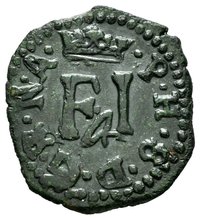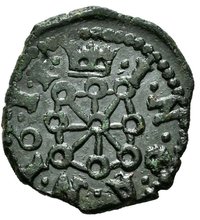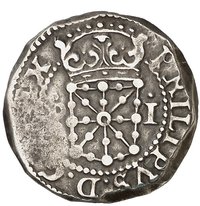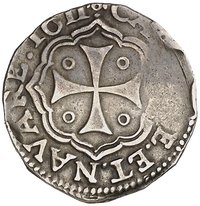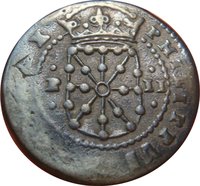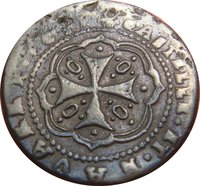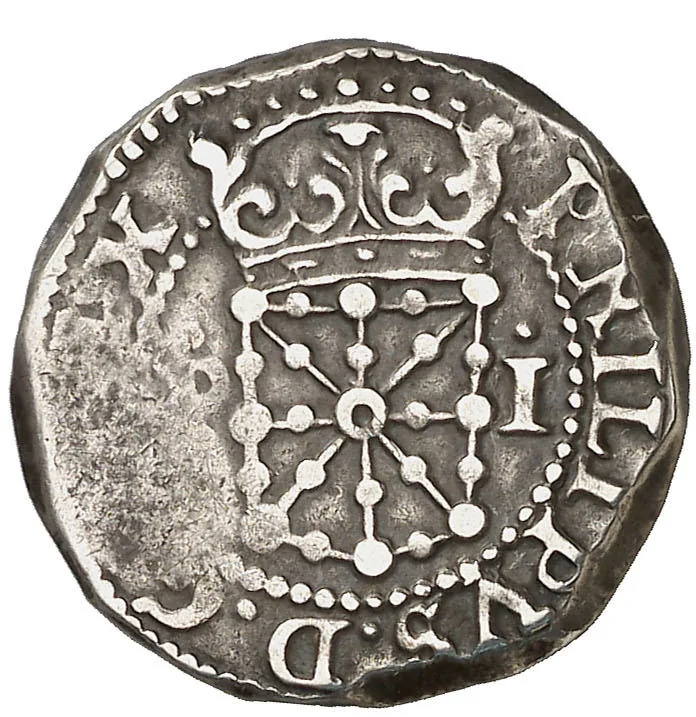
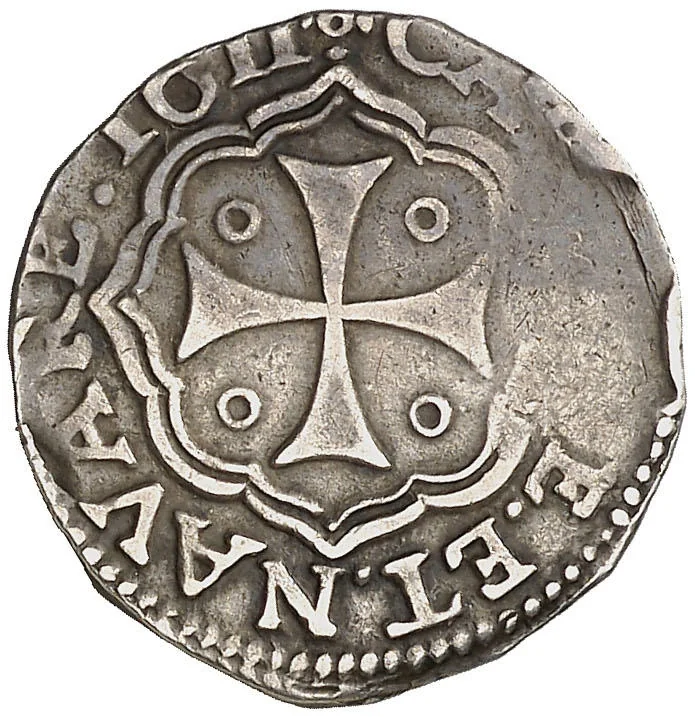
In 1611, the Kingdom of Navarre existed in a complex and transitional monetary state, divided between its northern and southern territories. The portion north of the Pyrenees, known as Lower Navarre, was a sovereign kingdom in personal union with France under King Henry III of Navarre, who was also Henry IV of France. Here, the French monetary system was dominant, with the
livre tournois,
écu, and
sol as the primary units of account and coinage, tied to the stability of the French crown.
South of the Pyrenees, Upper Navarre had been annexed by the Crown of Castile in 1512 but retained its formal title and certain
fueros (legal privileges). By 1611, this region was fully integrated into the Spanish Habsburg monetary system. The powerful Spanish real, particularly the silver
real de a ocho and its subsidiary coins, circulated widely. This placed Upper Navarre within the vast, treasure-fueled but inflation-prone economy of the Spanish Empire, which was struggling with the costly effects of the Eighty Years' War and other European conflicts.
Despite this political division, the Pyrenean border remained porous for trade, leading to a practical coexistence of French and Spanish coinage in market towns, especially along the frontier. This necessitated constant exchange and valuation, a task for money changers familiar with the fluctuating metallic content and official exchange rates between the two systems. Thus, the currency situation in Navarre in 1611 was fundamentally characterized by this duality—a reflection of the kingdom's partitioned political fate, with its economic life straddling two competing great powers of early modern Europe.