

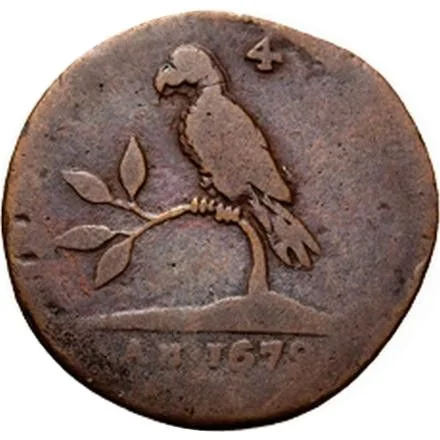
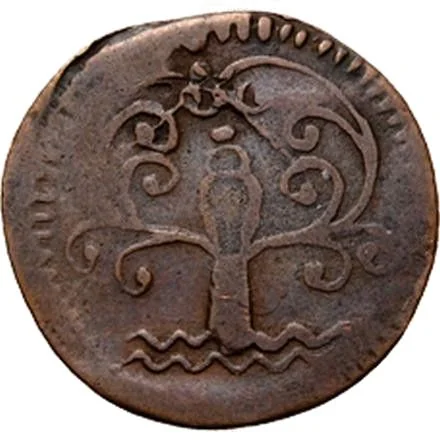
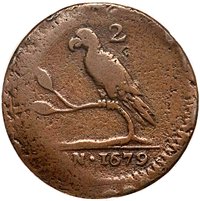
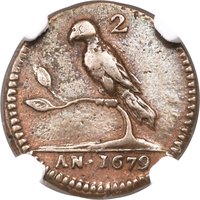
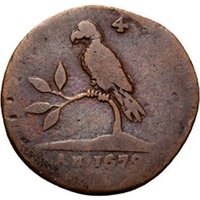
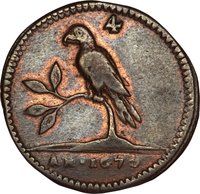
Obverse
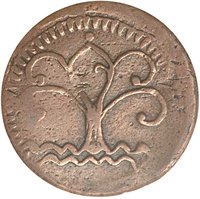
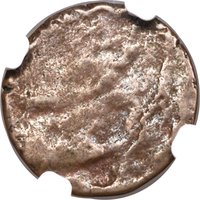
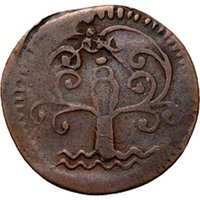
Reverse
Description:
Ornamental tree with dashes.
Edge
Plain
Mintings
| Year | Mint Mark | Mintage | Quality | Collection |
|---|---|---|---|---|
| 1679 | — | — |
Historical background
In 1679, Suriname was a young and struggling English colony, not yet under Dutch control. The colony's economy was almost entirely dedicated to the nascent sugar plantation system, which was labor-intensive and capital-poor. There was no formal, standardized currency issued by the English Crown for use in the colony. Instead, the economy operated on a complex and inefficient system of barter for local transactions and the use of commodity money, with unrefined sugar and tobacco often serving as the primary mediums of exchange and units of account for larger dealings.
The scarcity of official coinage was a chronic problem. What little hard currency—primarily Spanish pieces of eight and other European coins—entered the colony was quickly exported to pay for essential imported goods like tools, cloth, and equipment from England and other Caribbean islands. This created a perpetual liquidity crisis. To facilitate trade, planters and merchants relied heavily on credit and promissory notes, with debts and contracts often denominated in pounds of sugar. The value of these commodities was unstable, fluctuating with harvest yields and market prices in Europe, making the entire financial system precarious.
This unstable monetary environment reflected the colony's fragile state. It was a frontier society under constant threat from disease, slave rebellions, and conflicts with Indigenous peoples and European rivals. The lack of a reliable currency hindered internal commerce and complicated the colony's administration. This economic vulnerability would persist and be a contributing factor when Suriname was ceded to the Dutch in 1667 (by the Treaty of Breda, confirmed in 1674), with the English even then struggling to establish a stable financial foundation for their lucrative but chaotic plantation enterprise.
The scarcity of official coinage was a chronic problem. What little hard currency—primarily Spanish pieces of eight and other European coins—entered the colony was quickly exported to pay for essential imported goods like tools, cloth, and equipment from England and other Caribbean islands. This created a perpetual liquidity crisis. To facilitate trade, planters and merchants relied heavily on credit and promissory notes, with debts and contracts often denominated in pounds of sugar. The value of these commodities was unstable, fluctuating with harvest yields and market prices in Europe, making the entire financial system precarious.
This unstable monetary environment reflected the colony's fragile state. It was a frontier society under constant threat from disease, slave rebellions, and conflicts with Indigenous peoples and European rivals. The lack of a reliable currency hindered internal commerce and complicated the colony's administration. This economic vulnerability would persist and be a contributing factor when Suriname was ceded to the Dutch in 1667 (by the Treaty of Breda, confirmed in 1674), with the English even then struggling to establish a stable financial foundation for their lucrative but chaotic plantation enterprise.
Series: 1679 Suriname circulation coins

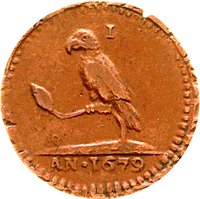
✨ Legendary