

1 reisedaler – Norway
Add to wishlist
Circulating commemorative coins
Commemoration: Christian's VI visit to Norway
Norway
Context
Years: 1732–1733
Issuer: Norway
Ruler: Christian VI
Currency:
(1523—1746)
Subdivision: 1 reisedaler = 6 Mark
Demonetized: Yes
Total mintage: 4,530
Material
References
KM: #
Numista: #100478
Value
Bullion value: $57.43
Obverse
Description:
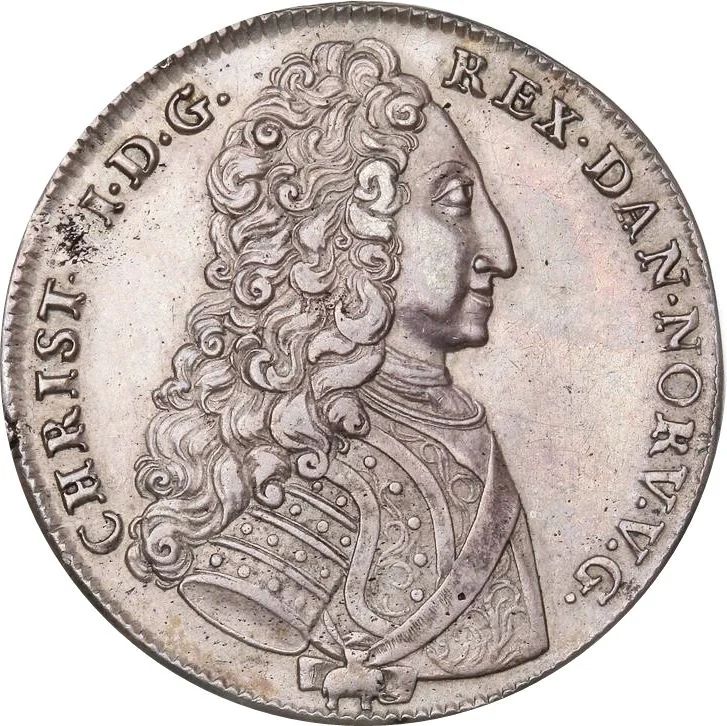
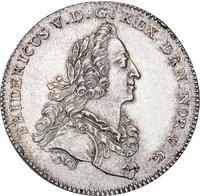
Bust of Christian VI right, encircled by inscription.
Inscription:
CHRIST·VI·D·G· DAN·NOR·V·G·
Script: Latin
Reverse
Description:
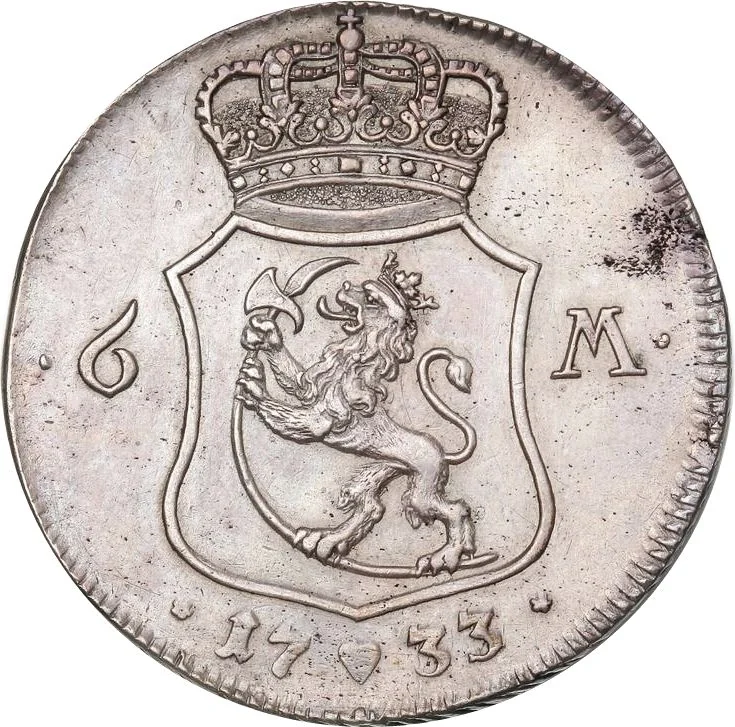
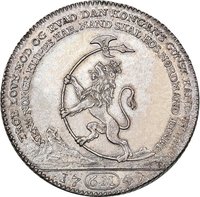
Norwegian crowned lion arms with axe, facing left. Value flanking, date below split by Copenhagen mintmark (heart).
Inscription:
·6 M·
1733
1733
Script: Latin
Edge
Rifled
Mints
| Name | Mark |
|---|---|
| Copenhagen | ♥ |
Mintings
| Year | Mint Mark | Mintage | Quality | Collection |
|---|---|---|---|---|
| 1732 | — | 4,524 | ||
| 1733 | — | 6 |
Historical background
In 1732, Norway was part of the Danish-Norwegian dual monarchy, governed from Copenhagen. The currency situation was complex and problematic, characterized by a severe shortage of official coinage in circulation. The primary unit was the riksdaler specie, a large silver coin, but everyday transactions relied heavily on a confusing mix of older, worn coins, foreign currency (especially from the Netherlands and Germany), and even commodity money like butter and dried fish in remote areas. This scarcity of reliable, state-issued coinage hindered commerce and created significant inconvenience for the population.
The root of the problem lay in Denmark-Norway's persistent trade deficit, particularly with other Baltic regions. Silver, the basis of the monetary system, was constantly flowing out of the kingdom to pay for imports. Furthermore, the state's own minting activity was inconsistent and insufficient to meet demand. Attempts to introduce lower-value coins, like the skilling, were often undermined by clipping and counterfeiting, as the intrinsic metal value of the coins could exceed their face value, leading to hoarding or melting.
Consequently, the monetary system in 1732 was fragmented and inefficient. While Copenhagen set the official standards, the reality in Norwegian towns and markets was a precarious reliance on a degraded and heterogeneous mix of payment methods. This unstable situation would eventually contribute to the establishment of Norges Bank in 1816, but in the early 18th century, it remained a chronic economic weakness, stifling trade and complicating daily economic life for Norwegians.
The root of the problem lay in Denmark-Norway's persistent trade deficit, particularly with other Baltic regions. Silver, the basis of the monetary system, was constantly flowing out of the kingdom to pay for imports. Furthermore, the state's own minting activity was inconsistent and insufficient to meet demand. Attempts to introduce lower-value coins, like the skilling, were often undermined by clipping and counterfeiting, as the intrinsic metal value of the coins could exceed their face value, leading to hoarding or melting.
Consequently, the monetary system in 1732 was fragmented and inefficient. While Copenhagen set the official standards, the reality in Norwegian towns and markets was a precarious reliance on a degraded and heterogeneous mix of payment methods. This unstable situation would eventually contribute to the establishment of Norges Bank in 1816, but in the early 18th century, it remained a chronic economic weakness, stifling trade and complicating daily economic life for Norwegians.
💎 Extremely Rare