

⅔ speciedaler – Norway
Add to wishlist
Norway
Context
Years: 1795–1796
Issuer: Norway
Ruler: Christian VII
Currency:
(1746—1814)
Demonetized: Yes
Total mintage: 100,900
Material
References
KM: #
Numista: #100311
Value
Bullion value: $42.23
Obverse
Description:
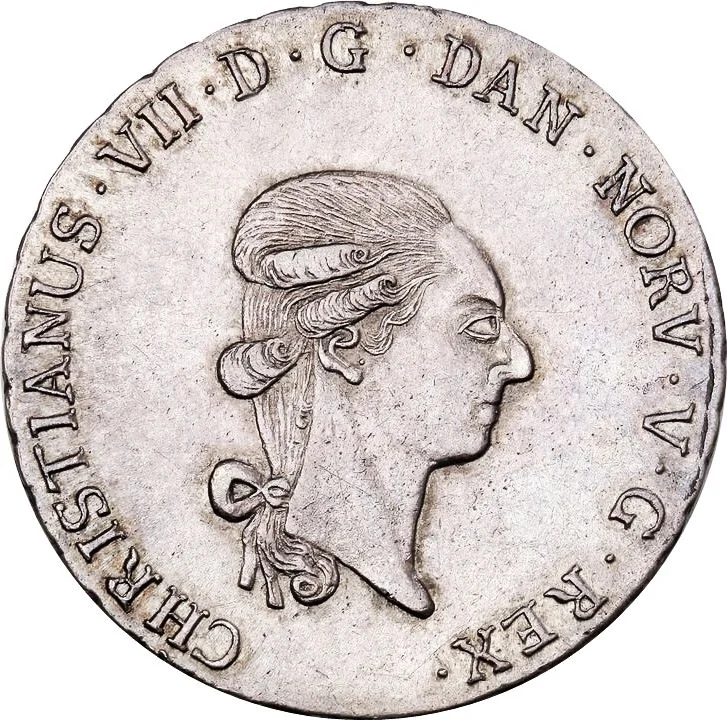
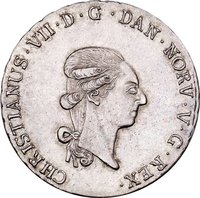
Bust of King Christian VII facing right, with long hair, encircled by an inscription.
Inscription:
CHRISTIANUS · VII · D · G · DAN · NORV · V · G · REX ·
Script: Latin
Reverse
Description:
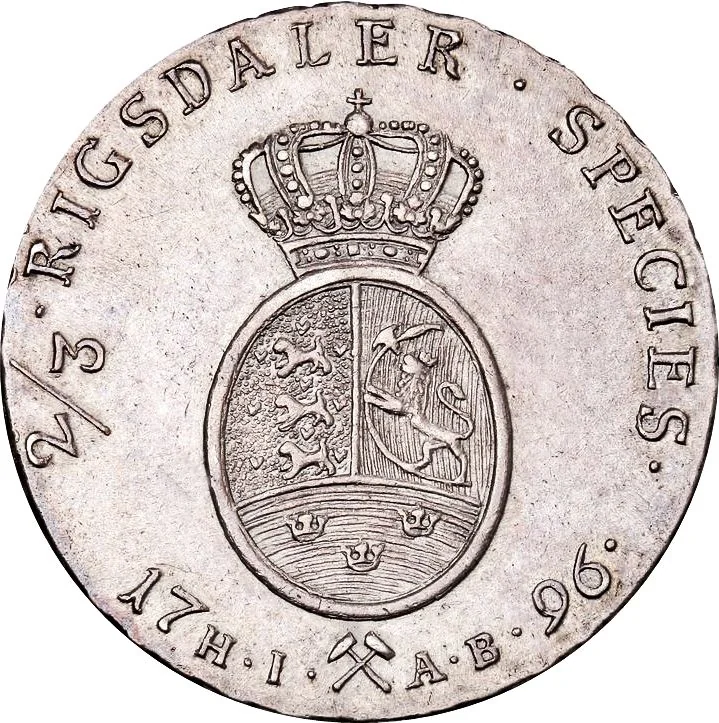
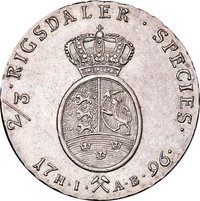
Danish, Norwegian, and Holstein arms in a crowned shield. Inscription surrounds. Date and mintmaster initials flank mintmark below.
Inscription:
2/3 · RIGSDALER · SPECIES ·
17·H·I·⚒·A·B·96·
17·H·I·⚒·A·B·96·
Script: Latin
Edge
Mints
| Name | Mark |
|---|---|
| Norwegian Mint | — |
Mintings
| Year | Mint Mark | Mintage | Quality | Collection |
|---|---|---|---|---|
| 1795 | — | 7,500 | ||
| 1796 | — | 93,400 |
Historical background
In 1795, Norway was part of the Dano-Norwegian dual monarchy, ruled from Copenhagen. The currency situation was complex and strained, characterized by a severe shortage of physical specie (coins) in circulation, particularly within Norway itself. The economy relied heavily on a mix of Danish rigsdaler, Norwegian skilling (with 96 skillings to 1 rigsdaler), and a bewildering array of foreign coins, primarily German and Dutch, which circulated at fluctuating values. This scarcity of official coinage hampered daily trade and economic activity, creating a persistent problem for both merchants and the general population.
The monetary system was further burdened by the extensive use of credit instruments and "credit notes" issued by local merchants and traders to facilitate transactions. More significantly, the state had authorized the issue of paper money, known as kurantsedler, but these were not legal tender and traded at a significant discount against silver. This discount widened during the late 18th century due to inflationary pressures from Denmark's involvement in the Napoleonic Wars, which began in the previous year, 1794. The result was a multi-tiered system where silver coins commanded a premium, paper money was distrusted, and the lack of a unified, trustworthy medium of exchange was a major economic weakness.
Overall, the currency situation in 1795 Norway was one of fragmentation and instability. It reflected the broader challenges of a remote kingdom within an absolute monarchy, struggling with the practicalities of commerce amid wartime finance and inadequate monetary supply. This unsatisfactory system would persist until the establishment of Norges Bank in 1816, following Norway's separation from Denmark, which was tasked with introducing a stable and unified national currency.
The monetary system was further burdened by the extensive use of credit instruments and "credit notes" issued by local merchants and traders to facilitate transactions. More significantly, the state had authorized the issue of paper money, known as kurantsedler, but these were not legal tender and traded at a significant discount against silver. This discount widened during the late 18th century due to inflationary pressures from Denmark's involvement in the Napoleonic Wars, which began in the previous year, 1794. The result was a multi-tiered system where silver coins commanded a premium, paper money was distrusted, and the lack of a unified, trustworthy medium of exchange was a major economic weakness.
Overall, the currency situation in 1795 Norway was one of fragmentation and instability. It reflected the broader challenges of a remote kingdom within an absolute monarchy, struggling with the practicalities of commerce amid wartime finance and inadequate monetary supply. This unsatisfactory system would persist until the establishment of Norges Bank in 1816, following Norway's separation from Denmark, which was tasked with introducing a stable and unified national currency.
Series: 1795 Norway circulation coins
✨ Legendary