

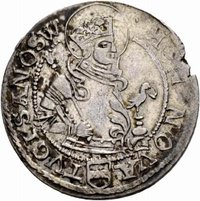
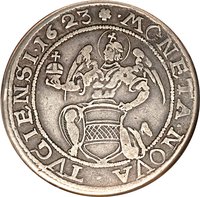
1 Batzen – Zug
Switzerland

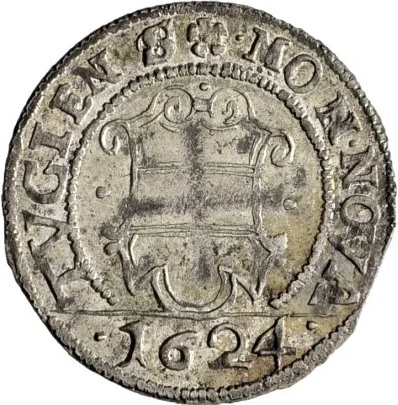
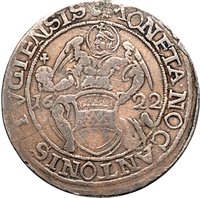
Obverse
Description:
Arms with ornamentation, date beneath.
Inscription:
MON·NOVA TVGIENS
·1624·
·1624·
Script: Latin
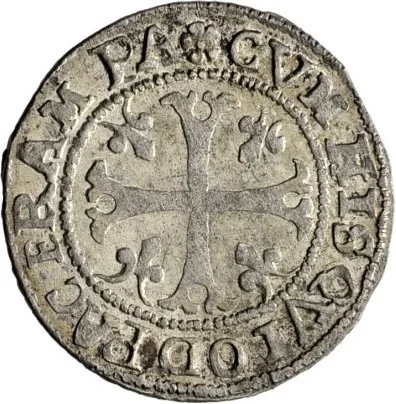
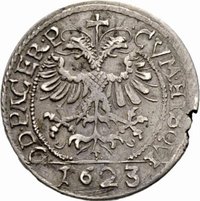
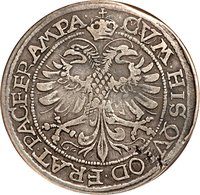
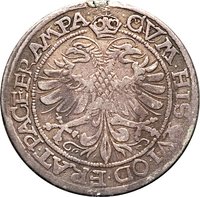
Reverse
Description:
Cross with flared ends, decorated angles.
Inscription:
CVM HIS QVI OD PAC ERAM PA
Script: Latin
Edge
Mintings
| Year | Mint Mark | Mintage | Quality | Collection |
|---|---|---|---|---|
| 1623 | — | — | ||
| 1624 | — | — | ||
| 1692 | — | — |
Historical background
In 1623, the Swiss canton of Zug, like much of Central Europe, was in the throes of the Kipper- und Wipperzeit (the clipping and culling period), a severe currency crisis. This was triggered by the immense financial strain of the Thirty Years' War (1618-1648). Rulers across the Holy Roman Empire, desperate to fund their armies, engaged in rampant currency debasement. They reduced the precious metal content in coins while maintaining their face value, flooding the market with unstable, low-quality money.
For Zug, a small, largely agrarian canton, the consequences were devastating. The influx of debased coins from neighbouring states caused good, full-weight coins to be hoarded or melted down, leaving only the bad money in circulation. This led to rapid inflation and a collapse in public trust, as the value of money could change unpredictably. Everyday trade and savings were severely disrupted, causing hardship for the population and complicating the canton's own fiscal governance.
In response, Zug joined other Swiss cantons in attempting to stabilize the situation through monetary ordinances. These regulations sought to fix exchange rates and ban the circulation of specific debased foreign coins. However, these local measures were of limited effect against a region-wide crisis. The situation only began to resolve later in the 1620s as imperial reforms, like the Reichsmünzordnung of 1623, were implemented to restore a uniform silver standard, slowly bringing the chaotic Kipperzeit to an end.
For Zug, a small, largely agrarian canton, the consequences were devastating. The influx of debased coins from neighbouring states caused good, full-weight coins to be hoarded or melted down, leaving only the bad money in circulation. This led to rapid inflation and a collapse in public trust, as the value of money could change unpredictably. Everyday trade and savings were severely disrupted, causing hardship for the population and complicating the canton's own fiscal governance.
In response, Zug joined other Swiss cantons in attempting to stabilize the situation through monetary ordinances. These regulations sought to fix exchange rates and ban the circulation of specific debased foreign coins. However, these local measures were of limited effect against a region-wide crisis. The situation only began to resolve later in the 1620s as imperial reforms, like the Reichsmünzordnung of 1623, were implemented to restore a uniform silver standard, slowly bringing the chaotic Kipperzeit to an end.
✨ Legendary