

1 Patagon – Spanish Netherlands
Netherlands
Context
Year: 1709
Country: Netherlands 
Issuer: Spanish Netherlands
Ruler: Philip V
Currency:
(1506—1713)
Demonetized: Yes
Total mintage: 3,624
Material
References
KM: #Click to copy to clipboard10
Numista: #100043
Value
Bullion value: $68.16
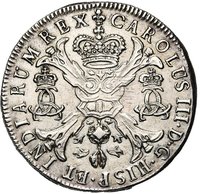
Obverse
Description:
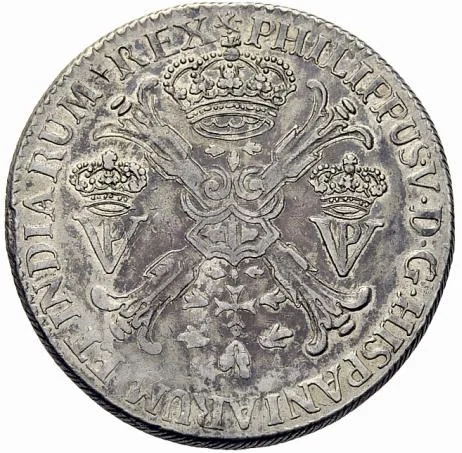
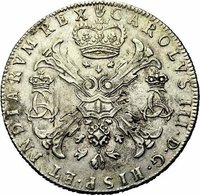
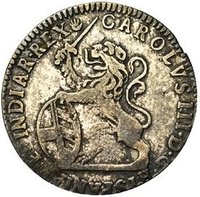
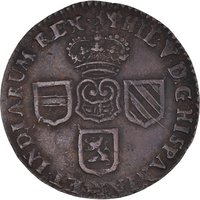
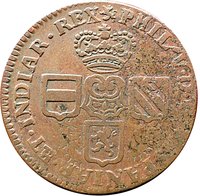
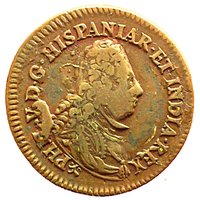
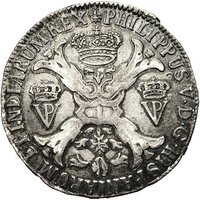
Crowned PV monograms flank a St. Andrew's cross, topped by a large crown and the Order of the Golden Fleece.
Inscription:
PHILLIPUS V • D • G • HISPANIARUM ET INDIARVM REX
Script: Latin
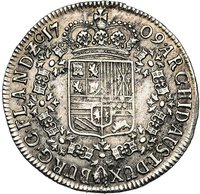
Reverse
Description:
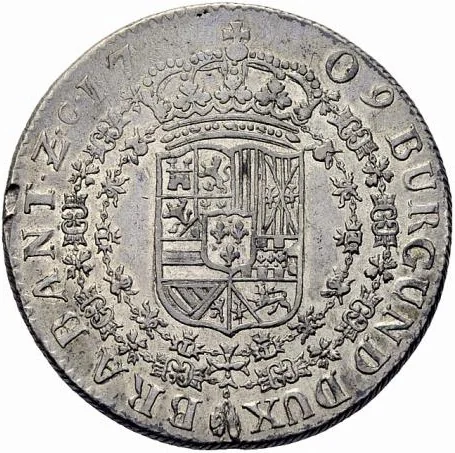
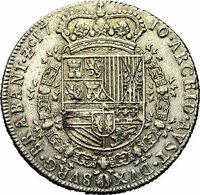
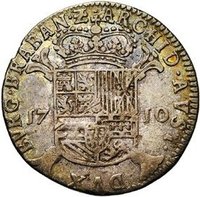
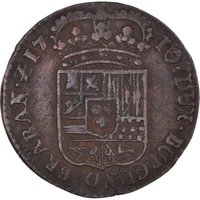
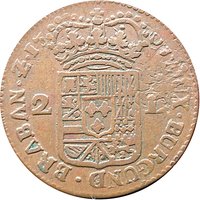
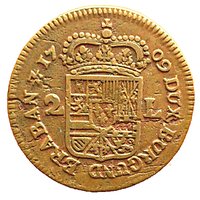
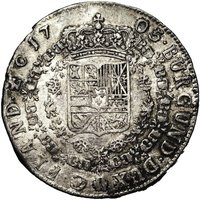
Shield with many arms, crowned and encircled by the collars of the Golden Fleece and Holy Spirit; date above.
Inscription:
BURGUND • DVX BRABANT • Zc.
Script: Latin
Edge
Ropeway
Mintings
| Year | Mint Mark | Mintage | Quality | Collection |
|---|---|---|---|---|
| 1709 | lion | 3,624 |
Historical background
In 1709, the Spanish Netherlands found itself in a severe monetary crisis, a direct consequence of its position as a primary battleground in the War of the Spanish Succession (1701-1714). The region was occupied and administered by a coalition of allied powers, primarily England and the Dutch Republic, who were fighting to prevent the unification of the French and Spanish crowns under the Bourbon dynasty. This military occupation placed an enormous financial strain on the local economy, as the Allied armies demanded exorbitant sums for their upkeep through forced "contributions," draining the territory of wealth and disrupting commerce and agriculture.
The crisis was fundamentally a debasement of the coinage. To meet their relentless military expenses, the Allied authorities, alongside some local mints, engaged in the widespread practice of issuing lightweight, debased silver coins (such as the patagon) and excessive quantities of low-value copper liards. This created a classic "bad money drives out good" scenario (Gresham's Law), where full-weight older coins were hoarded or exported, leaving the economy flooded with unstable and untrusted currency. The value of this money fluctuated wildly, prices soared, and ordinary transactions became fraught with uncertainty, crippling daily economic life.
This monetary chaos exacerbated the suffering of a population already enduring the "Great Winter" of 1708-1709, one of the coldest in recorded history, which had ruined harvests and led to famine. The combination of climatic disaster, wartime exploitation, and monetary collapse created a perfect storm of misery. The currency situation, therefore, was not merely a financial issue but a humanitarian catastrophe, undermining the social fabric of the Spanish Netherlands and highlighting the devastating economic consequences of early modern warfare on occupied territories.
The crisis was fundamentally a debasement of the coinage. To meet their relentless military expenses, the Allied authorities, alongside some local mints, engaged in the widespread practice of issuing lightweight, debased silver coins (such as the patagon) and excessive quantities of low-value copper liards. This created a classic "bad money drives out good" scenario (Gresham's Law), where full-weight older coins were hoarded or exported, leaving the economy flooded with unstable and untrusted currency. The value of this money fluctuated wildly, prices soared, and ordinary transactions became fraught with uncertainty, crippling daily economic life.
This monetary chaos exacerbated the suffering of a population already enduring the "Great Winter" of 1708-1709, one of the coldest in recorded history, which had ruined harvests and led to famine. The combination of climatic disaster, wartime exploitation, and monetary collapse created a perfect storm of misery. The currency situation, therefore, was not merely a financial issue but a humanitarian catastrophe, undermining the social fabric of the Spanish Netherlands and highlighting the devastating economic consequences of early modern warfare on occupied territories.
✨ Legendary