

½ yuan – Republic of China
Add to wishlist
China
Context
Years: 1941–1943
Country: China
Issuer: Republic of China
Period:
(1912—1949)
Currency:
(1912—1948)
Demonetized: Yes
Total mintage: 61,000,000
Material
Diameter: 28 mm
Weight: 9.06 g
Shape: Round
Composition: Copper-nickel
Technique: Milled
Alignment: Medal alignment
flip
References
Y: #
Numista: #9382
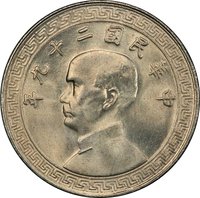
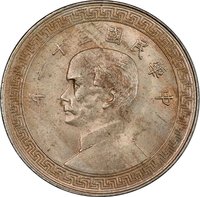
Obverse
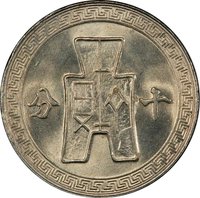
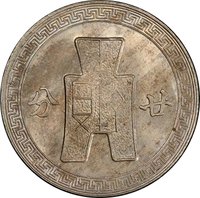
Reverse
Description:
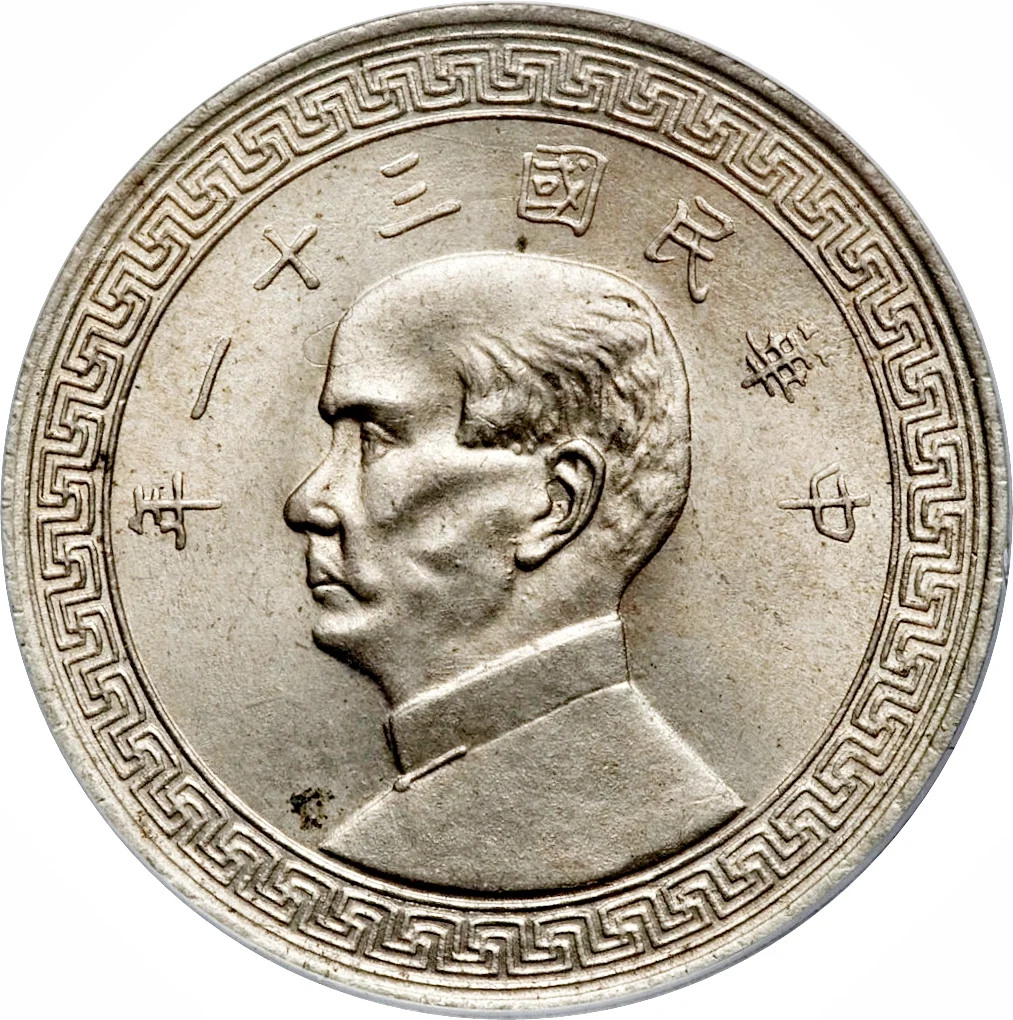
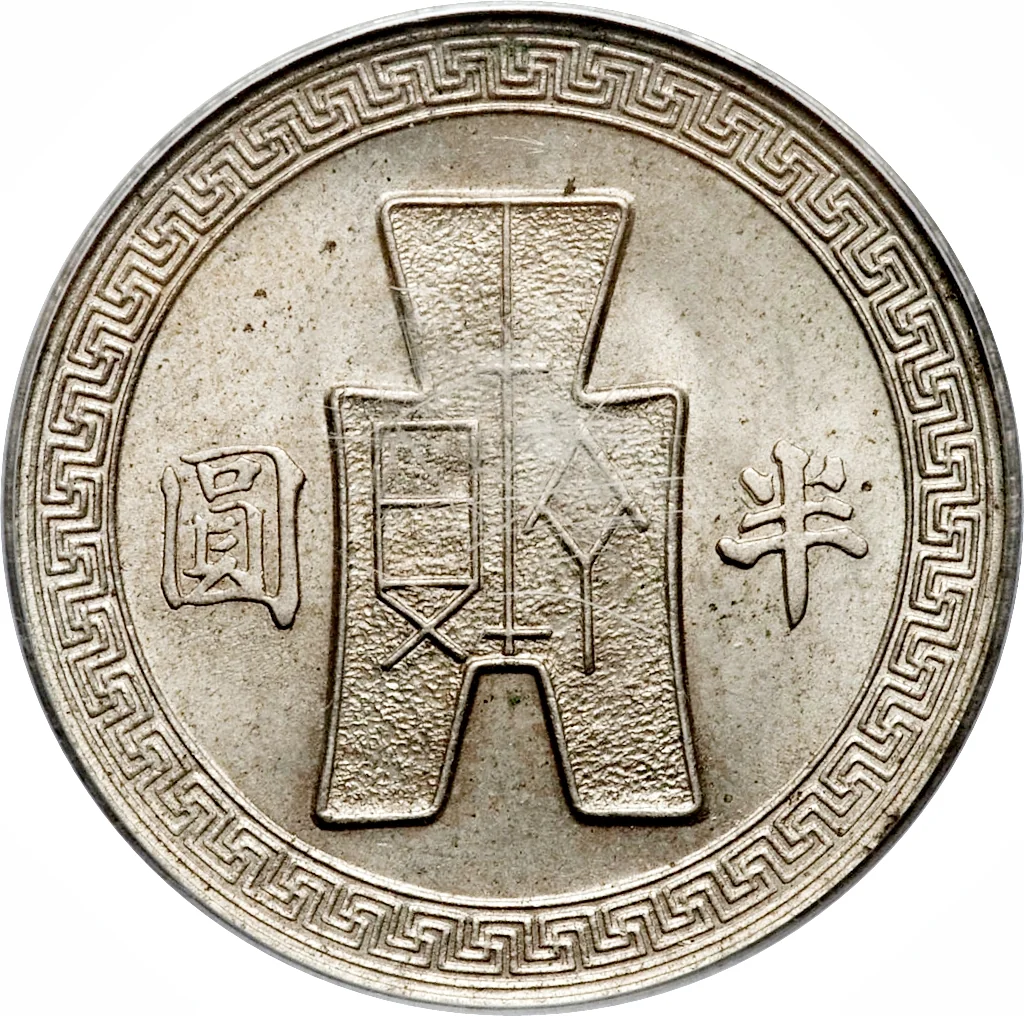
Ancient Chinese spade coin with one ideogram per side within a decorative border.
Inscription:
圓半
貝齊
貝齊
Translation:
Half yuan of Qi coin.
Script: Chinese
Language: Classical Chinese
Edge
Reeded.
Categories
| Currency> Coin depiction |
| Person> Politician |
Mintings
| Year | Mint Mark | Mintage | Quality | Collection |
|---|---|---|---|---|
| 1941 | — | — | ||
| 1942 | — | 57,000,000 | ||
| 1943 | — | 4,000,000 |
Historical background
In 1941, the currency situation in the Republic of China was one of severe and escalating crisis, directly tied to the brutal realities of the ongoing Second Sino-Japanese War (1937-1945). The Nationalist (Kuomintang) government, having retreated inland to the provisional capital of Chongqing, faced immense financial strain from funding protracted warfare. To cover massive military expenditures and budget deficits, the government under Chiang Kai-shek resorted to unrestrained printing of the national currency, the fabi (legal tender). This led to rampant inflation, which was further exacerbated by the loss of major industrial and revenue-rich coastal areas to Japanese occupation, severely shrinking the tax base and productive capacity supporting the currency.
The monetary landscape was fractured by occupation and conflict. In Japanese-occupied regions of north and east China, puppet regimes, most notably the Wang Jingwei government in Nanjing, issued their own competing currencies like the Reserve Bank and Central Reserve Bank notes. These were forced upon the population in an attempt to supplant the fabi and integrate the occupied economies into Japan's "Greater East Asia Co-Prosperity Sphere," while also financing Japanese military operations. Furthermore, various local currencies, military scrip, and even pre-war silver dollars continued to circulate in different regions, creating a chaotic and multi-layered monetary environment where exchange rates fluctuated wildly and trust in any paper money rapidly eroded.
By late 1941, hyperinflation was taking hold in Free China. Prices began a steep, accelerating climb as the money supply exploded and goods became increasingly scarce due to wartime blockades and disrupted transportation. The government's attempts to control prices and curb speculation through regulations proved largely futile. The situation placed an unbearable burden on civil servants, soldiers, and urban populations on fixed incomes, corroding social stability and government credibility. The Japanese attack on Pearl Harbor in December 1941, which brought the United States fully into the Pacific War, promised increased Allied financial and material aid, but did not immediately halt the inflationary spiral, which would worsen dramatically in the ensuing years.
The monetary landscape was fractured by occupation and conflict. In Japanese-occupied regions of north and east China, puppet regimes, most notably the Wang Jingwei government in Nanjing, issued their own competing currencies like the Reserve Bank and Central Reserve Bank notes. These were forced upon the population in an attempt to supplant the fabi and integrate the occupied economies into Japan's "Greater East Asia Co-Prosperity Sphere," while also financing Japanese military operations. Furthermore, various local currencies, military scrip, and even pre-war silver dollars continued to circulate in different regions, creating a chaotic and multi-layered monetary environment where exchange rates fluctuated wildly and trust in any paper money rapidly eroded.
By late 1941, hyperinflation was taking hold in Free China. Prices began a steep, accelerating climb as the money supply exploded and goods became increasingly scarce due to wartime blockades and disrupted transportation. The government's attempts to control prices and curb speculation through regulations proved largely futile. The situation placed an unbearable burden on civil servants, soldiers, and urban populations on fixed incomes, corroding social stability and government credibility. The Japanese attack on Pearl Harbor in December 1941, which brought the United States fully into the Pacific War, promised increased Allied financial and material aid, but did not immediately halt the inflationary spiral, which would worsen dramatically in the ensuing years.
🌱 Fairly Common