

¼ franc – France
Add to wishlist
France
Context
Years: 1803–1805
Issuer: France
Ruler: Napoleon I
Currency:
(1795—1959)
Demonetization: 30 April 1852
Total mintage: 147,028
Material
References
KM: #
Numista: #8198
Value
Bullion value: $2.82
Obverse
Description:
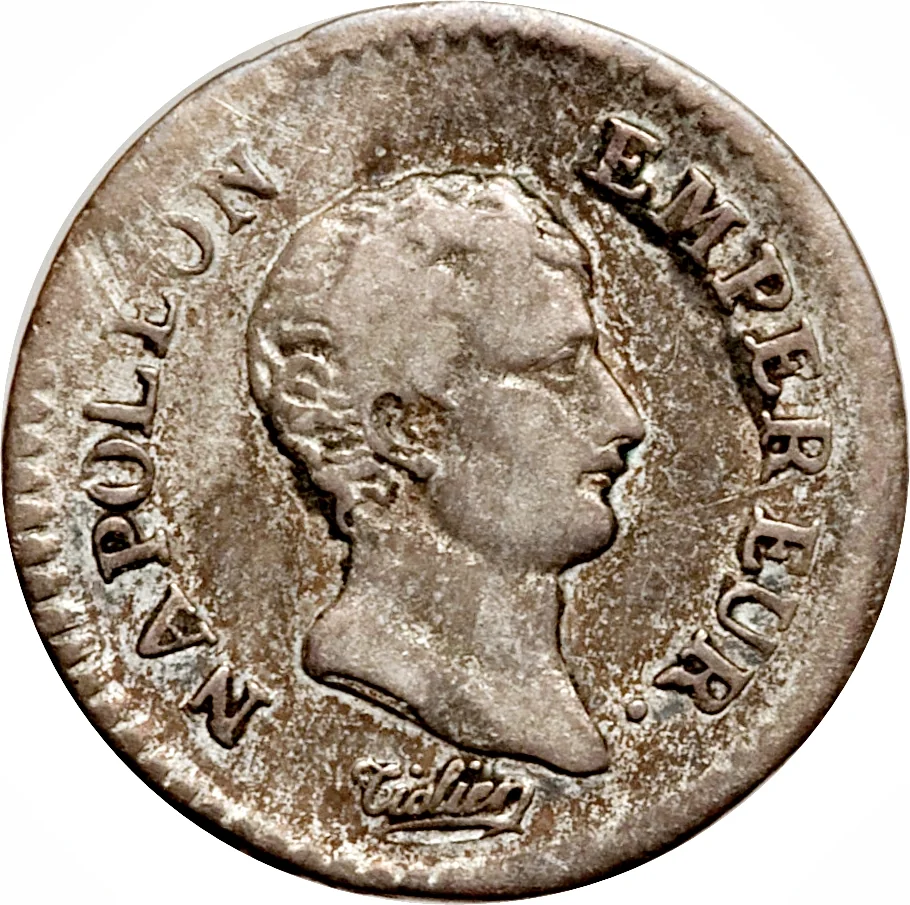
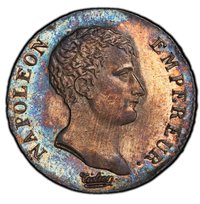
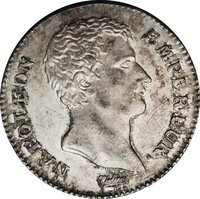
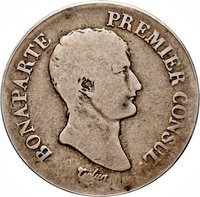
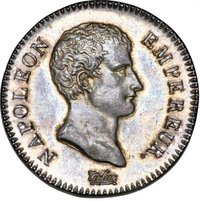
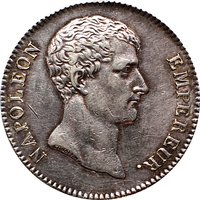
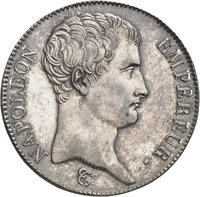
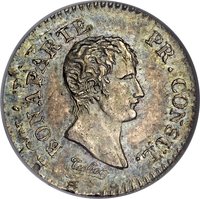
Napoleon I's bare head, right-facing; signed "Tiolier" below.
Inscription:
NAPOLEON EMPEREUR.
Tiolier
Tiolier
Translation:
Napoleon Emperor.
Script: Latin
Language: French
Engraver: Pierre-Joseph Tiolier
Reverse
Description:
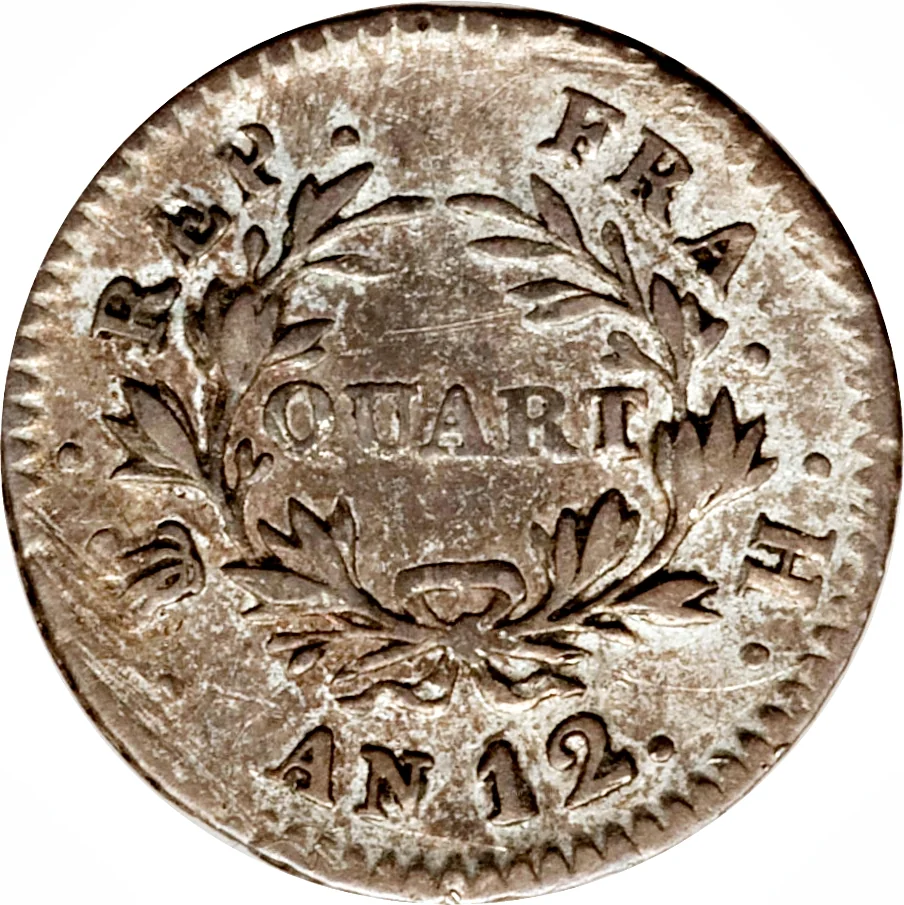
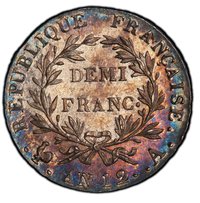
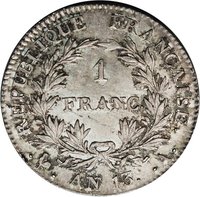
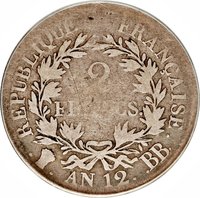
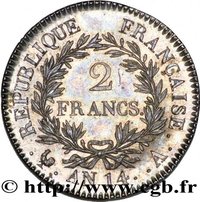
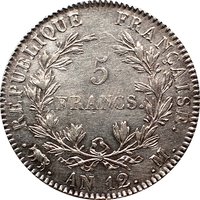
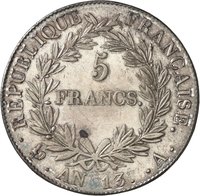
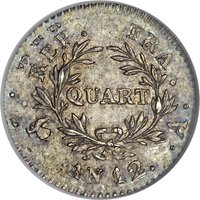
Crowned by two olive branches.
Inscription:
REP. FRA.
QUART
. . AN 13. .A.
QUART
. . AN 13. .A.
Translation:
FRENCH REPUBLIC
QUARTER
. . YEAR 13. .A.
QUARTER
. . YEAR 13. .A.
Script: Latin
Language: French
Engraver: Pierre-Joseph Tiolier
Edge
Alternating beads and bars incused
Mints
| Name | Mark |
|---|---|
| Monnaie de Paris | A |
| Strasbourg | BB |
| Lyon | D |
| La Rochelle | H |
| Limoges | I |
| Bordeaux | K |
| Bayonne | L |
| Toulouse | M |
| Marseille | MA |
| Nantes | T |
| Turin | U |
Mintings
| Year | Mint Mark | Mintage | Quality | Collection |
|---|---|---|---|---|
| 1803 | — | 18,665 | ||
| 1804 | — | 128,363 | ||
| 1805 | — | — |
Historical background
In 1803, France was in the midst of a profound monetary transition under the Consulate of Napoleon Bonaparte. The preceding decade of revolution had left the nation's currency in disarray, with the disastrous experiment of the assignat (paper money backed by confiscated church lands) ending in hyperinflation and worthless notes. This was followed by the equally failed mandats territoriaux. By the late 1790s, public trust in paper money was utterly destroyed, and the economy had regressed to a chaotic system of barter and a patchwork of ancient pre-revolutionary coins, foreign currency, and private tokens.
Recognizing that monetary stability was essential for economic recovery and political legitimacy, Napoleon initiated a decisive reform. The pivotal moment came with the Law of 7 Germinal, Year XI (March 28, 1803), which formally established the Franc Germinal. This law created a bimetallic system based on a strict fixed ratio between gold and silver: the franc was defined as 5 grams of silver with 90% purity (4.5 grams of fine silver), and the 20-franc gold coin (the Napoléon) was also precisely defined. The new currency was notable for its stability, as its value was directly tied to its precious metal content, not government decree.
This reform was a resounding success, providing France with a stable and credible currency for decades. The Franc Germinal facilitated commerce, restored public confidence, and underpinned Napoleon's ambitious projects of national reconstruction and warfare. It effectively laid the foundation for a modern, unified monetary system that would endure until the First World War, marking the end of the revolutionary financial chaos and establishing a cornerstone of the era's economic order.
Recognizing that monetary stability was essential for economic recovery and political legitimacy, Napoleon initiated a decisive reform. The pivotal moment came with the Law of 7 Germinal, Year XI (March 28, 1803), which formally established the Franc Germinal. This law created a bimetallic system based on a strict fixed ratio between gold and silver: the franc was defined as 5 grams of silver with 90% purity (4.5 grams of fine silver), and the 20-franc gold coin (the Napoléon) was also precisely defined. The new currency was notable for its stability, as its value was directly tied to its precious metal content, not government decree.
This reform was a resounding success, providing France with a stable and credible currency for decades. The Franc Germinal facilitated commerce, restored public confidence, and underpinned Napoleon's ambitious projects of national reconstruction and warfare. It effectively laid the foundation for a modern, unified monetary system that would endure until the First World War, marking the end of the revolutionary financial chaos and establishing a cornerstone of the era's economic order.
Series: 1803 France circulation coins
⭐ Rare