

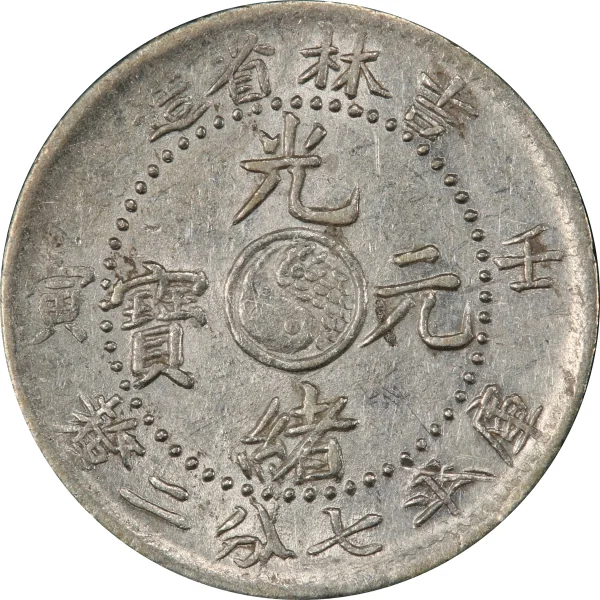
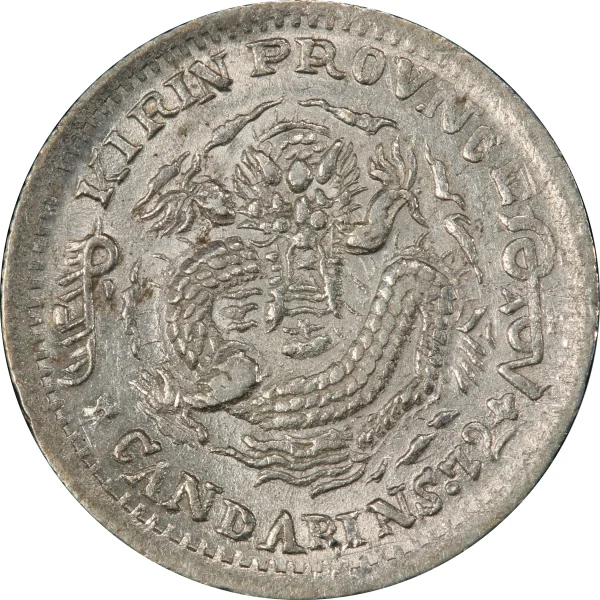
10 Fen – Kirin Province
China
Context
Years: 1900–1905
Country: China 
Issuer: Kirin Province
Ruler: Guangxu
Currency:
(1898—1909)
Demonetized: Yes
Material
References
Y: #Click to copy to clipboard180a
Numista: #62144
Value
Bullion value: $7.25
Obverse
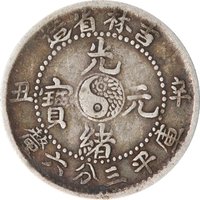
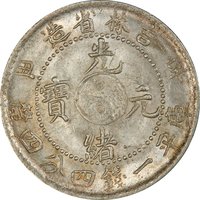
Description:
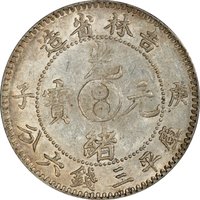
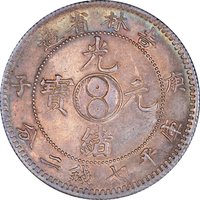
Yin-yang encircled by four central ideograms, surrounded by more characters.
Inscription:
造省林吉
寅壬
光
寶元
緒
釐二分七平庫
寅壬
光
寶元
緒
釐二分七平庫
Translation:
Made in Jilin Province.
Ren Yin Year [1902].
Guangxu Reign.
Yuan Bao.
Seven Fen, Two Li. Pingku [Treasury Standard].
Ren Yin Year [1902].
Guangxu Reign.
Yuan Bao.
Seven Fen, Two Li. Pingku [Treasury Standard].
Language: Classical Chinese
Reverse
Edge
Reeded.
Categories
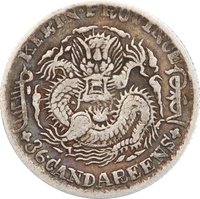
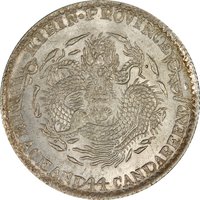
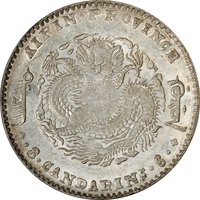
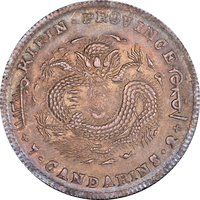
| Mythology> Fantastic animal |
Mintings
| Year | Mint Mark | Mintage | Quality | Collection |
|---|---|---|---|---|
| 1900 | — | — | ||
| 1901 | — | — | ||
| 1902 | — | — | ||
| 1903 | — | — | ||
| 1904 | — | — | ||
| 1905 | — | — |
Historical background
In 1900, Kirin Province (Jilin) in Northeast China existed within a complex monetary ecosystem shaped by foreign encroachment and domestic decline. The primary currency was the silver tael, a unit of weight rather than a coin, leading to inconsistent local "sycee" ingots and a cumbersome system of exchange. Alongside this, copper-alloy cash coins with square holes, strung in strings of 1,000, served as the everyday currency for the majority of the population. However, the provincial economy was increasingly destabilized by a severe shortage of these low-denomination coins, leading to local hardship and the circulation of privately minted and often debased tokens.
Critically, the region’s monetary sovereignty was being eroded by foreign currencies. The Russian ruble (known locally as the "ch'ao" or "羌帖") had become dominant in northern Kirin, especially along the Chinese Eastern Railway zone, functioning as a major trade and reserve currency. Simultaneously, the Japanese yen was making significant inroads into southern parts of the province, following Japan's rising political and military influence after the First Sino-Japanese War (1894-95). This currency competition reflected the broader imperial "Great Game" between Russia and Japan being played on Manchurian soil.
The Qing government's attempts to modernize the currency system were fragmented and ineffective at this time. While imperial mint facilities in Kirin and elsewhere in Manchuria began producing new silver and copper coinage in the late 1890s, their output was insufficient to unify the system or displace foreign money. Consequently, by 1900, Kirin operated with a fractured multi-currency environment: traditional silver and copper, new but scarce imperial coins, and competing Russian and Japanese currencies, all fluctuating in value. This monetary disorder mirrored the province's precarious political state on the eve of the Boxer Rebellion, which would further disrupt the regional economy and intensify foreign military intervention.
Critically, the region’s monetary sovereignty was being eroded by foreign currencies. The Russian ruble (known locally as the "ch'ao" or "羌帖") had become dominant in northern Kirin, especially along the Chinese Eastern Railway zone, functioning as a major trade and reserve currency. Simultaneously, the Japanese yen was making significant inroads into southern parts of the province, following Japan's rising political and military influence after the First Sino-Japanese War (1894-95). This currency competition reflected the broader imperial "Great Game" between Russia and Japan being played on Manchurian soil.
The Qing government's attempts to modernize the currency system were fragmented and ineffective at this time. While imperial mint facilities in Kirin and elsewhere in Manchuria began producing new silver and copper coinage in the late 1890s, their output was insufficient to unify the system or displace foreign money. Consequently, by 1900, Kirin operated with a fractured multi-currency environment: traditional silver and copper, new but scarce imperial coins, and competing Russian and Japanese currencies, all fluctuating in value. This monetary disorder mirrored the province's precarious political state on the eve of the Boxer Rebellion, which would further disrupt the regional economy and intensify foreign military intervention.
💎 Extremely Rare