

Obverse
Description:
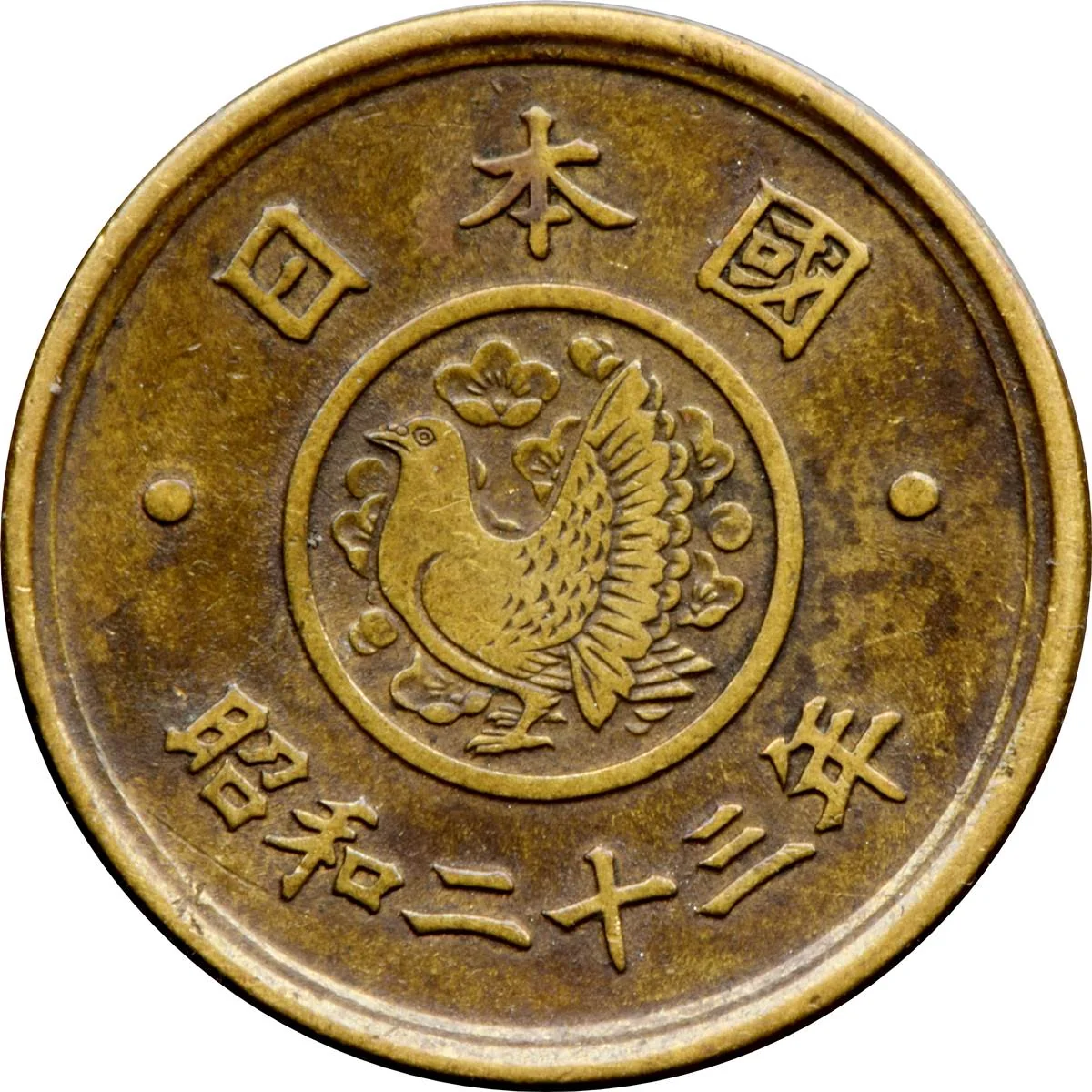
Pigeon in circle, dots on sides, crown above, date below.
Inscription:
• 日 本 國 •
昭和二十三年
昭和二十三年
Translation:
JAPAN
SHOWA 23
SHOWA 23
Language: Japanese
Reverse
Description:
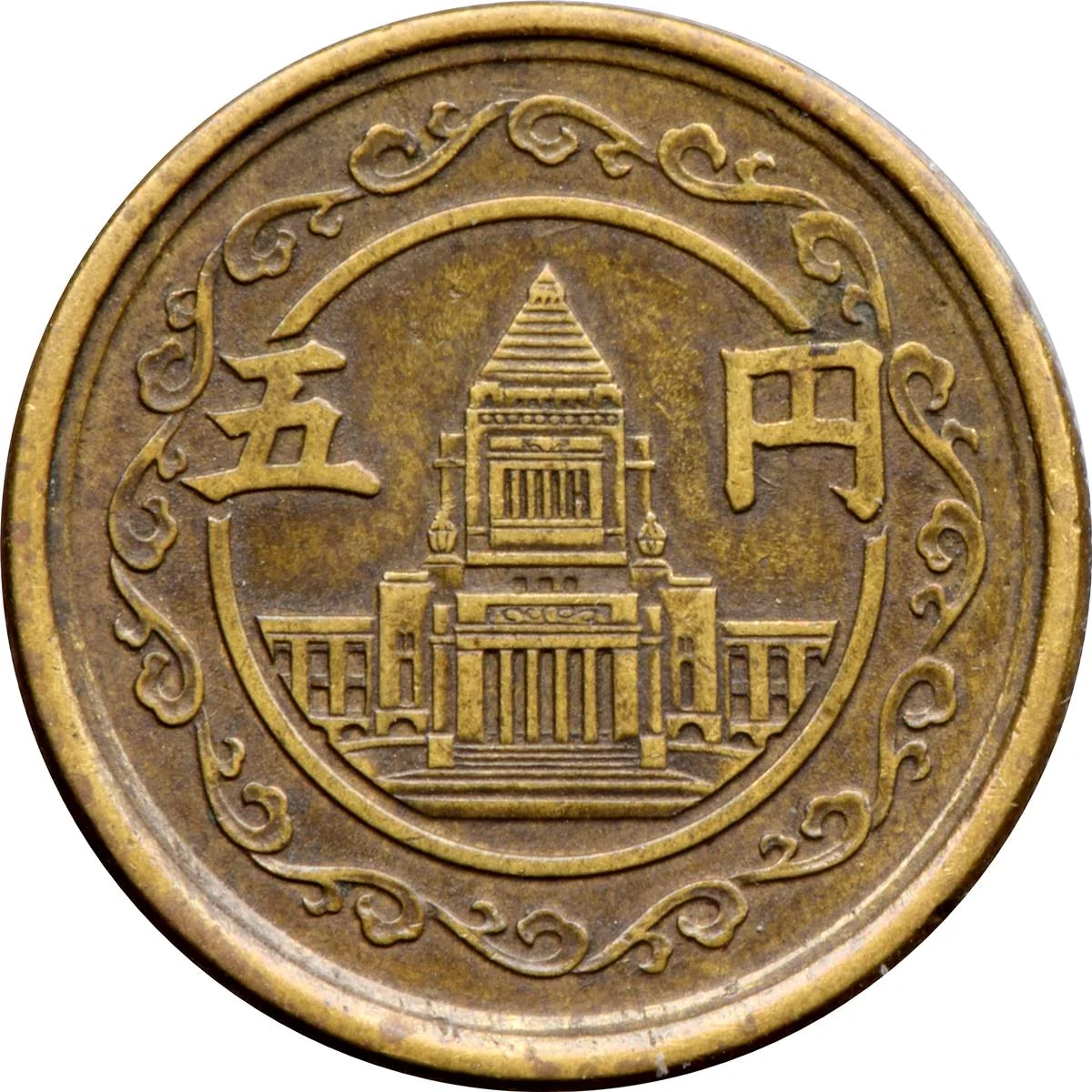
National Diet Building in circle, value and denomination divided by wreath.
Inscription:
五 円
Translation:
Five Yen
Language: Japanese
Edge
Reeded
Categories
| Animal> Bird |
| Building> Governmental building |
Mints
| Name | Mark |
|---|---|
| Japan Mint | — |
Mintings
| Year | Mint Mark | Mintage | Quality | Collection |
|---|---|---|---|---|
| 1948 | — | 74,520,000 | ||
| 1949 | — | 179,692,000 |
Historical background
In 1948, Japan's currency situation was one of severe instability and inflation, a direct legacy of the Pacific War. The Japanese economy, under Allied Occupation led by General Douglas MacArthur's Supreme Commander for the Allied Powers (SCAP), was struggling with a massive oversupply of currency. To finance the war, the government had printed money excessively, and this flood of banknotes continued after surrender to cover reconstruction costs and subsidies to key industries. The result was runaway inflation, with prices in 1948 soaring to over 100 times their pre-war levels, severely eroding the value of the yen and crippling economic recovery.
Recognizing that this monetary chaos was fostering a black market and hindering production, the U.S. government dispatched a mission under Detroit banker Joseph Dodge in early 1949. However, the critical groundwork was laid in 1948. That year, SCAP and Japanese officials began formulating the drastic stabilization plan Dodge would later enforce. The focus shifted from mere industrial revival to imposing fiscal and monetary discipline. A key preliminary step was the establishment of the Reconstruction Finance Bank in 1946, but its inflationary lending was curtailed in 1948, marking the first serious attempt to stop the flow of cheap money.
Thus, 1948 represents a pivotal transitional year. It was the peak of the post-war inflationary crisis, yet also the period when the blueprint for its resolution was drawn. The old, discredited yen remained in circulation, but the conceptual shift toward a balanced budget, the end of subsidized lending, and a single fixed exchange rate—cornerstones of the 1949 "Dodge Line"—took definitive shape. The currency situation was dire, but the policies that would eventually stabilize the yen and lay the foundation for Japan's future economic miracle were being urgently crafted under American guidance.
Recognizing that this monetary chaos was fostering a black market and hindering production, the U.S. government dispatched a mission under Detroit banker Joseph Dodge in early 1949. However, the critical groundwork was laid in 1948. That year, SCAP and Japanese officials began formulating the drastic stabilization plan Dodge would later enforce. The focus shifted from mere industrial revival to imposing fiscal and monetary discipline. A key preliminary step was the establishment of the Reconstruction Finance Bank in 1946, but its inflationary lending was curtailed in 1948, marking the first serious attempt to stop the flow of cheap money.
Thus, 1948 represents a pivotal transitional year. It was the peak of the post-war inflationary crisis, yet also the period when the blueprint for its resolution was drawn. The old, discredited yen remained in circulation, but the conceptual shift toward a balanced budget, the end of subsidized lending, and a single fixed exchange rate—cornerstones of the 1949 "Dodge Line"—took definitive shape. The currency situation was dire, but the policies that would eventually stabilize the yen and lay the foundation for Japan's future economic miracle were being urgently crafted under American guidance.
🌱 Very Common