

500 yen (Local Autonomy Law) – Japan
Add to wishlist
Circulating commemorative coins
Commemoration: 60th anniversary of Local Autonomy Law
Japan
Context
Year: 2013
Japanese - Heisei era Year:: 25
Issuer: Japan
Ruler: Heisei
Currency:
(since 1871)
Total mintage: 1,670,000
Material
Diameter: 26.5 mm
Weight: 7.1 g
Thickness: 1.8 mm
Shape: Round
Techniques: Latent image, Milled
Alignment: Medal alignment
flip
References
Y: #
Numista: #56475
Value
Exchange value: 500 JPY
Inflation-adjusted value: 575.38 JPY
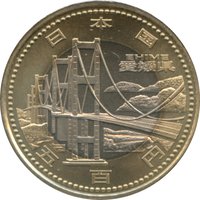
Obverse
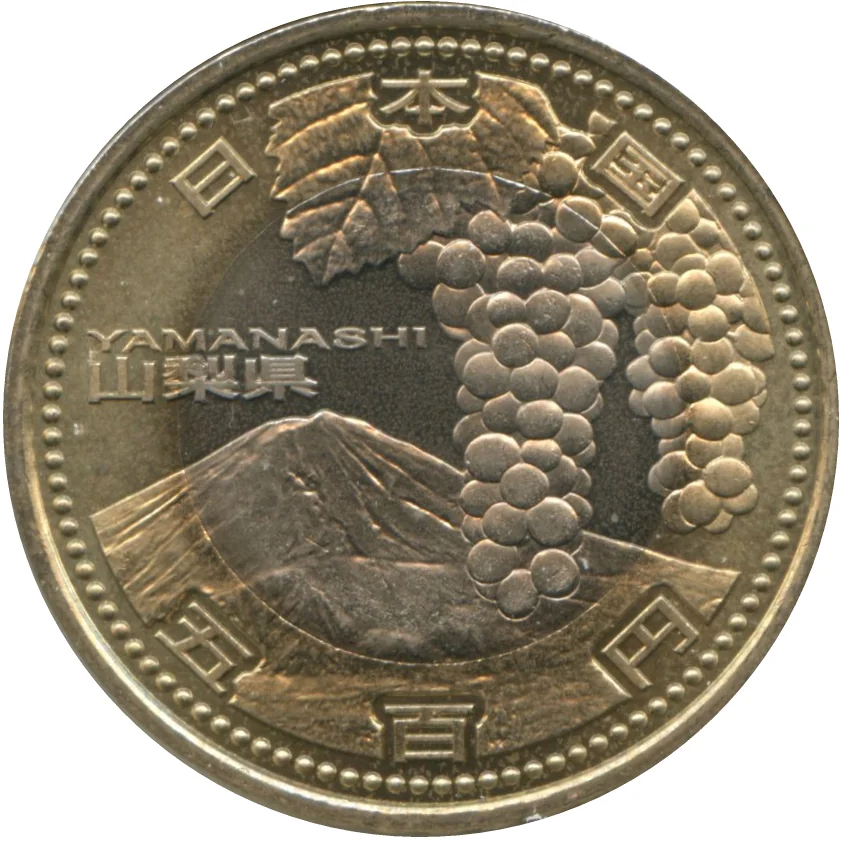
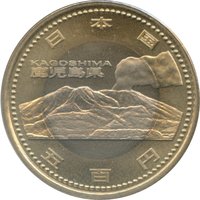
Description:
Fuji grapes
Inscription:
日 本 国
YAMANASHI
山梨県
五 百 円
YAMANASHI
山梨県
五 百 円
Translation:
JAPAN
YAMANASHI
Five Hundred Yen
YAMANASHI
Five Hundred Yen
Language: Japanese
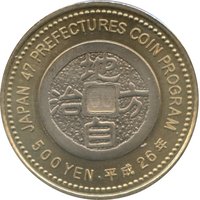
Reverse
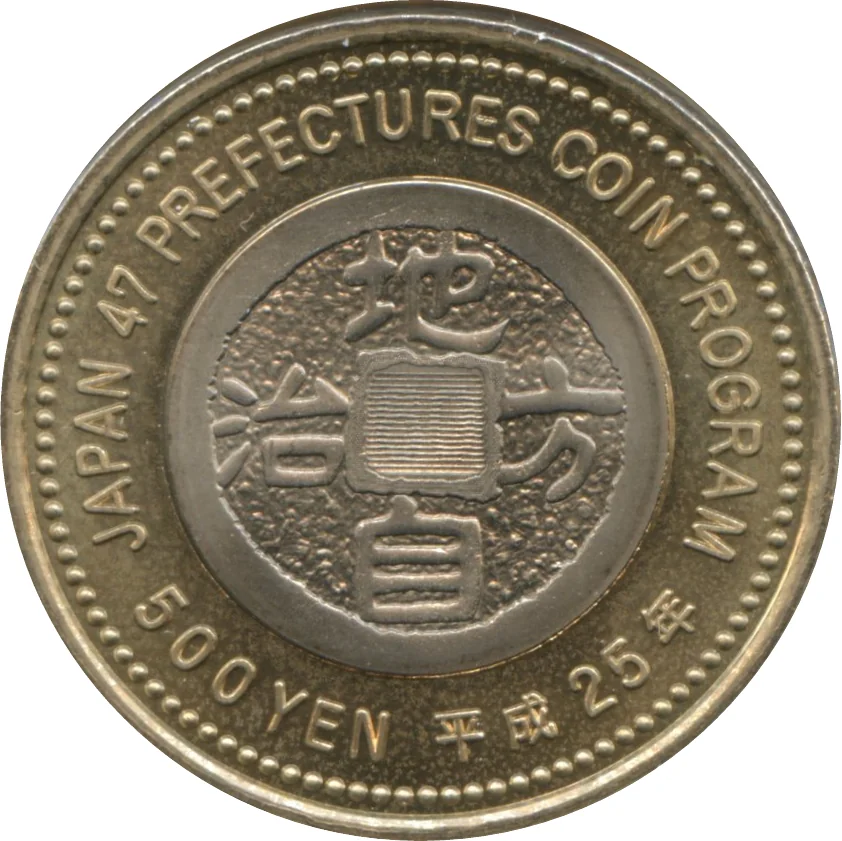
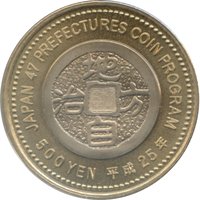
Description:
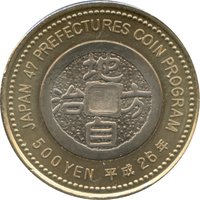
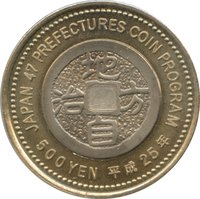
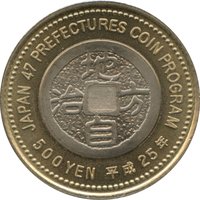
Old coin: Mon symbol with latent images in square hole, encircled by legends.
Inscription:
JAPAN 47 PREFECTURES COIN PROGRAM
地
方(47/60)自
治
500 YEN 平成 25 年
地
方(47/60)自
治
500 YEN 平成 25 年
Translation:
JAPAN 47 PREFECTURES COIN PROGRAM
Local (47/60) Self-
Government
500 YEN Heisei 25 Year
Local (47/60) Self-
Government
500 YEN Heisei 25 Year
Language: Japanese
Edge
Slanted reeding with two different pitches
Categories
| Currency> Coin depiction |
Mints
| Name | Mark |
|---|---|
| Japan Mint | — |
Mintings
| Year | Mint Mark | Mintage | Quality | Collection |
|---|---|---|---|---|
| 2013 | — | 1,640,000 | ||
| 2013 | — | 30,000 | Proof |
Historical background
In 2013, Japan's currency situation was dominated by the aggressive monetary and fiscal policies of Prime Minister Shinzo Abe's newly inaugurated government, known as "Abenomics." The core objective was to decisively end decades of deflation and economic stagnation. A central pillar of this strategy, spearheaded by the Bank of Japan (BOJ) under Governor Haruhiko Kuroda, was unprecedented monetary easing. In April 2013, the BOJ launched a massive quantitative and qualitative easing (QQE) program, committing to double the monetary base and achieve a 2% inflation target, which directly targeted the yen's value.
Consequently, the yen depreciated sharply against major currencies, particularly the US dollar. From around 86 yen to the dollar at the end of 2012, it weakened to approximately 105 yen by the end of 2013—a decline of over 20%. This deliberate devaluation aimed to boost exports by making Japanese goods cheaper abroad and to raise domestic prices to combat deflation. The policy was initially celebrated by financial markets and major exporters, contributing to a significant stock market rally as the Nikkei 225 index surged by over 50% that year.
However, the rapid yen depreciation also presented significant challenges. It increased the cost of imports, notably energy and raw materials, straining households and businesses reliant on imported goods. This raised concerns about the potential erosion of real incomes and sparked criticism from trading partners. Thus, the 2013 currency landscape was defined by this high-stakes policy experiment: a purposeful and dramatic weakening of the yen that delivered short-term market gains and reflationary hopes, but at the cost of higher import prices and uncertainty about the long-term structural reforms needed to sustain economic recovery.
Consequently, the yen depreciated sharply against major currencies, particularly the US dollar. From around 86 yen to the dollar at the end of 2012, it weakened to approximately 105 yen by the end of 2013—a decline of over 20%. This deliberate devaluation aimed to boost exports by making Japanese goods cheaper abroad and to raise domestic prices to combat deflation. The policy was initially celebrated by financial markets and major exporters, contributing to a significant stock market rally as the Nikkei 225 index surged by over 50% that year.
However, the rapid yen depreciation also presented significant challenges. It increased the cost of imports, notably energy and raw materials, straining households and businesses reliant on imported goods. This raised concerns about the potential erosion of real incomes and sparked criticism from trading partners. Thus, the 2013 currency landscape was defined by this high-stakes policy experiment: a purposeful and dramatic weakening of the yen that delivered short-term market gains and reflationary hopes, but at the cost of higher import prices and uncertainty about the long-term structural reforms needed to sustain economic recovery.
🌟 Uncommon