

20 Möngö – Mongolia
Mongolia
Context
Material
Diameter: 22.2 mm
Weight: 3.7 g
Thickness: 1.4 mm
Shape: Round
Composition: Copper-nickel
Technique: Milled
Alignment: Medal alignment
flip
References
KM: #Click to copy to clipboard14
Numista: #12536
Value
Exchange value: 0.20 MNT
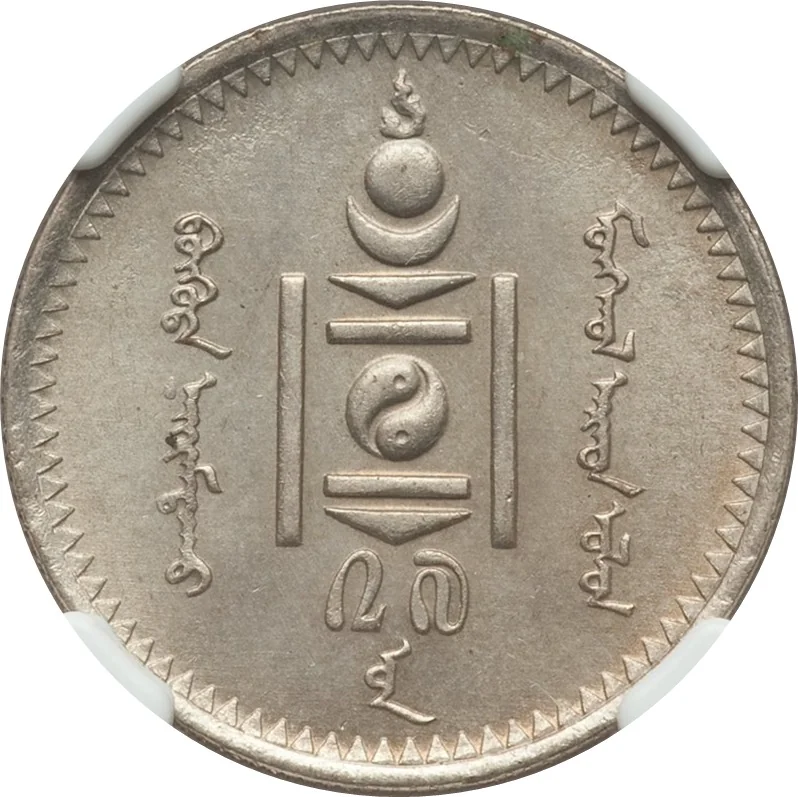
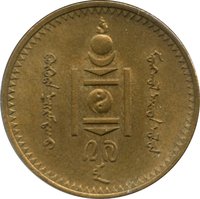
Obverse
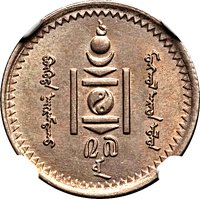
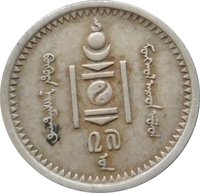
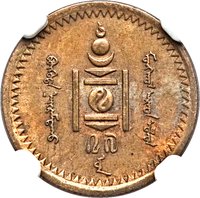
Description:
Soyombo script and symbol with date. State emblem of the People's Republic of Mongolia (1924–1939).
Inscription:
ᠪᠦᠭᠦᠳᠡ ᠨᠠᠶᠢᠷᠠᠮᠳᠠᠬᠤ ᠮᠣᠩᠭᠣᠯ ᠠᠷᠠᠳ ᠤᠯᠤᠰ
᠒᠗
ᠣᠨ
᠒᠗
ᠣᠨ
Translation:
Bügüde nayiramdaqu Mongγol arad ulus
26
on
26
on
Language: Mongolian
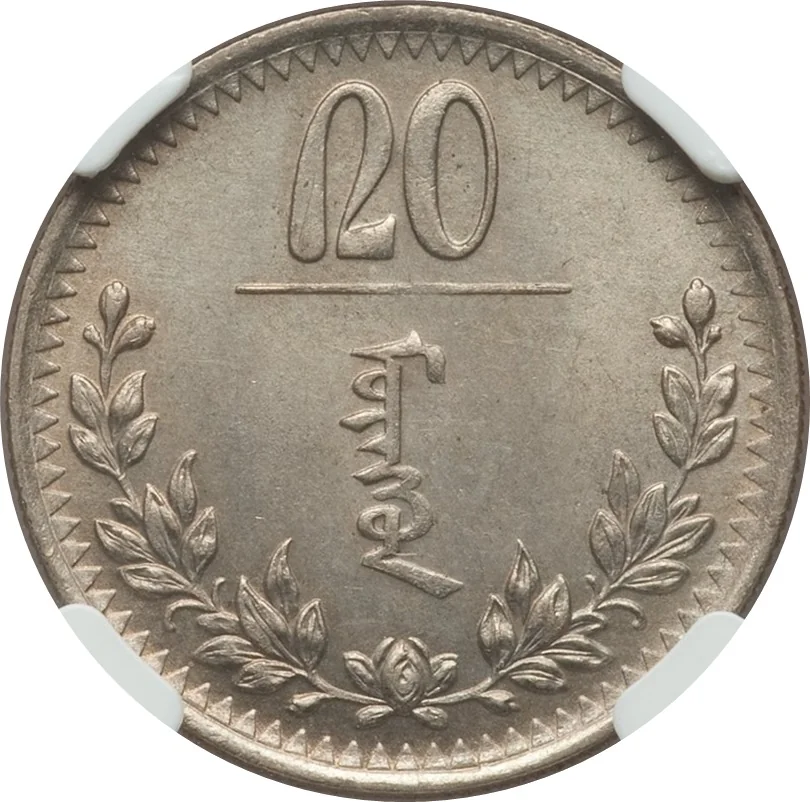
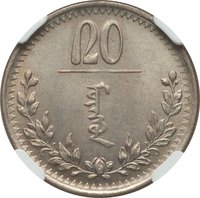
Reverse
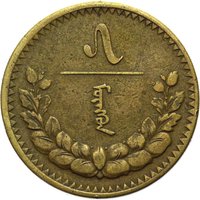
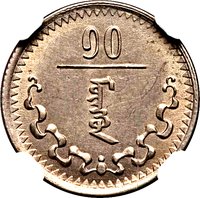
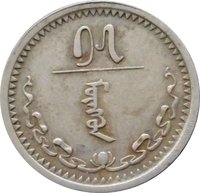
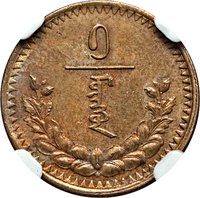
Description:
Within half a wreath's value.
Inscription:
᠒᠐
ᠮᠥᠩᠭᠥᠨ
ᠮᠥᠩᠭᠥᠨ
Translation:
20
Mönggön
Mönggön
Language: Mongolian
Edge
Reeded
Mintings
| Year | Mint Mark | Mintage | Quality | Collection |
|---|---|---|---|---|
| 1937 | — | — |
Historical background
In 1937, Mongolia's currency system was firmly under the control of the Mongolian People's Republic, a single-party socialist state closely aligned with the Soviet Union. The official currency was the Tögrög (MNT), introduced in 1925 to replace earlier currencies and assert economic sovereignty. However, its stability and value were entirely dependent on the Soviet Union, as Mongolia operated within the Soviet economic sphere. The State Bank of Mongolia, established with Soviet guidance, held a monopoly on currency issuance and credit.
Economically, 1937 fell within a period of intense political repression and accelerated collectivization under Khorloogiin Choibalsan, often called Mongolia's "Stalin." While direct hyperinflation was not the primary issue, the currency's function was subservient to state planning and the brutal suppression of the traditional economy. The government had just completed a devastating campaign against Buddhist monasteries (1937-1939), seizing their assets and dismantling a major pillar of the old economic and monetary system. This further centralized all financial activity under the state bank and the tögrög.
Internationally, the tögrög was a non-convertible currency, pegged to and fully backed by the Soviet ruble rather than gold or independent reserves. This peg guaranteed its stability within the closed Soviet bloc system but made Mongolia's monetary policy a direct extension of Moscow's. Consequently, the currency situation in 1937 reflected a nation undergoing violent socio-economic transformation, with its money serving as a tool for Soviet-style central planning and the consolidation of a repressive political regime.
Economically, 1937 fell within a period of intense political repression and accelerated collectivization under Khorloogiin Choibalsan, often called Mongolia's "Stalin." While direct hyperinflation was not the primary issue, the currency's function was subservient to state planning and the brutal suppression of the traditional economy. The government had just completed a devastating campaign against Buddhist monasteries (1937-1939), seizing their assets and dismantling a major pillar of the old economic and monetary system. This further centralized all financial activity under the state bank and the tögrög.
Internationally, the tögrög was a non-convertible currency, pegged to and fully backed by the Soviet ruble rather than gold or independent reserves. This peg guaranteed its stability within the closed Soviet bloc system but made Mongolia's monetary policy a direct extension of Moscow's. Consequently, the currency situation in 1937 reflected a nation undergoing violent socio-economic transformation, with its money serving as a tool for Soviet-style central planning and the consolidation of a repressive political regime.
Series: 1937 Mongolia circulation coins
🌱 Fairly Common