

5 yen – Japan
Add to wishlist
Japan
Context
Year: 1930
Japanese - Shōwa era Year:: 5
Issuer: Japan
Ruler: Shōwa
Currency:
(since 1871)
Demonetized: Yes
Total mintage: 852,563
Material
References
Y: #
Numista: #50110
Value
Exchange value: 5 JPY
Bullion value: $576.17
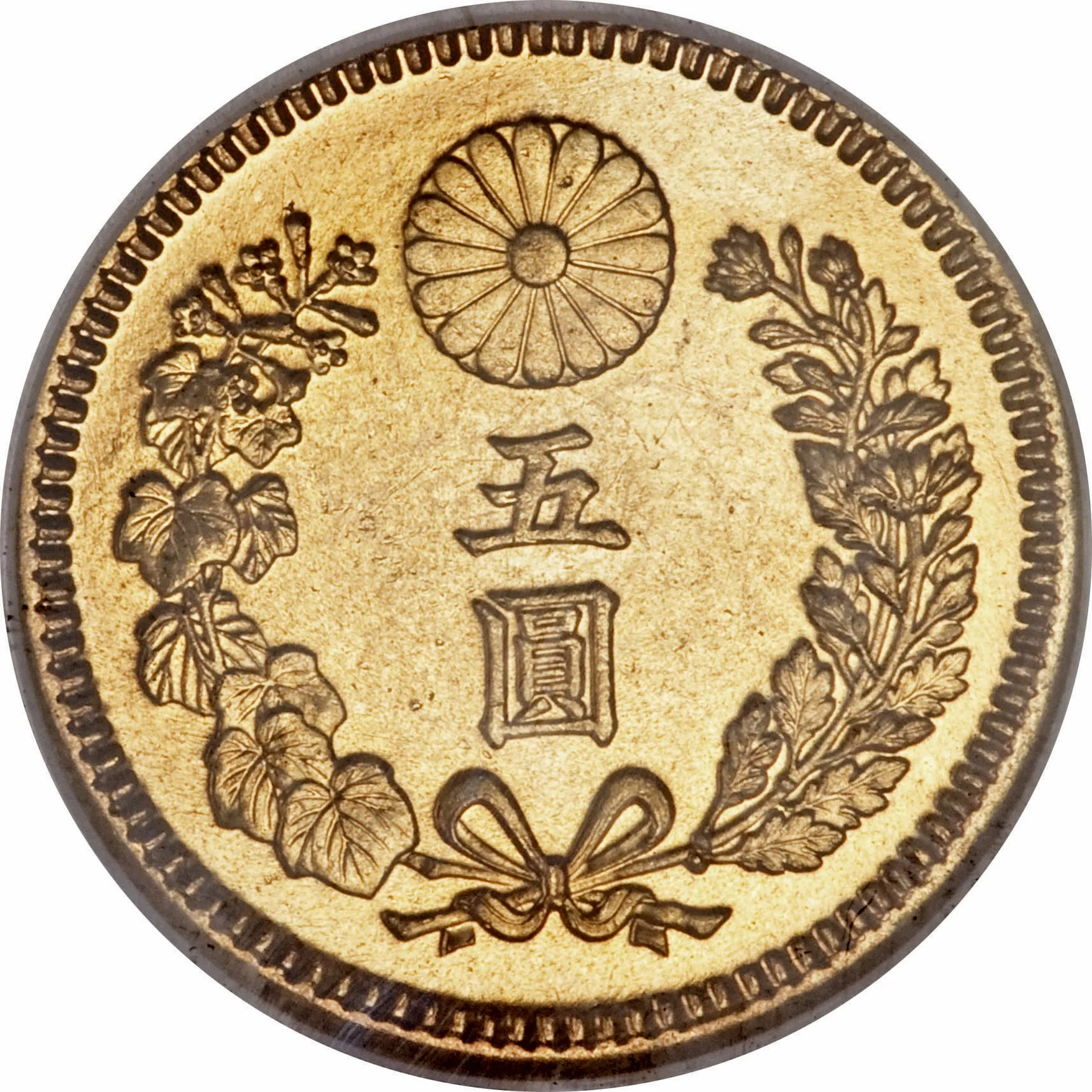
Obverse
Description:
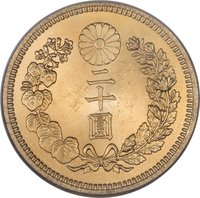
Chrysanthemum crest with paulownia and chrysanthemum branches flanking the value.
Inscription:
五
圓
圓
Translation:
Five
Dollars
Dollars
Language: Chinese
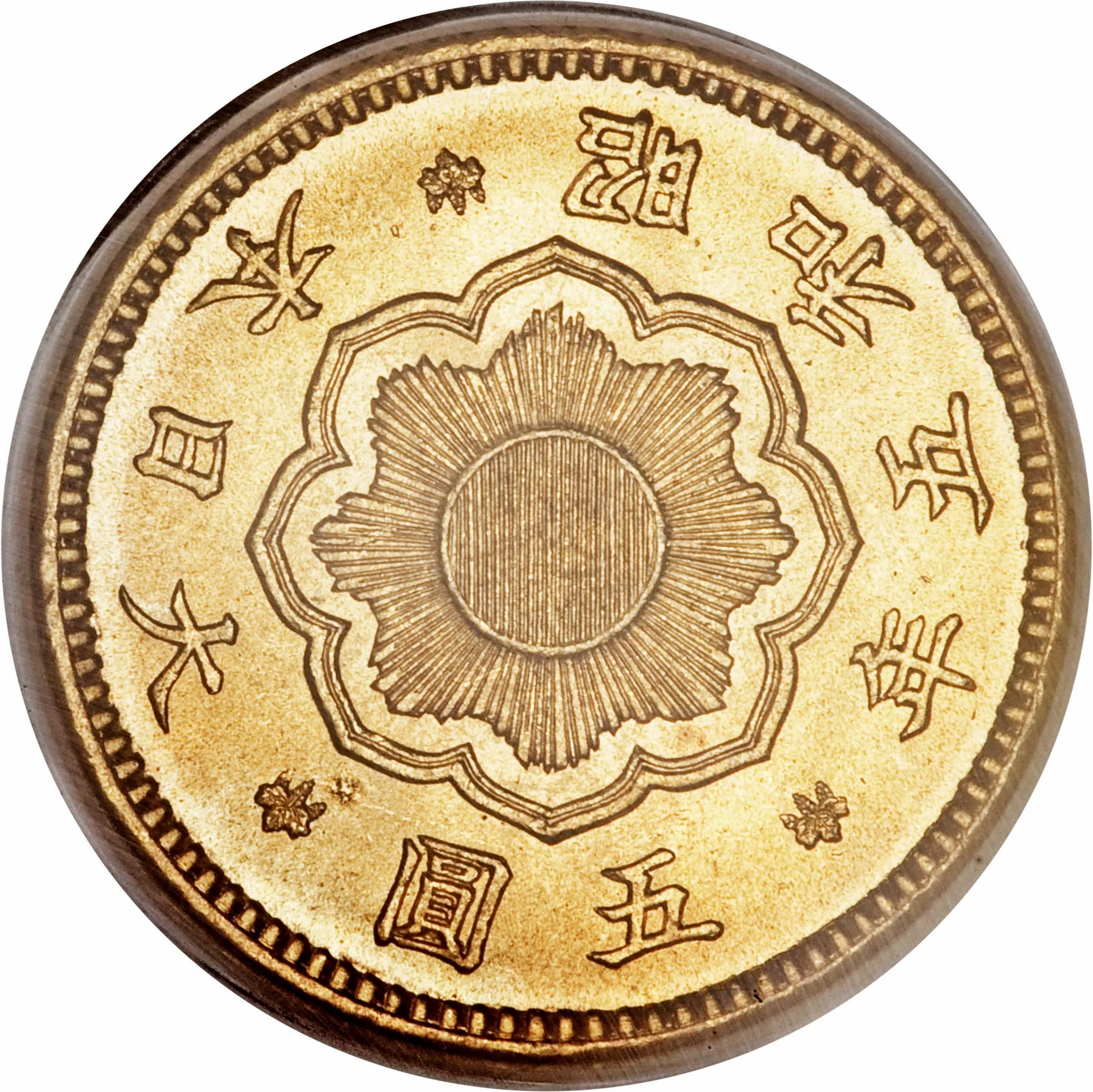
Reverse
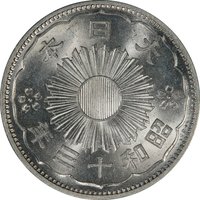
Description:
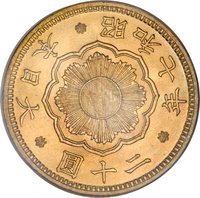
Radiant sun in a floral cartouche, encircled by text divided by small Paulownia flower seals.
Inscription:
年 五 和 昭 · 本 日 大
· 圓 五 ·
· 圓 五 ·
Translation:
Year 5 of Showa; Great Japan
5 Yen
5 Yen
Language: Japanese
Edge
Reeded
Mints
| Name | Mark |
|---|---|
| Japan Mint | — |
Mintings
| Year | Mint Mark | Mintage | Quality | Collection |
|---|---|---|---|---|
| 1930 | — | 852,563 |
Historical background
In the late 1920s, Japan's currency situation was defined by its return to the gold standard in January 1930 under Finance Minister Junnosuke Inoue. This move, taken at the pre-World War I parity, significantly overvalued the yen, making Japanese exports like silk and cotton textiles prohibitively expensive on the global market. The policy was intended to instill fiscal discipline and align Japan with major Western economies, but its timing was catastrophic, coinciding with the onset of the Great Depression. Global demand collapsed just as Japan's exports became less competitive, triggering a severe deflationary spiral, falling agricultural prices, and widespread business failures.
The domestic consequences were devastating. The overvalued yen and deflation crushed the rural economy, particularly silk-producing regions dependent on the U.S. market, leading to profound social distress. Industrial output plummeted, unemployment rose, and the financial system came under severe strain. The government's commitment to maintaining the gold standard required tight monetary policy and austerity budgets, which further deepened the economic crisis and eroded public confidence in both the government and major financial institutions.
Mounting political and economic pressure forced Japan to abandon the gold standard in December 1931, just 23 months after its adoption. The new government swiftly implemented a decisive devaluation of the yen, which provided immediate relief by boosting export competitiveness. This shift marked a critical turning point, moving Japan toward a managed currency system and state-led industrial expansion. However, the trauma of the period fueled social instability, increased militarist influence, and pushed Japan toward economic autarky and expansionist policies in Asia to secure resources and markets, setting a course with profound consequences for the decade ahead.
The domestic consequences were devastating. The overvalued yen and deflation crushed the rural economy, particularly silk-producing regions dependent on the U.S. market, leading to profound social distress. Industrial output plummeted, unemployment rose, and the financial system came under severe strain. The government's commitment to maintaining the gold standard required tight monetary policy and austerity budgets, which further deepened the economic crisis and eroded public confidence in both the government and major financial institutions.
Mounting political and economic pressure forced Japan to abandon the gold standard in December 1931, just 23 months after its adoption. The new government swiftly implemented a decisive devaluation of the yen, which provided immediate relief by boosting export competitiveness. This shift marked a critical turning point, moving Japan toward a managed currency system and state-led industrial expansion. However, the trauma of the period fueled social instability, increased militarist influence, and pushed Japan toward economic autarky and expansionist policies in Asia to secure resources and markets, setting a course with profound consequences for the decade ahead.
✨ Legendary